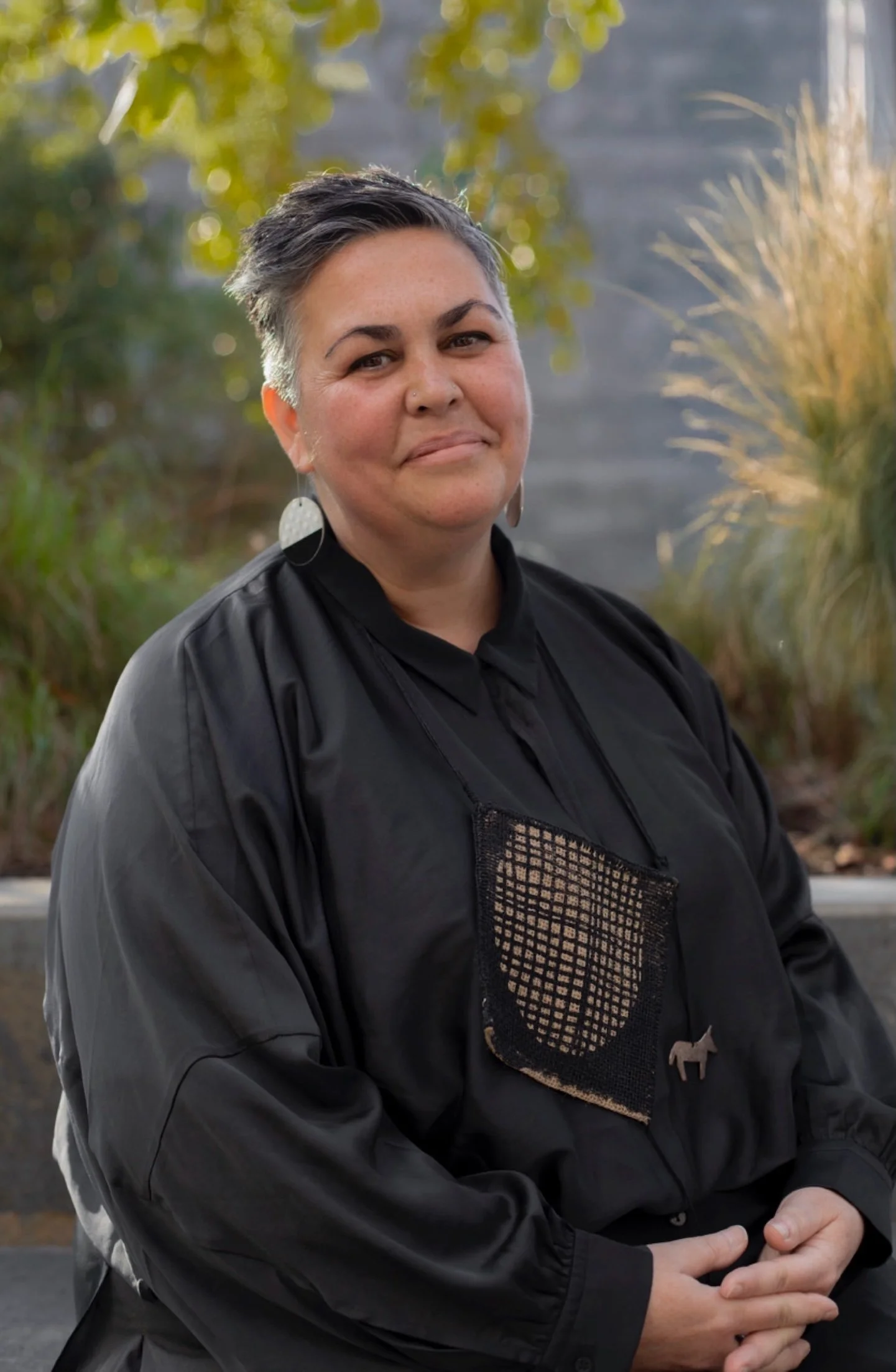

Gurambilbarra/Townsville, ‘Rain coming’, Cameron Robbins. 20 hrs Wind Drawing, 77cm x77cm
At any time over the last 15 years, you will have undoubtedly experienced the remarkable work of Cameron Robbins at Stockroom.
Since its inception in 2011, the innovative Castlemaine-based artist has exhibited his many wind solar and river-powered drawings there, plus the instruments he uses to make them, kinetic sculptures, sound installations and videos. His site-specific permanent installation, Atmospheric Test Rig, is a Stockroom-fam fave, beguiling those who stand before it while it chews the atmosphere to fuel its work.
This longtime association of both the gallery and artist is a cherished one.
Since 2011, Cameron’s been around the world and back, becoming a highly sought after multi-disciplinary artist, with acquisitions, commissions and exhibitions from galleries, festivals and museums around Australia and the world. He’s produced site-specific installations and exhibitions in art spaces, disused buildings and outdoor sites in Australia, Switzerland, Japan, Norway, China, Denmark, Germany and the UK. (1)
He was also the “first Australian artist invited to present a large-scale solo exhibition at MONA (Museum of Old and New Art)” (2) in Lutruwita/Tasmania. Initially taking over nine indoor and outdoor spaces, Field Lines (2016) included seven separate commissions on temporary display, while permanent exhibit Wind Section Instrumental has been generating five-metre-long wind drawings since 2018. The count was up to one hundred and thirty when Cameron visited MONA in October.
Returning to Stockroom this November, Cameron’s latest body of work, Dream Studio, was created on the busy foreshore of The Strand in Gurambilbarra/Townsville, northern Queensland, as the invited artist of the Ephemera Public Art Festival (July-August 2025.)
Created in a custom outdoor studio overlooking Yunbenun/Magnetic Island – thus spawning the title “Dream Studio” – Cam will bring multiple wind drawings, a video, and drawing machine and instrument parts from the project into the spacious, industrial art space of Stockroom, from 21 November until 3 January 2027.
Dream Studio caused quite a stir in Townsville. Cameron literally gave hundreds of impromptu artist talks, yarning to all and sundry about his contribution to the festival, created in homage to nature and the elements. It’s something he’s happy to replicate while the work is at Stockroom.
As fascinating as it is to witness Cameron’s work in situ, it’s just as fascinating to hear what’s behind it. Cameron shares more about the mechanics of Dream Studio at Stockroom in this interview.
Interviewee: Cameron Robbins. Storyteller: Megan Spencer
Stockroom: Can you tell us what will be at Stockroom for your new exhibition, Dream Studio? What will you be bringing into the space?
Cameron Robbins: For Dream Studio I am going to have about 15 drawings. There's a video as well and a piece of the actual sculpture installation that it was drawn from.
It was a site-specific project that was done up in Queensland at Townsville, and it was a big kinetic sculpture that I devised to create [the] drawings. And it was actually a frame of a shed - or a studio building - that I made. All the machine parts were inside.
I've made a really nice video document of the process, and I've got six framed and nine unframed drawings [in the show at Stockroom].
SR: So - that's pretty big!
CR: Yeah, it's pretty big! …It's a decent show, and yeah, very exciting to be able to show this work here.
SR: You've said before that your wind-drawing instruments are like a conduit for nature. And you have a pretty close relationship with nature and science, and the elements, the weather. Just reading your artist statement for Dream Studio, it felt like this could be, for want of a better word, a ‘legacy’ piece, because you're talking about observing the changes in our environment, and reminding people how important this is, especially right now, in this moment [of the Anthropocene]. Is that a fair thing to say?
CR: I think it's really good to talk about this aspect of the work… We could talk for hours about this, because people do ask [me], “Have you noticed stuff with climate change?”
And it's interesting: firstly, it's about weather more than climate. Weather is minutes, hours, and days, and then climate is days, weeks, months, years, centuries and millennia. It's going to take a while to notice general trends. So, it's a difficult thing to pinpoint, I suppose.
And that's one of the hard things about climate science: it's on a bigger scale than humans are generally aware of. Like we're very aware of the weather, and everybody's interested in that. But then we've definitely noticed that people lose interest with climate a bit because it's just such a big topic - a big time span.
Having said that, there's periods of drought when the drawings that I make [out in the natural world] don't have rain on them, for instance. That happens a lot. There was a 10-year drought. I just used to think, “Wow! I used to really like those rainy drawings with water all over them.” And so things like that do change in climatic shifts.
But it's not over yet, and I'm still experimenting and documenting all this.
One of the important things about this [Dream Studio] project [was] having the dream studio set up in public - with me making wind drawings and taking artistic and scientific measurements and data - was to remind people of the process of observing nature and actually recording details empirically. Watching things happen and noting it down on a one-to-one scale. Something happens and it's on paper and that's it.
I thought that was really important part of it.
SR: When I look at your work, it's almost like you're part sailor, part navigator, part scientist and then part artist. How did all of these things get brought into your work? Is it just the way you were brought up - just your nature, your proclivities towards certain things, have come together in the work?
CR: Yeah, I have to say that, studying art, once I sort of got through the Bachelor – the first three years - then I did my postgrad a few years later at VCA [Victorian College of the Arts], the work was becoming more and more expressive of my life. And what I wanted to do was less about the historical precedent and more about my own life.
I was lucky when I grew up: we had a shack down the coast and I was able to go surfing all the time and [on] nature walks, and spend a lot of time by myself once my brothers and sisters had grown up. Just the observation of nature, I think, really was my kind of spiritual home, and I started to bring that into the work.
When I was working in Melbourne, in the city, at VCA, I would go on the roof and actually have my wind machines on the roof, and [I] was making drawings and observing sunsets and trying to contact that energy that I'd grown up with, and then working out how to communicate that to the audience.
SR: You don’t make it easy for yourself, do you? I mean, with these installations, there's construction involved, there's heavy materials, there's balancing stuff, there's harnessing wind energy... all the way down to getting drawing implements onto marble and paper.
You have to nut all this out, but also you have to lug stuff! And then the other side of it is kind of meditative. So there's kind of a yin yang [involved]. Can you speak to that a little bit, and why you make it so ‘complicated’ for yourself as an artist?
CR: Well, my first response to that is, as an artist, you have to have a ‘niche’, don't you? And so, I do have a niche!
And it's interesting: in the art galleries, in ‘my day’, when I'd go to an art gallery like the NGV, in the corner of each gallery space would be a small instrument that was recording the humidity and temperature - a hygrothermograph. I used to love those. And I'd go and look at them, and just go, “Wow, that is such a great thing, marking out these variations.” Of course it's all about climate control in there…
I became, you know, ‘that guy’… I'm that sort of person in the art world. So often I get curated into shows because the curator will want something that's active, something that's monitoring or related to that aspect. So I think that's really interesting.
But yeah, you've got to have - ‘the rock and the feather’ is the metaphor for this kind of work, where you need a big anchor and then you need very light delicate parts as well. I've got to make instruments that are responsive to the slightest breeze, but they're also robust enough to withstand the harshest storm or the most severe storm.
So it's a serious business if you've got heavy objects suspended metres above a general public, you know? Like it is really serious business. It's kind of life threatening, so you have to be very serious with engineering.
Like my time in Tasmania when I worked with MONA for 10 years. I worked with a lot of marine engineers that were very good with specifying materials to use for this kind of thing. So I've now got a pretty good grasp on what will just never give up and never break. And also how to make a ‘risk matrix’ for a design, where you go from the very top of the sculpture and just analyse every part [of it] - every nut and bolt, every bearing, every grub screw, every thickness of metal, thickness of carbon fiber. You know, every aspect of the sculpture from top to bottom.
And you just write it all down in a big chart, and just go, “Yep, nothing can actually break.” And so, when you get to that stage, you're confident to put that [sculpture] up.
SR: Listening to you talk about what you do in such detail, the question comes to mind: do you love what you do? What is your relationship with what you do in terms of this part of your artistic practice?
CR: Yes, I do. I really do love it. I just love seeing the drawings unfold, for instance. I'll never get tired of it.
Whenever I set up a wind drawing project, it's like a new thing again. Even though I've been doing this for 35 years now, it's always different. Every circumstance is different: the topography of the place, the winds coming on and off the land.
For instance, in Townsville, you get the sea breeze and then in the morning you get the offshore breeze coming from the land, and then all these other things in between, and it's always very interesting. And I just find that fascinating. On the other hand, if it's really windy and I'm out there, like it just drives me mad as well. I'm just going, "What am I doing? This is crazy!" And you actually get that wind craze, like anyone. But I absolutely love it and I need to get out there.
I guess this [Cameron’s art practice] has kind of replaced things like surfing for me, whereas now I'm really doing this as much as possible. So I'm trying to communicate it all to the audience.
SR: You're represented by Stockroom, and you've been there since the start, which was 15 years ago. What is it like for you to have that long term relationship with this these people [Magali Gentric and Jason Waterhouse, co-directors], and their space? And do you think that somewhere like Stockroom is important to have in a regional environment?
CR: I think Stockroom is absolutely invaluable, not only for the region but for all of Victoria and Australia, really. They're a dedicated gallery that think art is important, and stick at it, and they've been there the whole time, for 15 years. And even when I was living in Melbourne, when they started, I just remember Jason calling me up and saying, "Oh, there's this butter factory we're going to get for an art gallery, and there's a huge boiler with a big chimney there. Do you think you could come up and just have a look and see if you can do something with that?” [The location under which Cam’s Atmospheric Test Rig installation is located]. And that was really exciting.
I didn't need any further encouragement. I just went straight up.
They're the kind of people you just say “yes” to, because they're always instigating things and [are] big drivers. And in anyone's art career, you need people like that who alert you to opportunities and want you to do things. They are just such cultural treasures in Australia… Having a long association with gallerists and the space, it does develop a feeling of trust, and looking into the future to continue working together.
SR: Cam, when people experience this work at Stockroom, what kind of experience do you hope they have, when they take on your art?
CR: I really want people to look at the drawings and get something out of [them], because I think there's a certain power in the drawings and a kind of sense of mystery.
Because these ones [in Dream Studio], a lot of the drawings are dark. So they're dark paper that I've created using different inks and pigments to make a bit more of a cosmic feel, like the Milky Way. But then the drawings - the wind drawing - is also layered. So a lot of the dark patches are done at night, so black ink at night for night winds.
And then right on top of that, I'll put a silver pen in [into the wind-drawing machine] in the morning, and then ‘the daytime’, the morning off-shore winds [draw] on top of that.
So I want people to really kind of see the drawings and just get energy from those. But then they can [also] look at the machine parts and look at the video for some context of that actual project.
SR: Is there anything else you’d like to add that you think might be important for people to know about this exhibition?
CR: Well, I'd love to be able to talk more about Dream Studio to anyone that wants to chat. It was a really interesting process…
[In Townsville], I made it [the outdoor studio] a bit like a shop front where there were apertures in the wall, and people could just come and lean in and have a look at what I was doing.
And I gave like hundreds of artist talks... It was on for two weeks. I was on The Strand, the busiest place in Townsville, and thousands and thousands of people saw it, and a lot of them stopped to talk to me. So any time I felt like I was up for it, I could just give multiple artist talks, because it was all there, and everyone was very excited.
And it was it was a great thing, because I just realised that it really does communicate to people, and generally people are really open to art and this kind of scientific inquiry.
—-
Many thanks to Cameron Robbins for the interview, which was done in person at his studio in Djaara/Castlemaine. Dream Studio opens at Stockroom, Gallery One, on Saturday 21 November 2026 and runs until Sunday 3 January 2027.
To find out more about Dream Studio, please contact Magali Gentric at Stockroom: info@stockroom.space
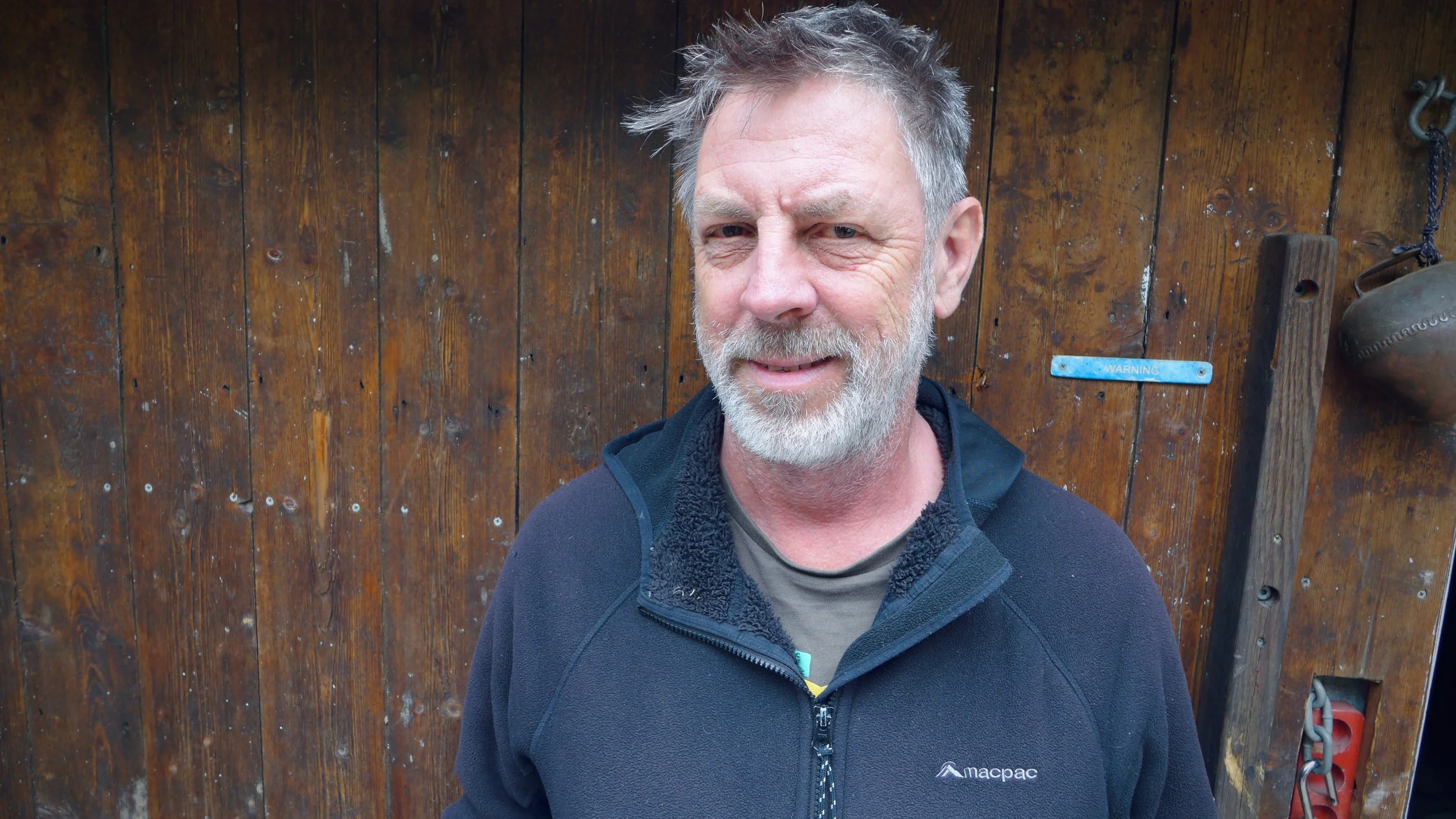
Artist Cameron Robbins. Photo by Megan Spencer.