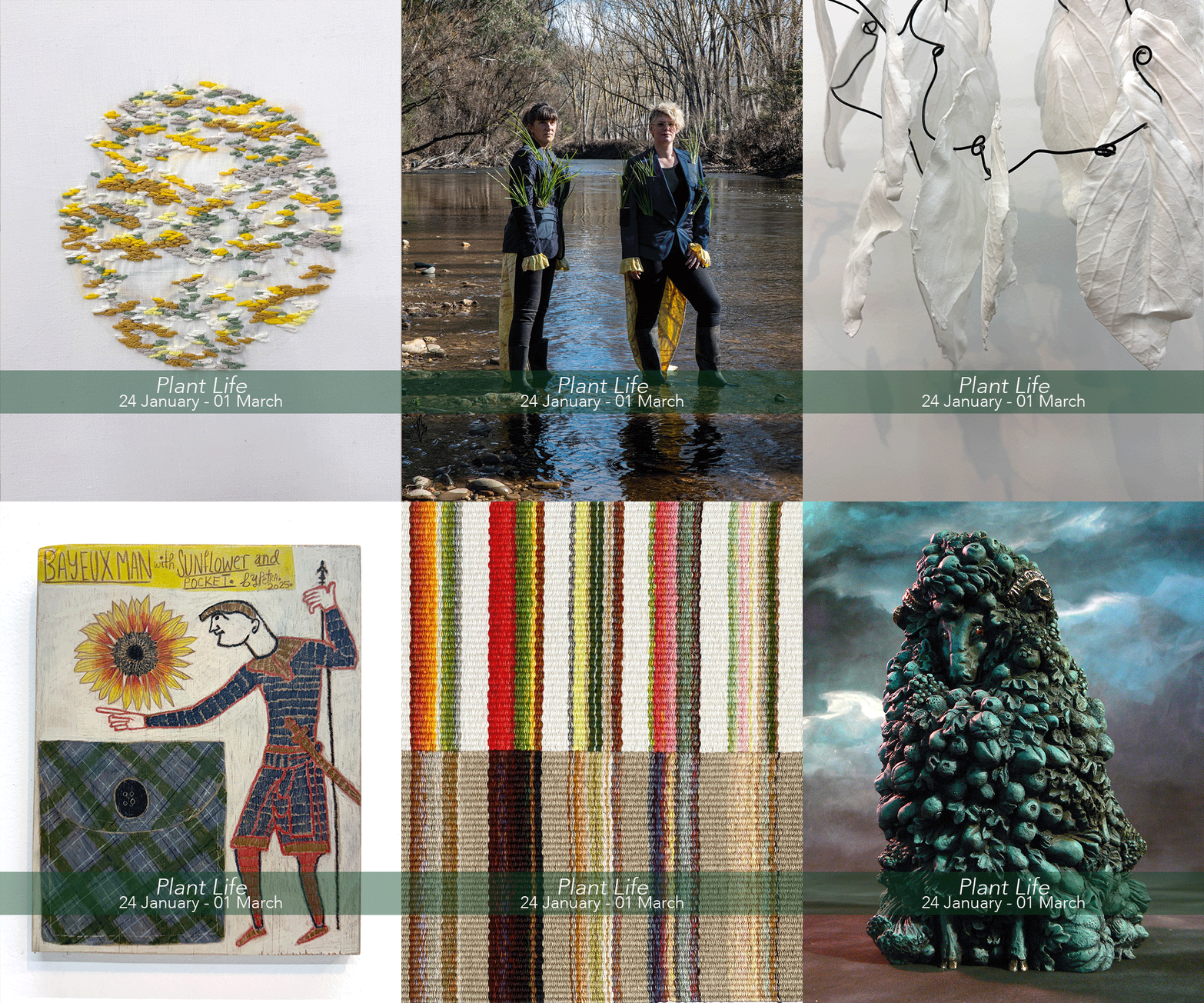
Plant Life

Stockroom Kyneton, all galleries
24 January / 1 March 2026

Plant Life

Sofi Basseghi, Steven Bellosgardo, Kris Coad, Amber Cronin, Rhett D’Costa, Beverly Downs, William Eicholtz, Peter Ellis, Gracia Haby & Louise Jennison, Clare McCracken & Heather Hesterman, Anthea Kemp, Sara Lindsay, Sally Mannall, Julie Millowick, Betty Mula, Laetitia Olivier-Gargano, Petra Rodgers, Sarah Rudledge, Jason Waterhouse, Lisa Waup, Rosie Weiss
I CATALOGUE I

Exhibition Statement:


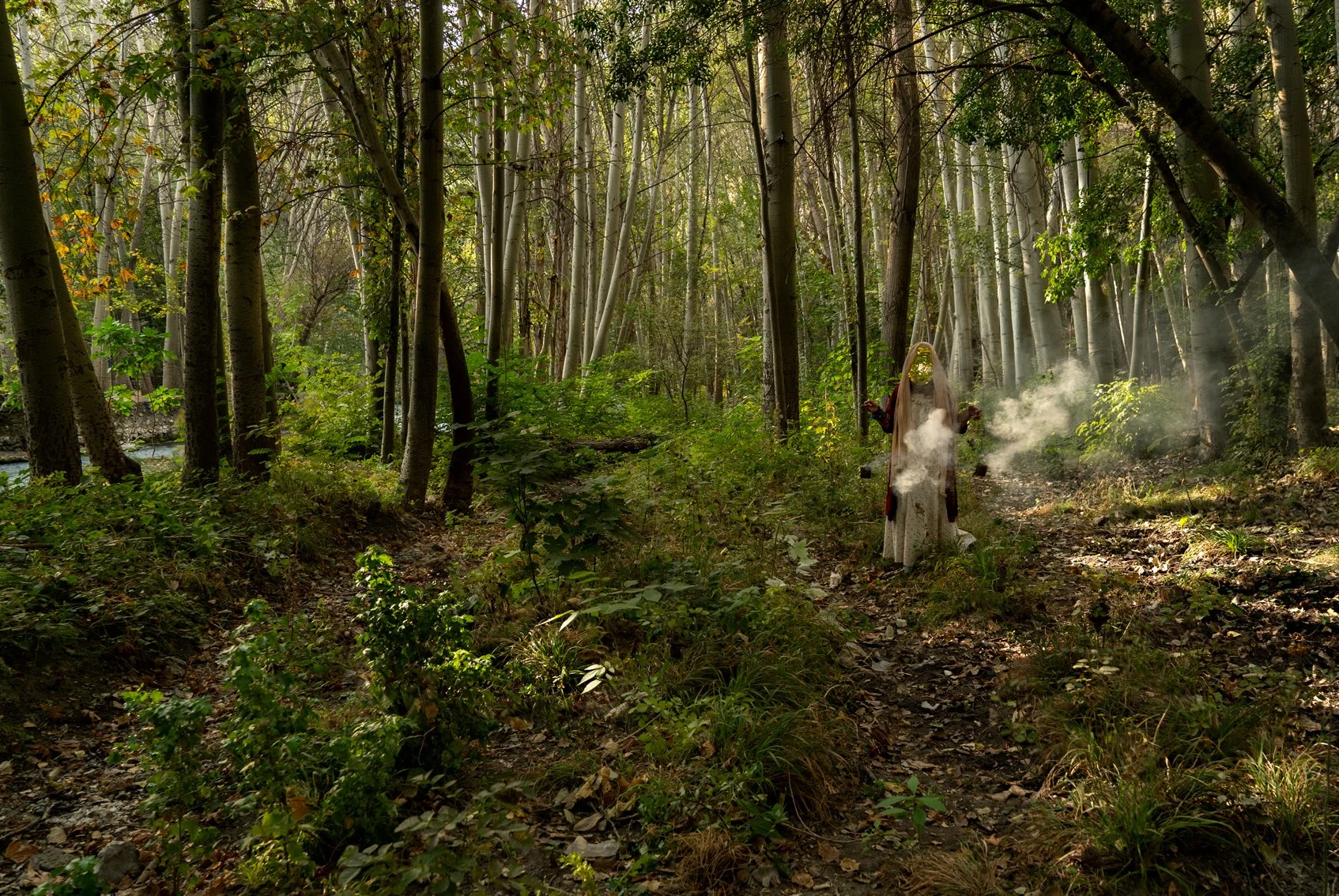
It’s been days and she hasn’t moved. She just stands in the backyard. She says she doesn’t need anything, that she’s drawing water from the air and the ground and her energy from the sun. Last night it rained and I begged her to come inside. She shook her head slowly, as if doing so caused her pain. I took out an umbrella and held it over her, but she growled so deeply and inhumanely that I dropped it and fled inside.

In the morning, Travis comes around and I make him coffee. We sit down next to her, hoping the aroma will tempt her.

It doesn’t.

‘She’s given up,’ Travis says.

‘That’s not what this is,’ I say. P1.

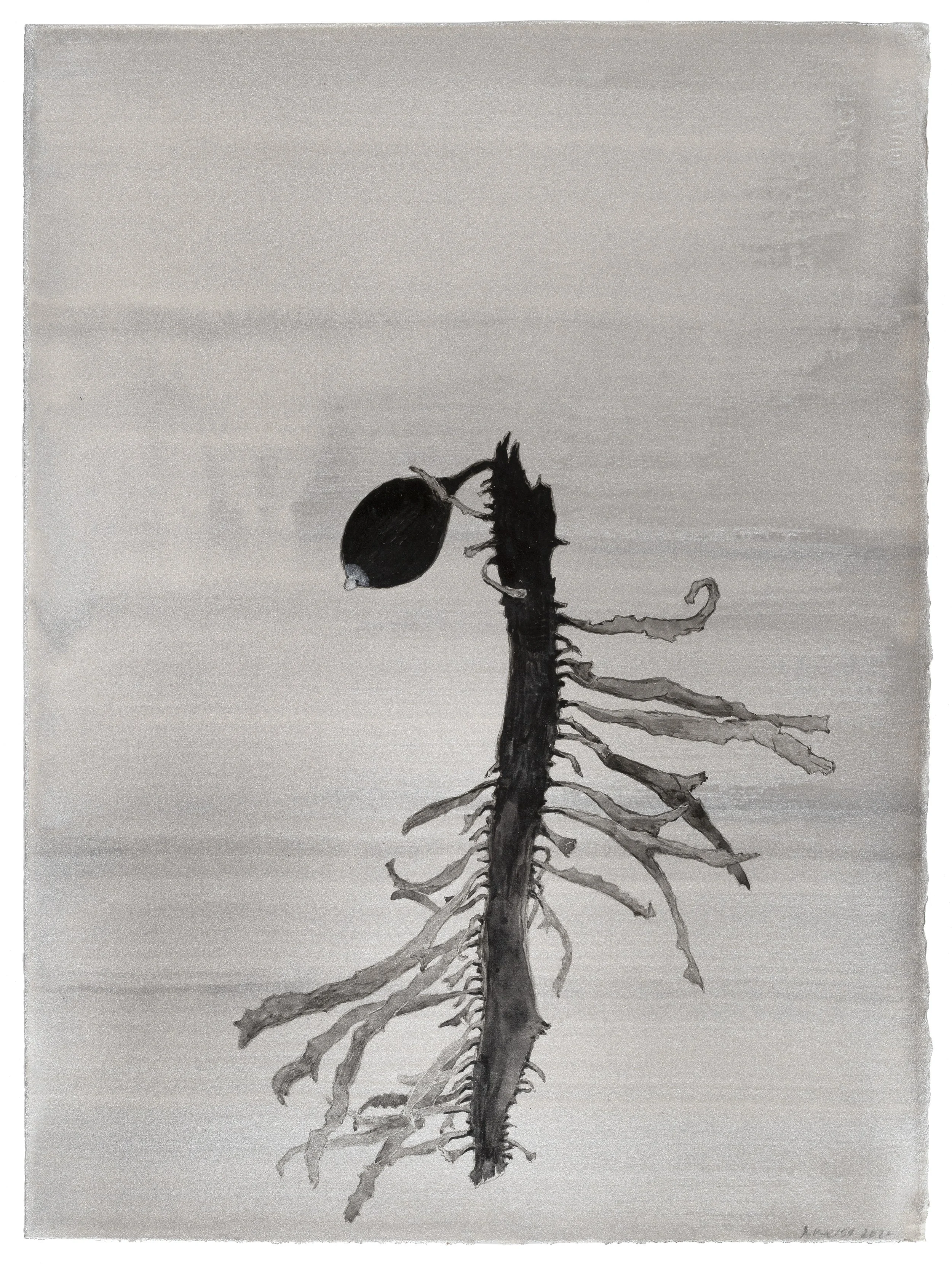
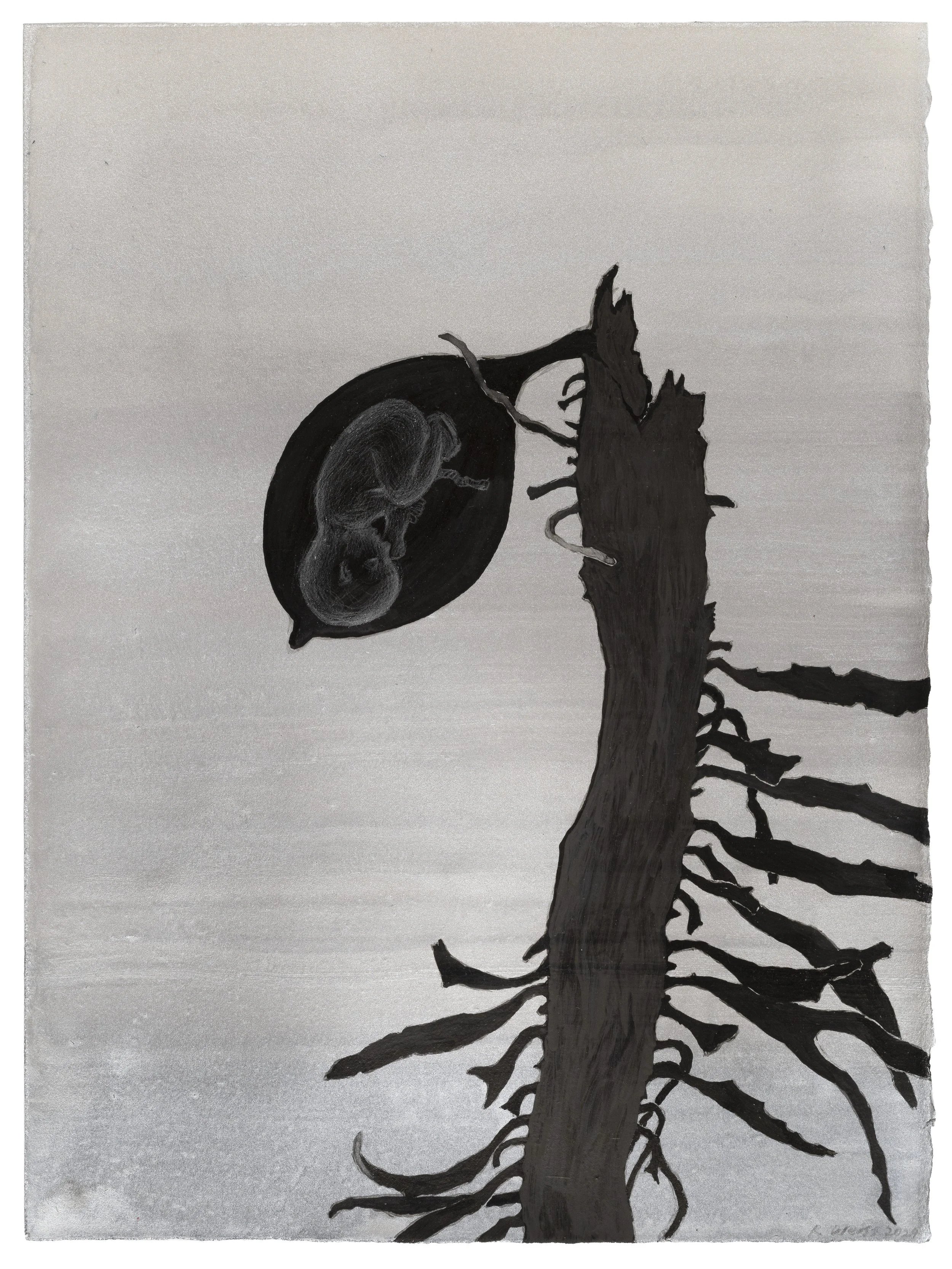
So begins Rhett Davis’ new book, Arborescence. In the novel, Davis puts forward the idea of humans choosing to stand still so they can turn into trees. The term he uses to describe this phenomenon is aborescence. An unsettling and somewhat mind-bending idea, one which in these times of climate crisis and out of control capitalism, conjures up a multitude of reasons why it doesn’t seem like a bad idea. As a character in the book who chooses the path to aborescent explains,

‘ There’s so much that’s wrong … Imagine how much good I can do. I can help the earth heal. I can be part of the solution, not the problem.’ p237

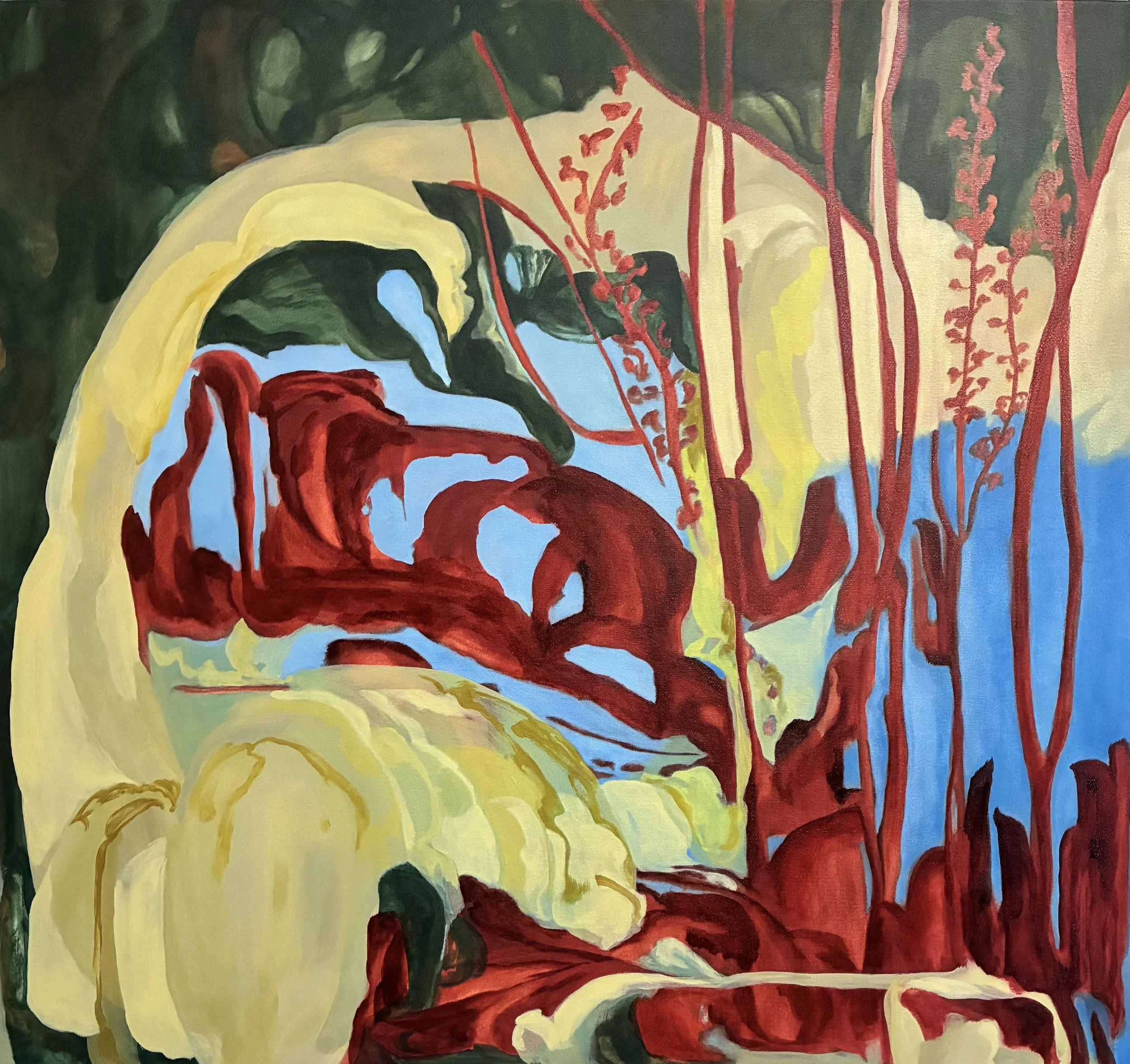
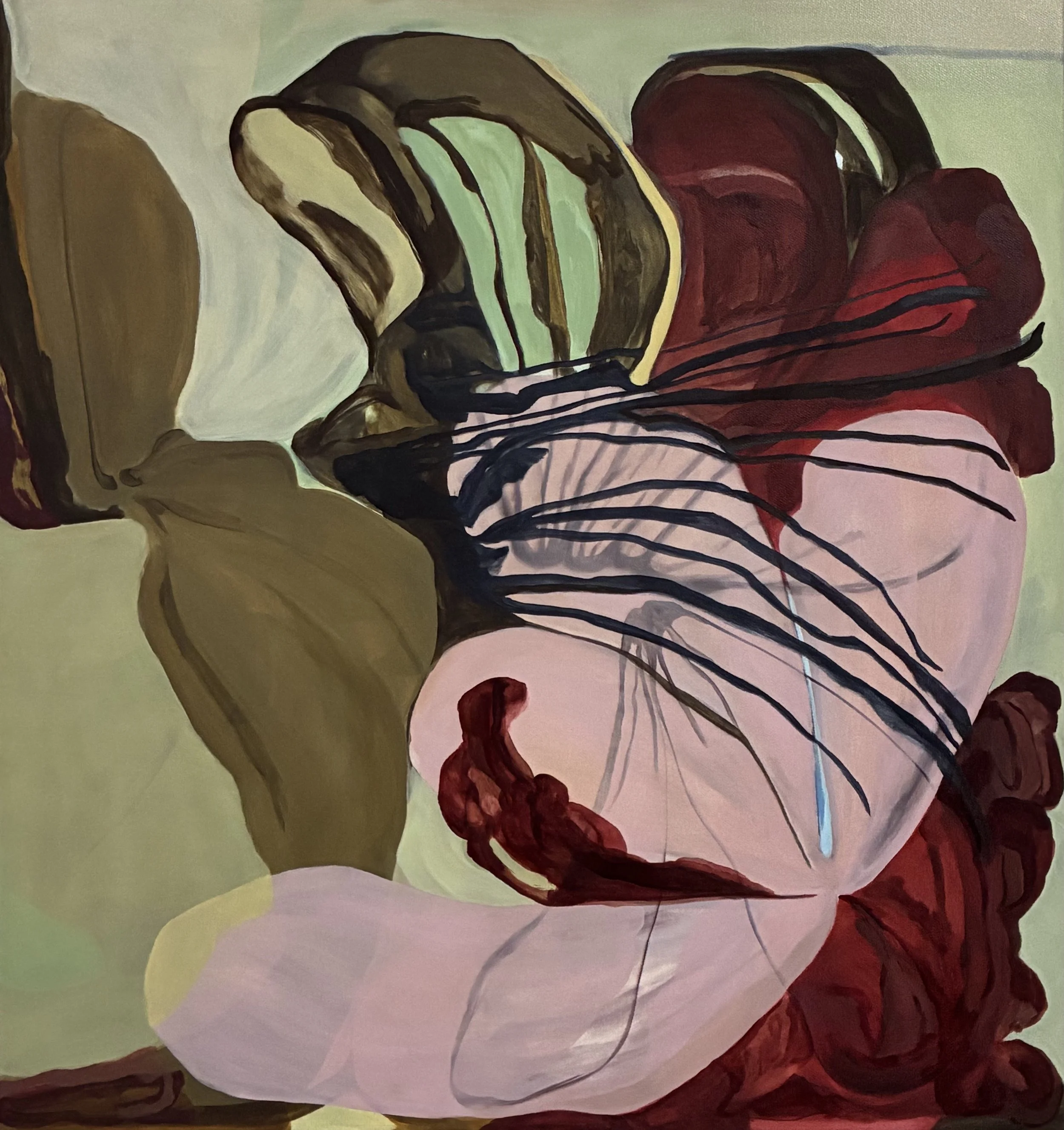
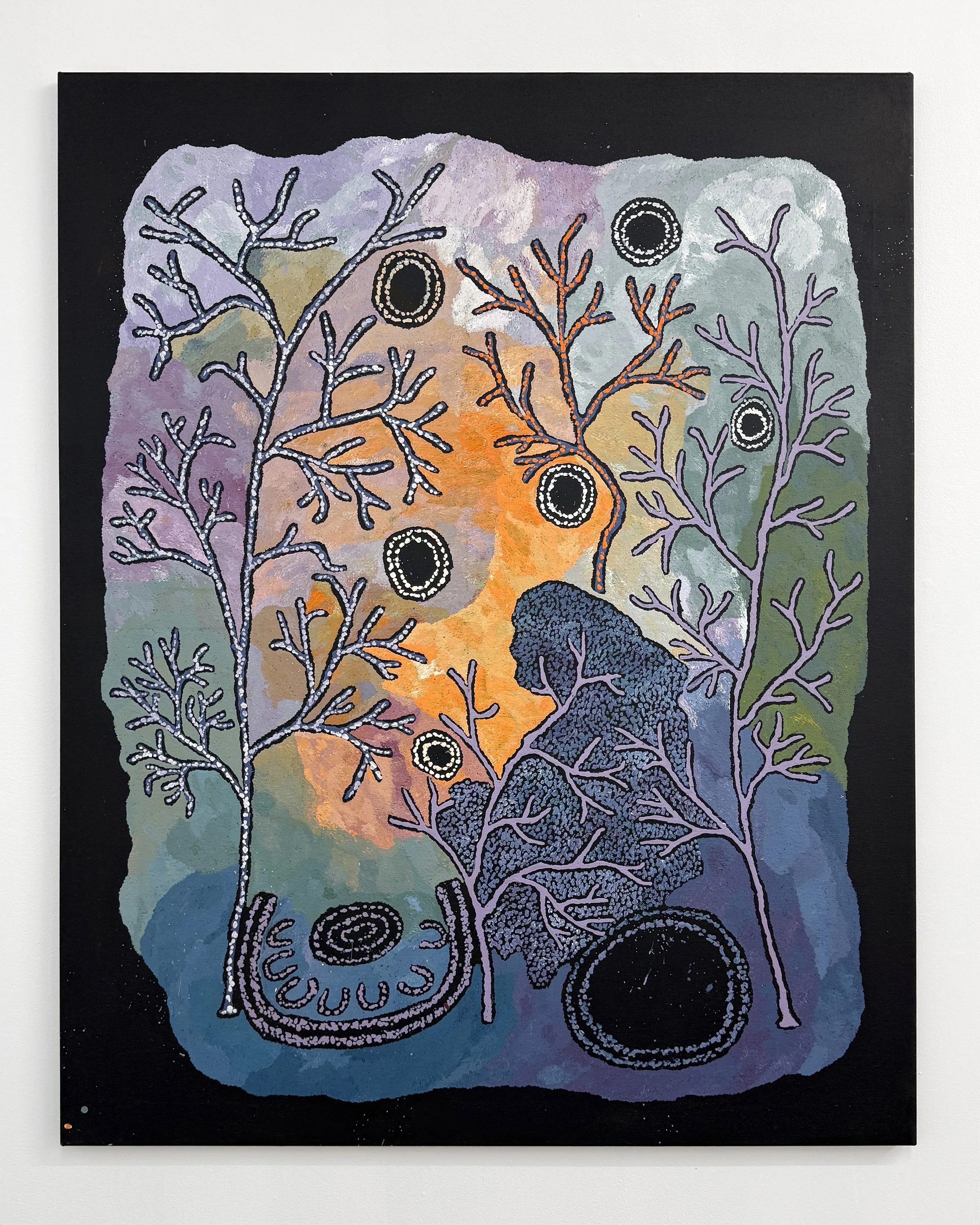
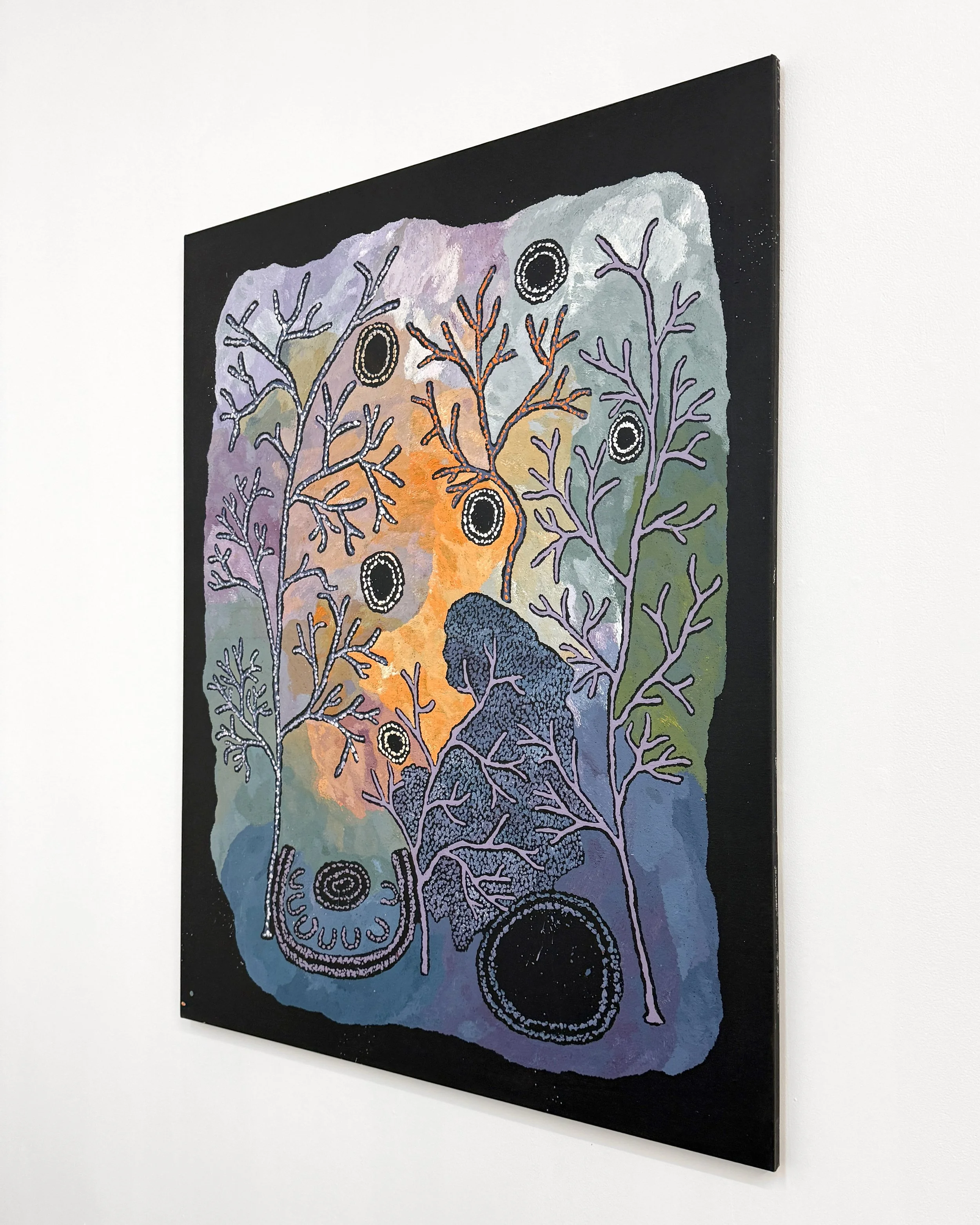
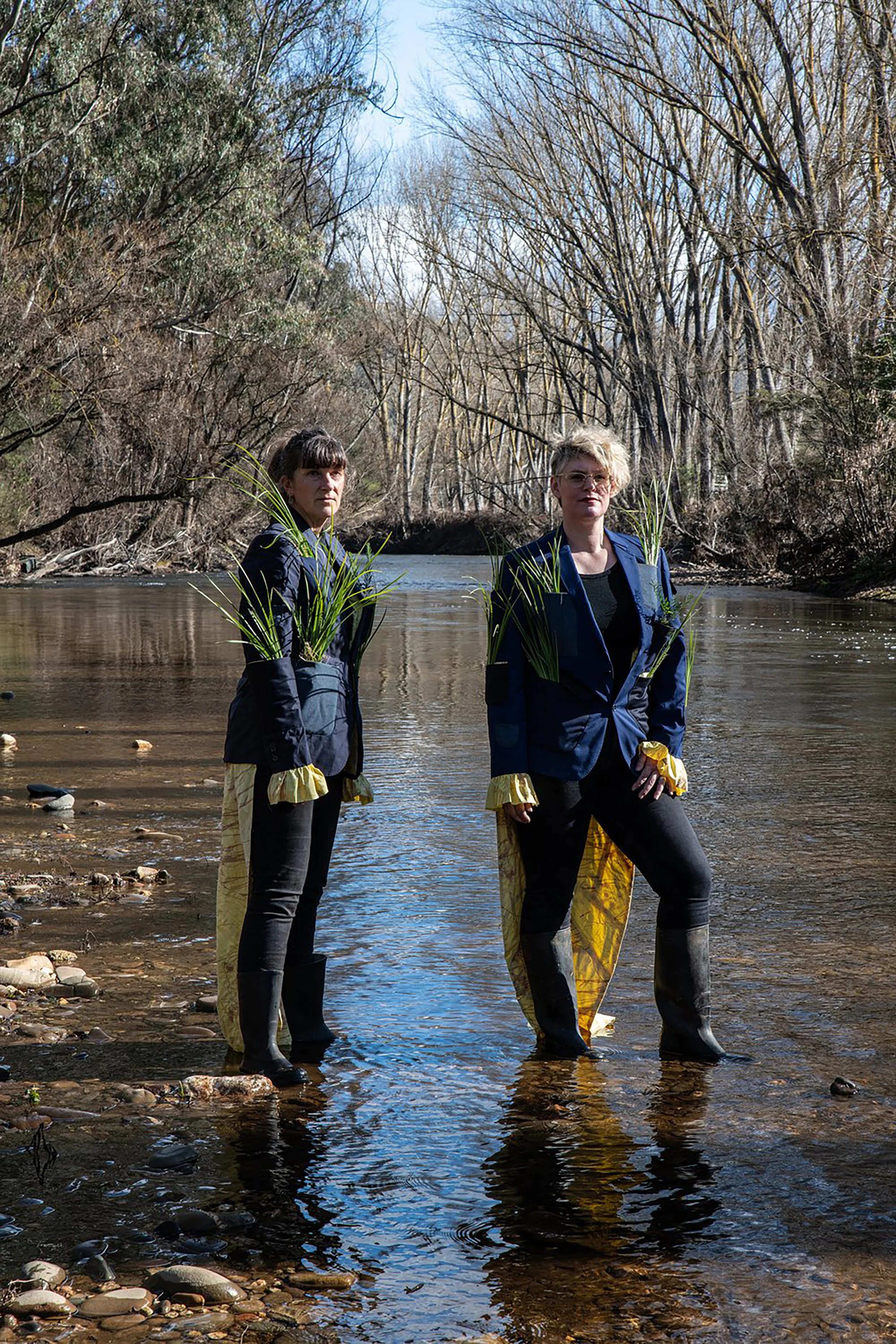
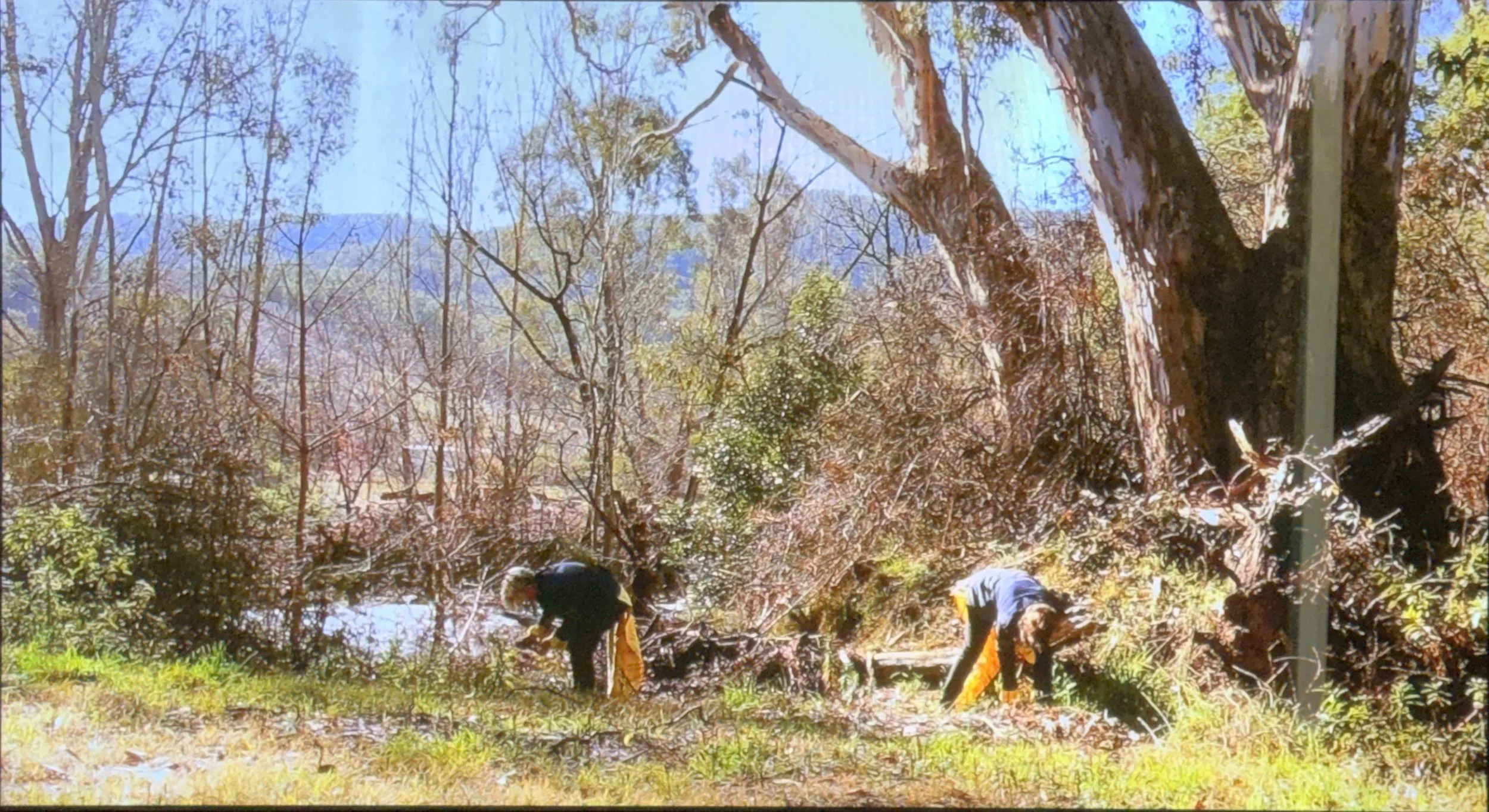
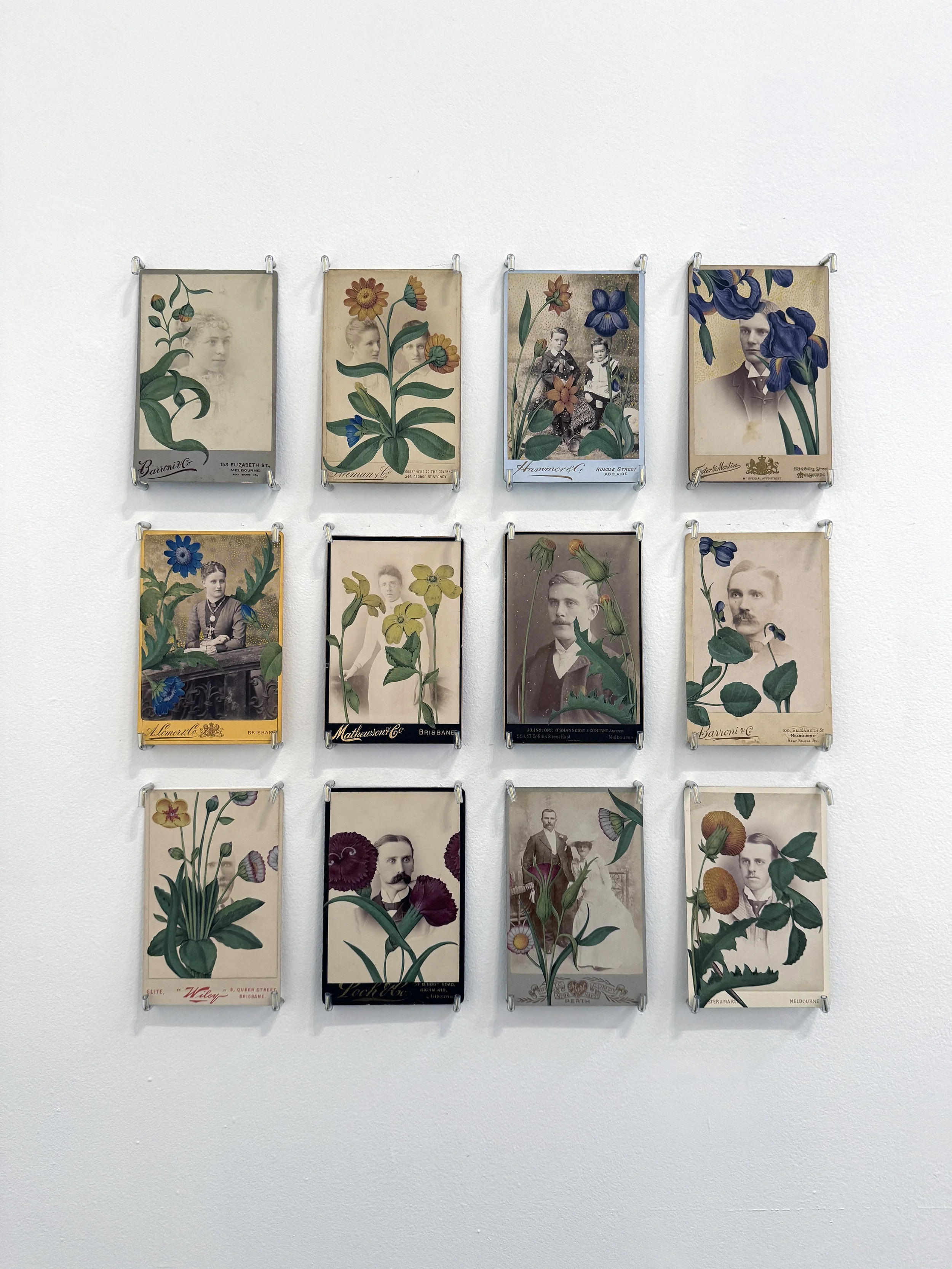
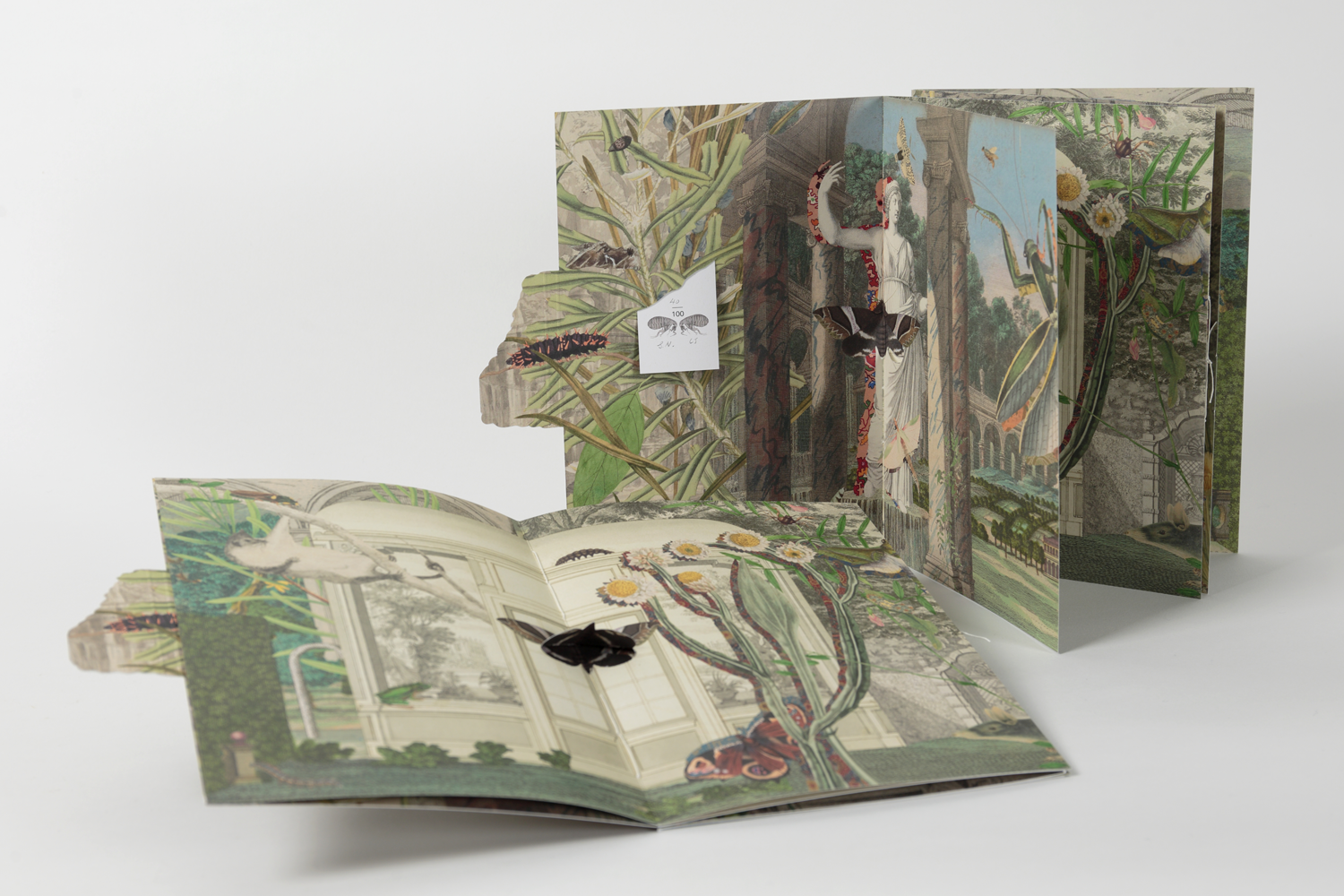
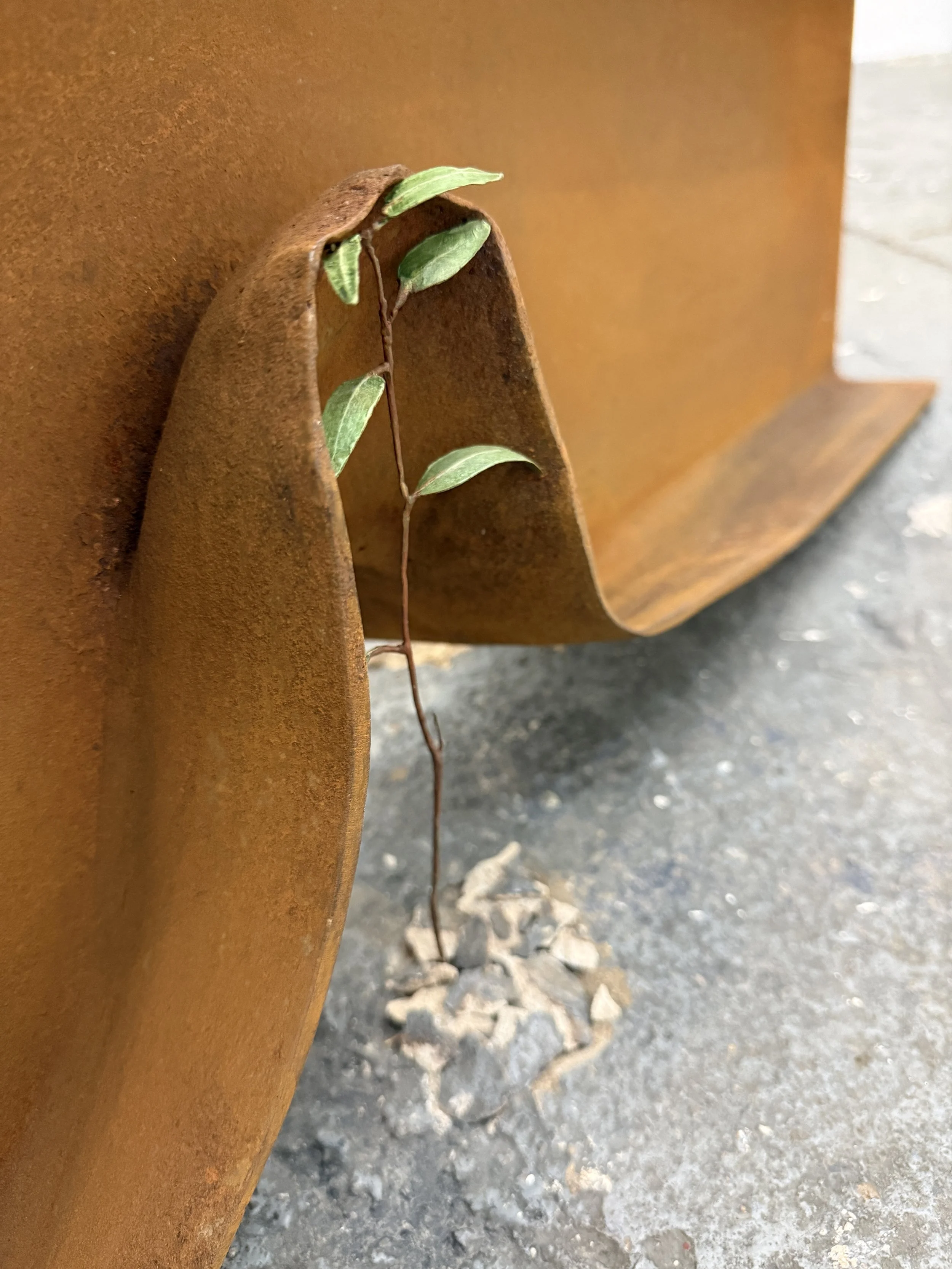
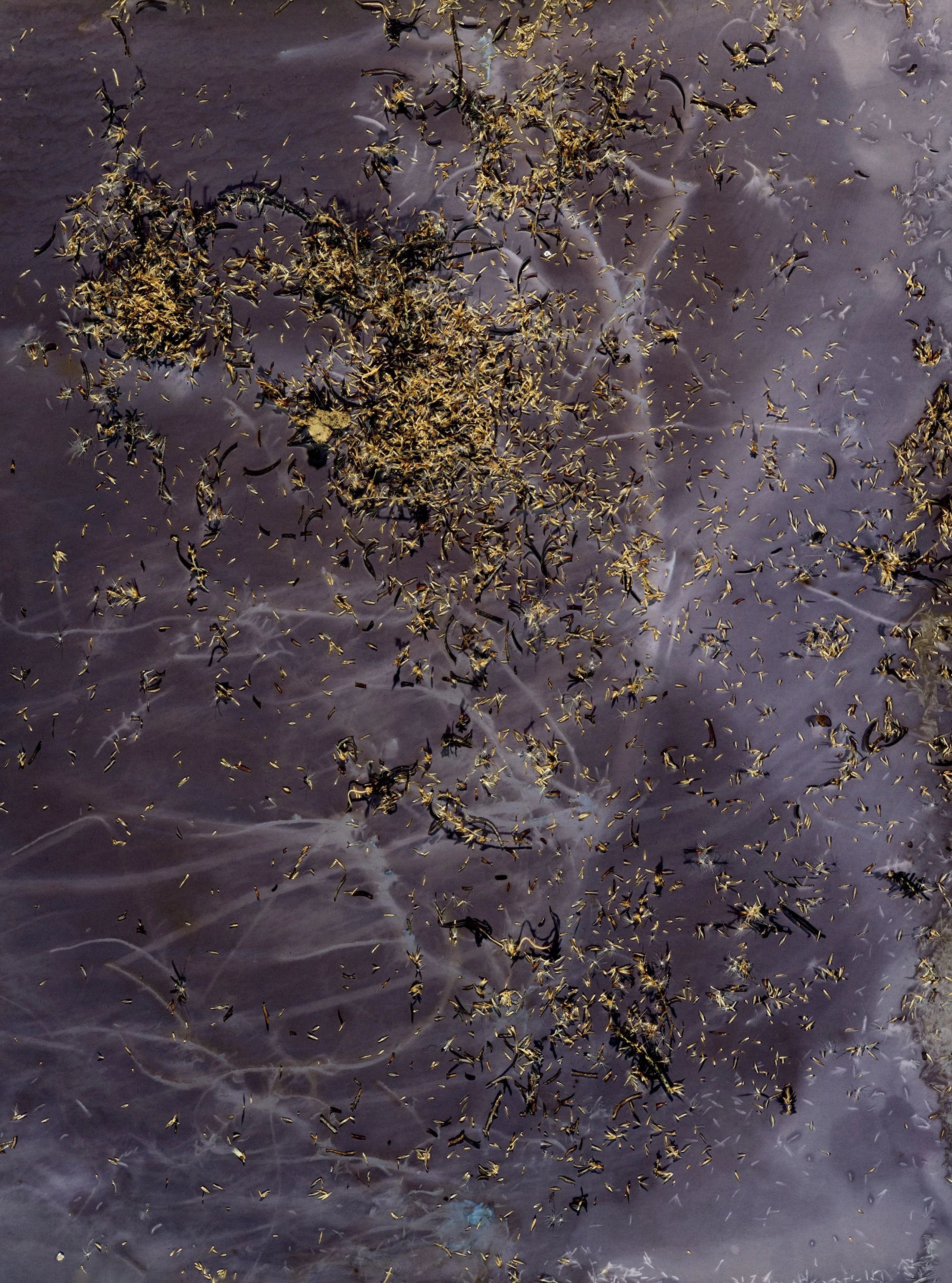
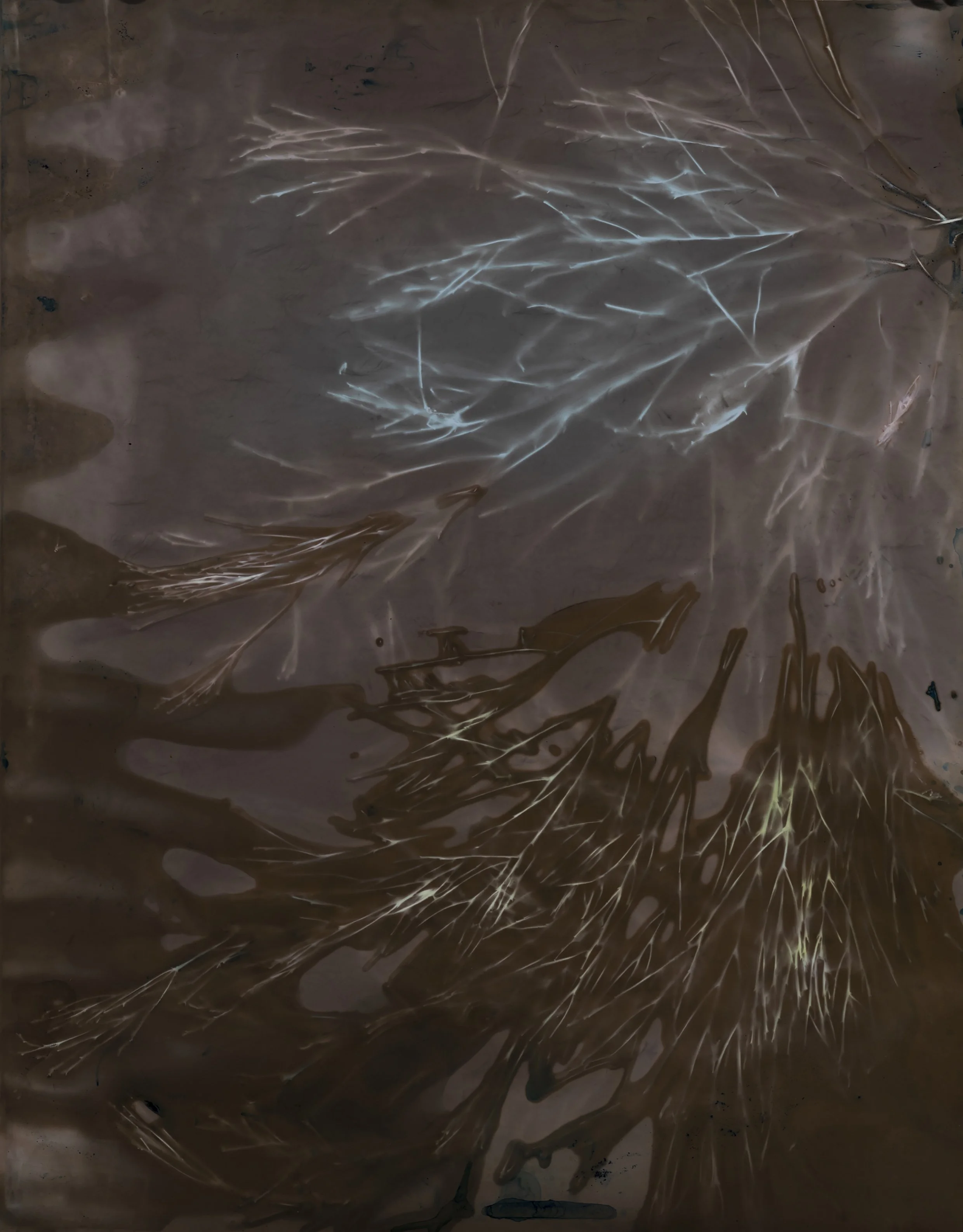
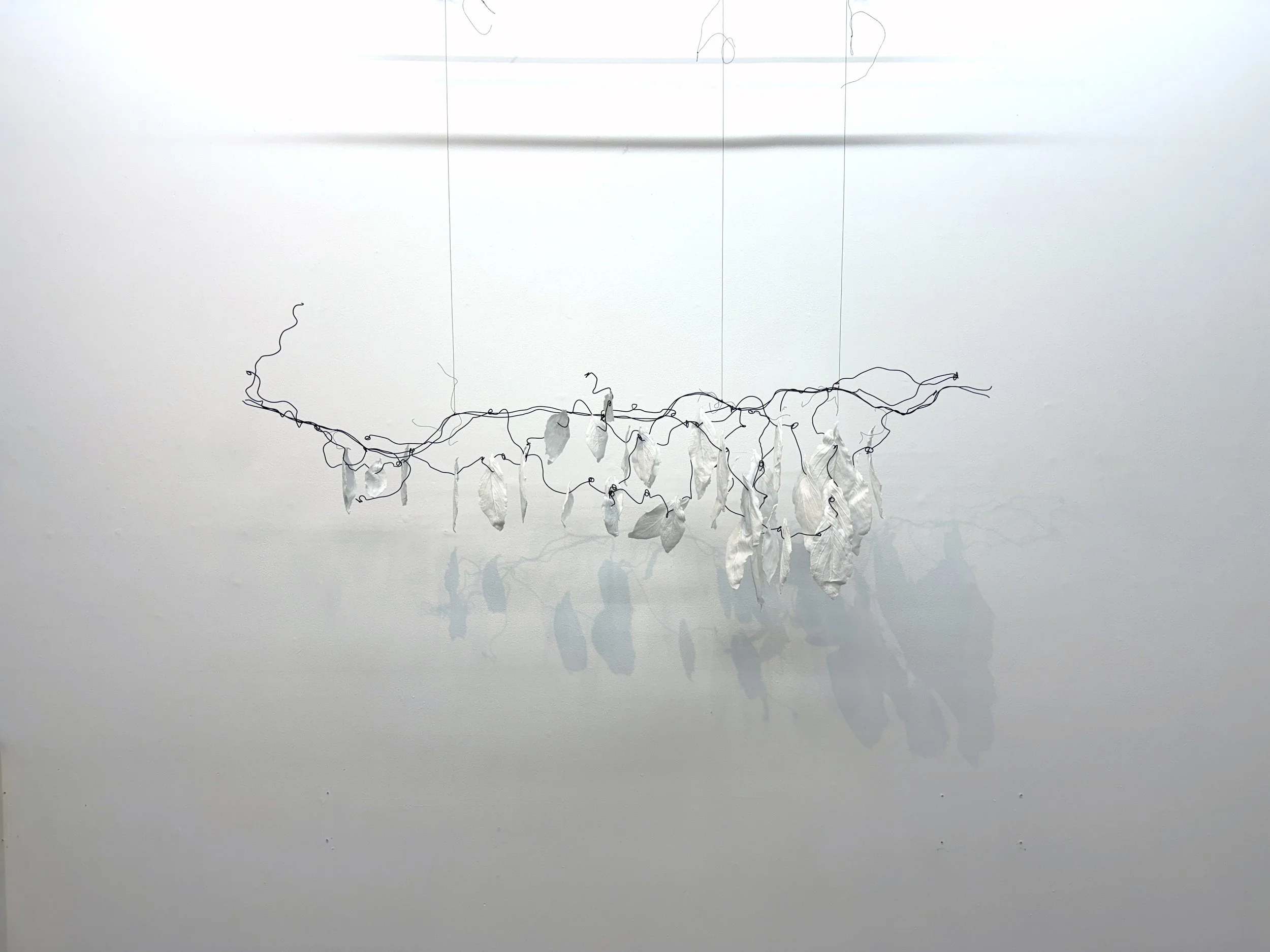
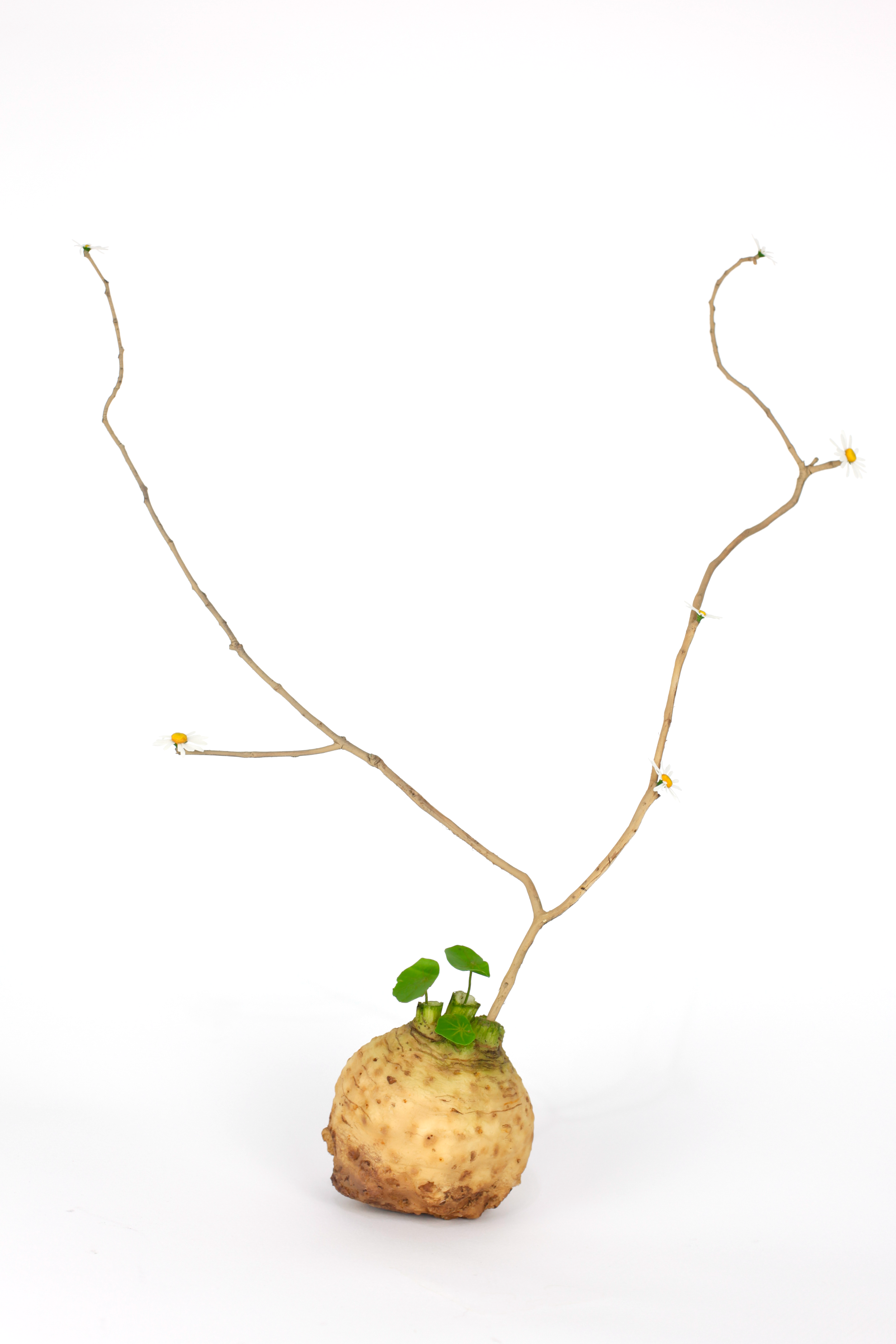
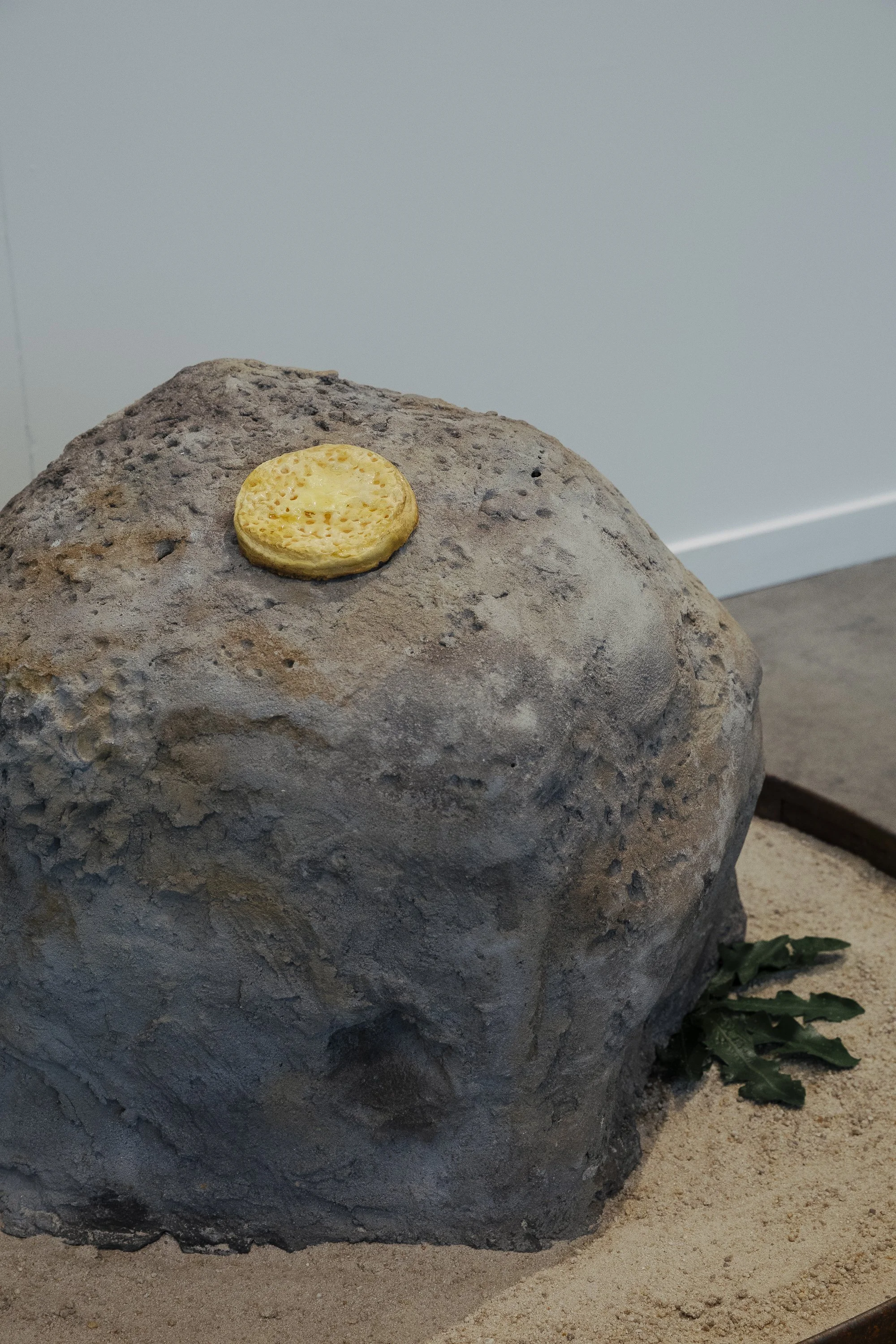
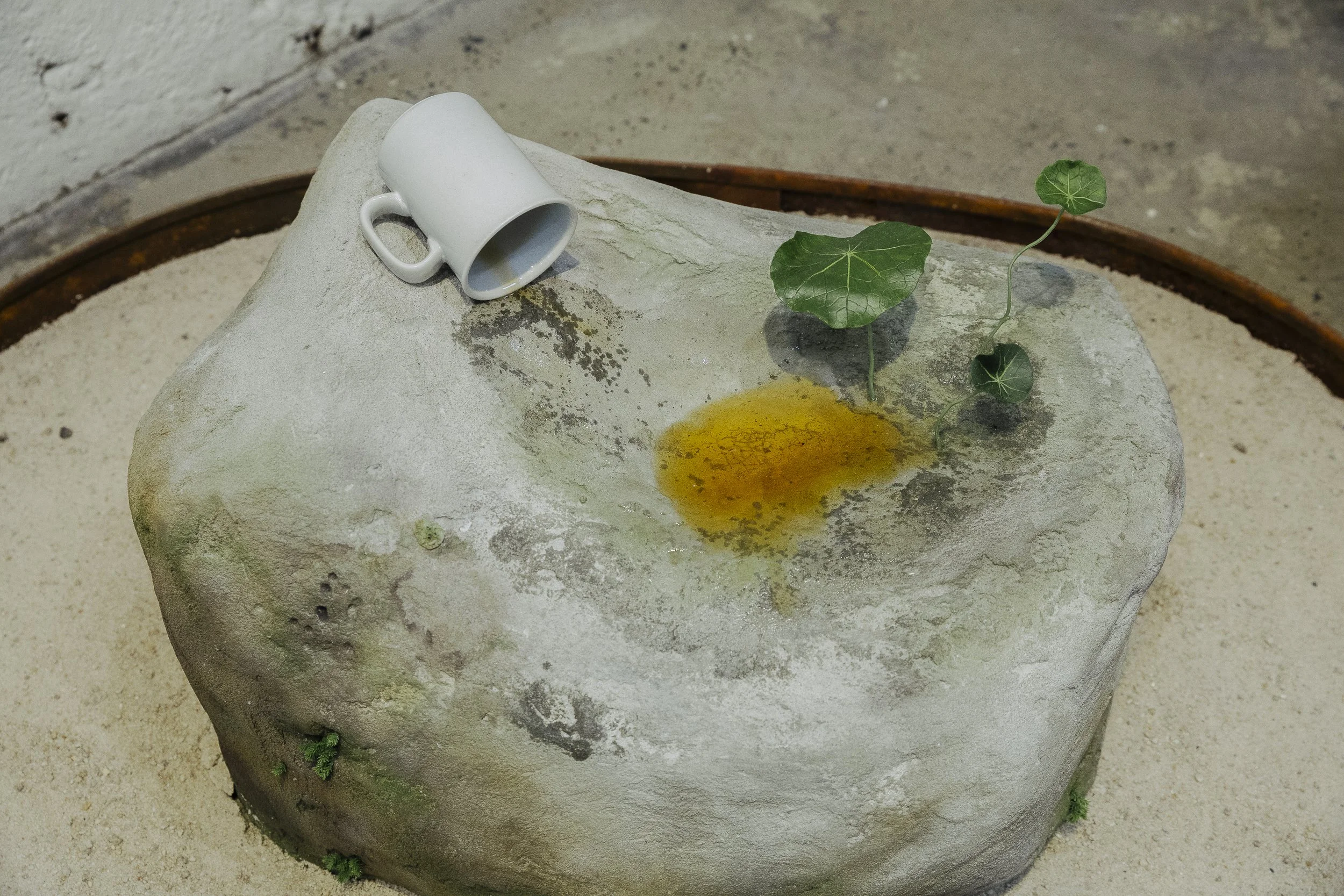
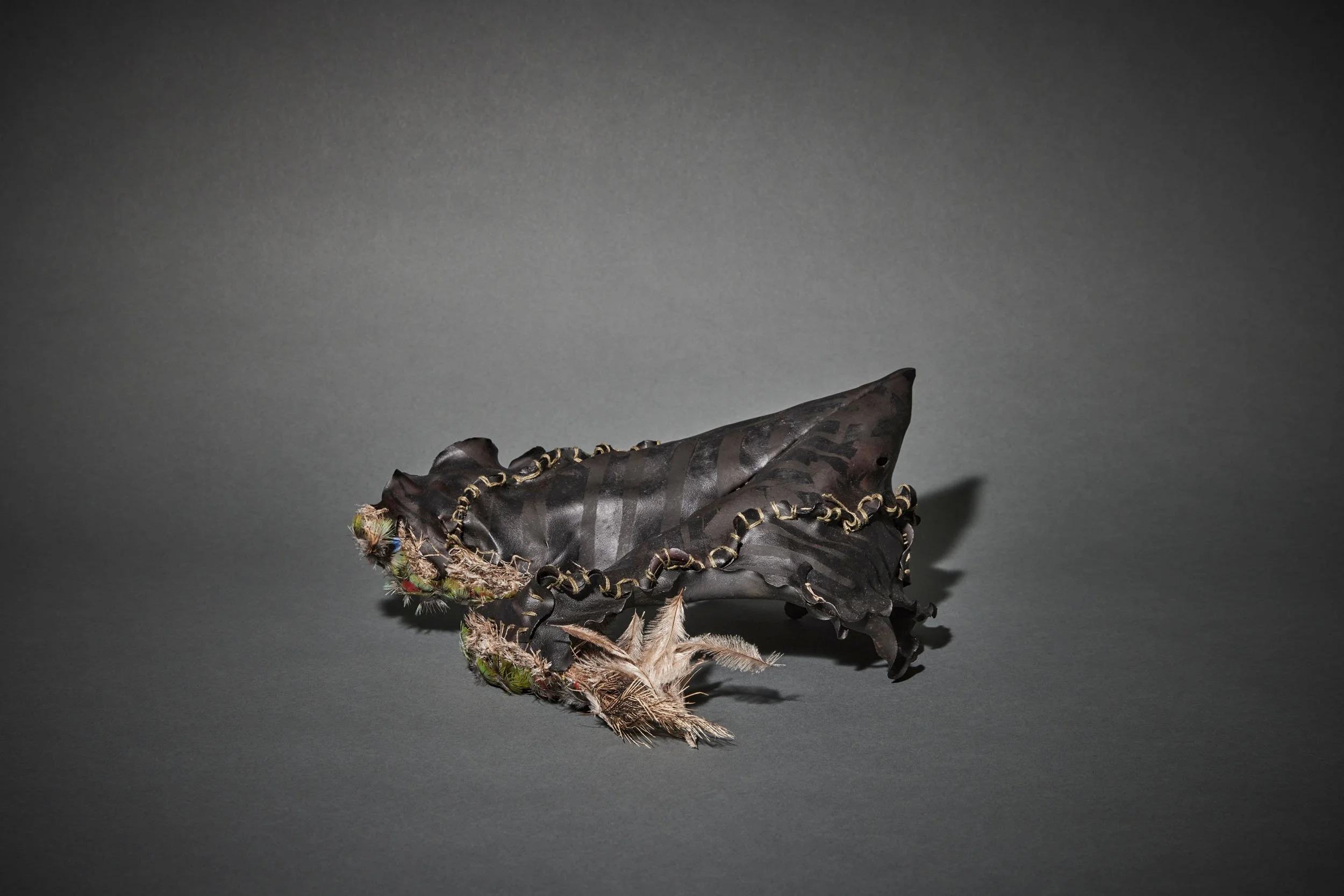
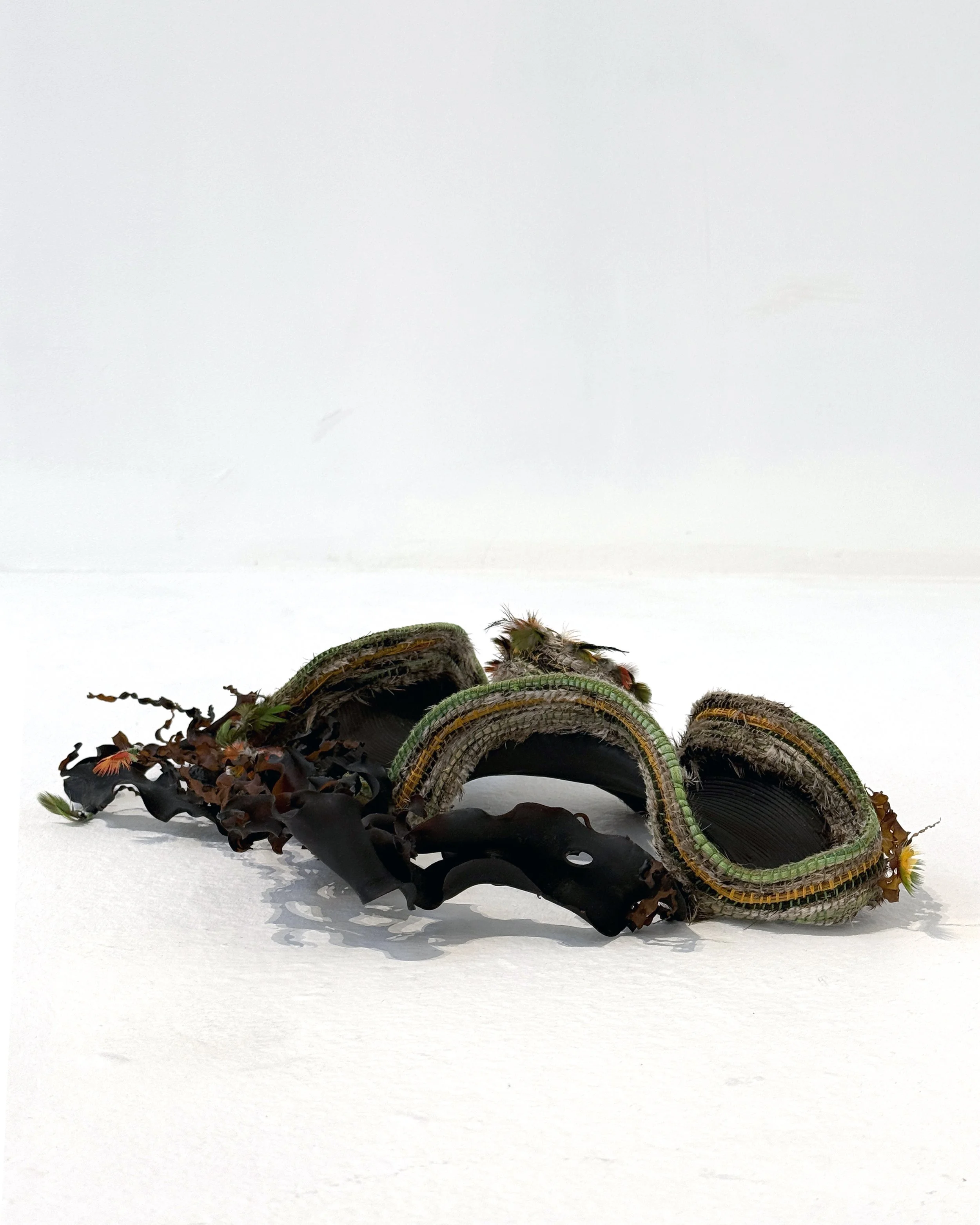
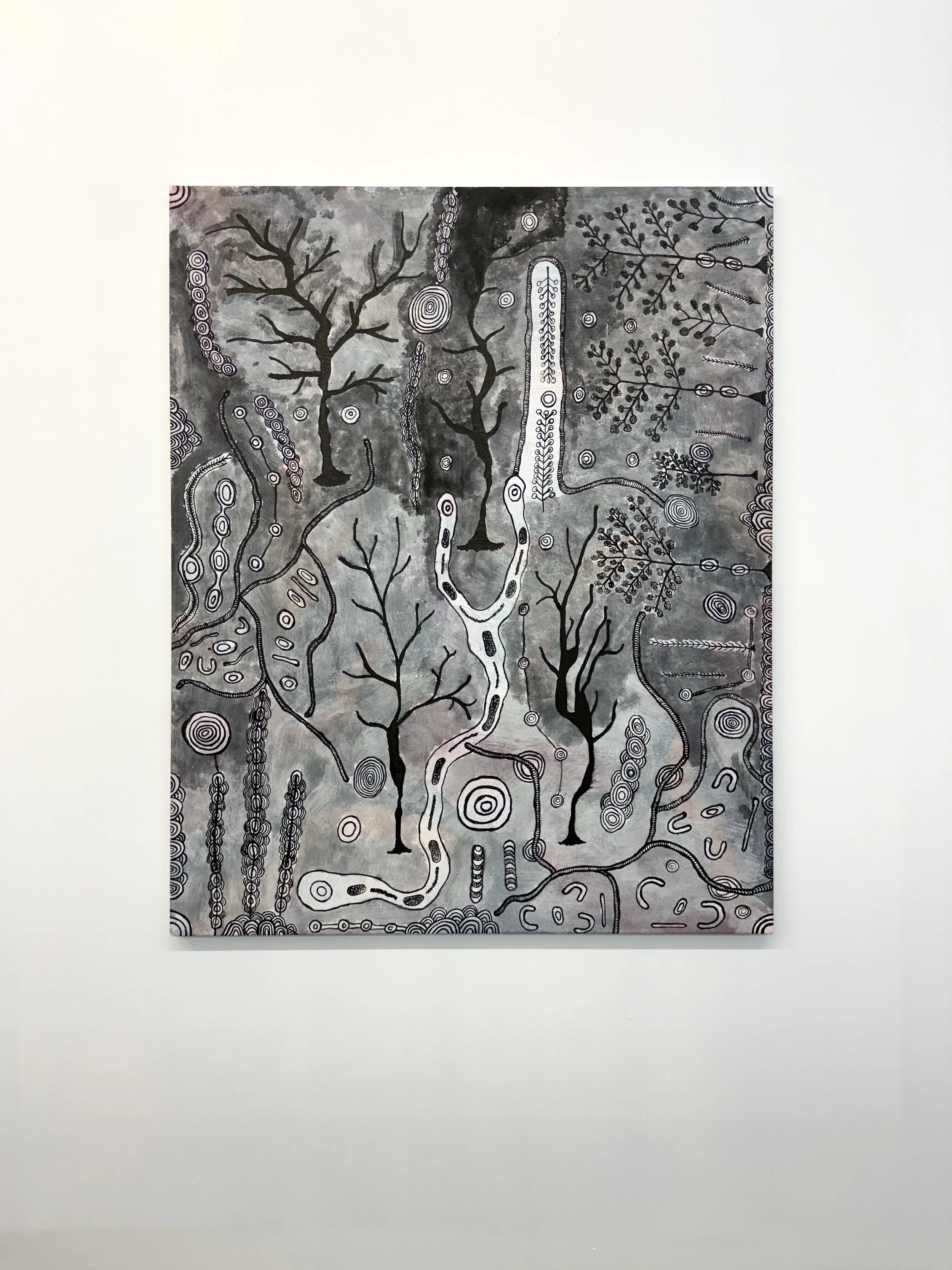
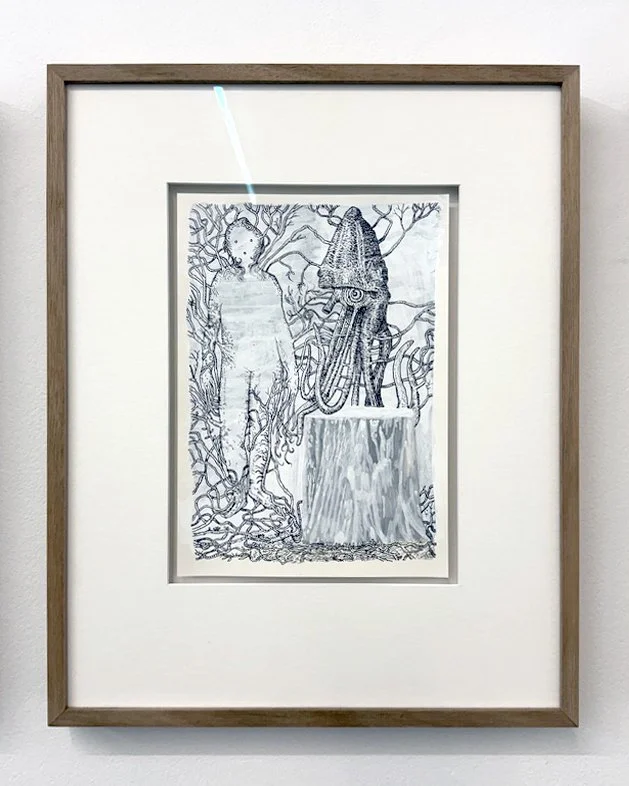
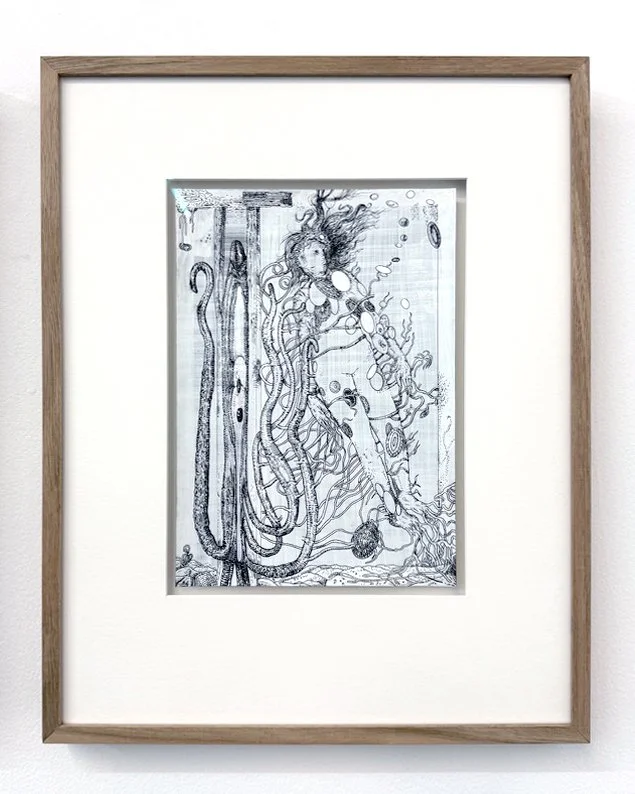
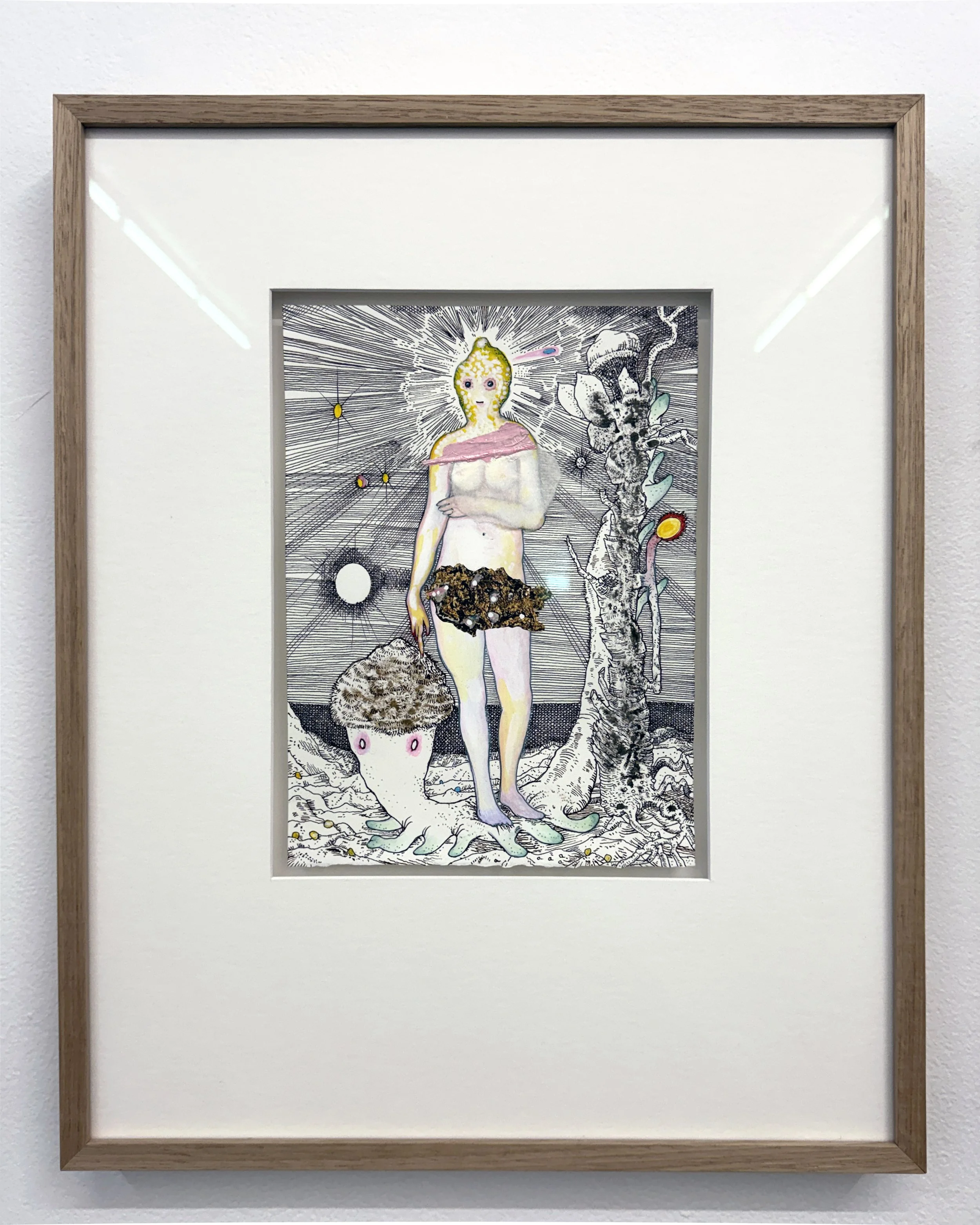
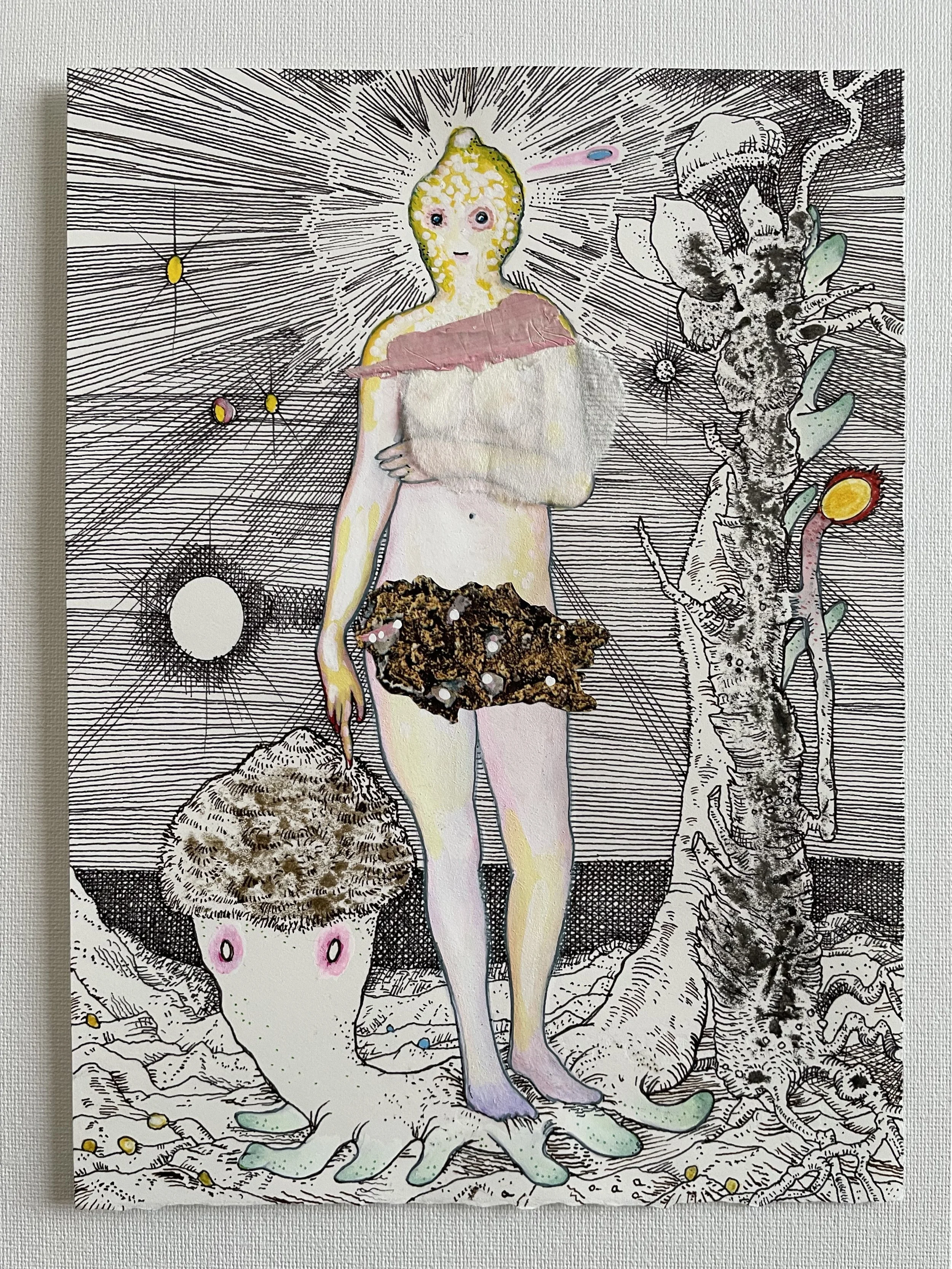
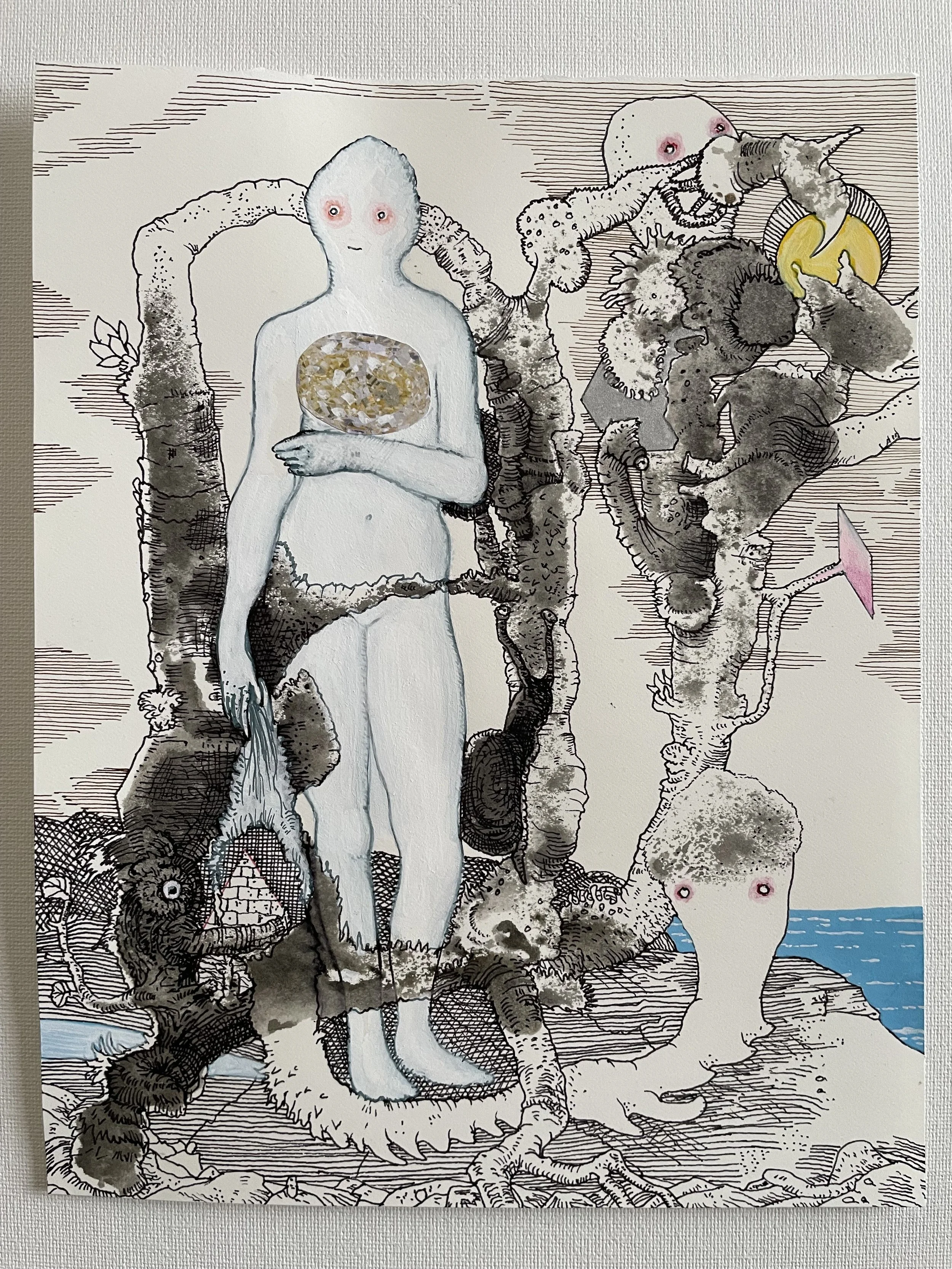
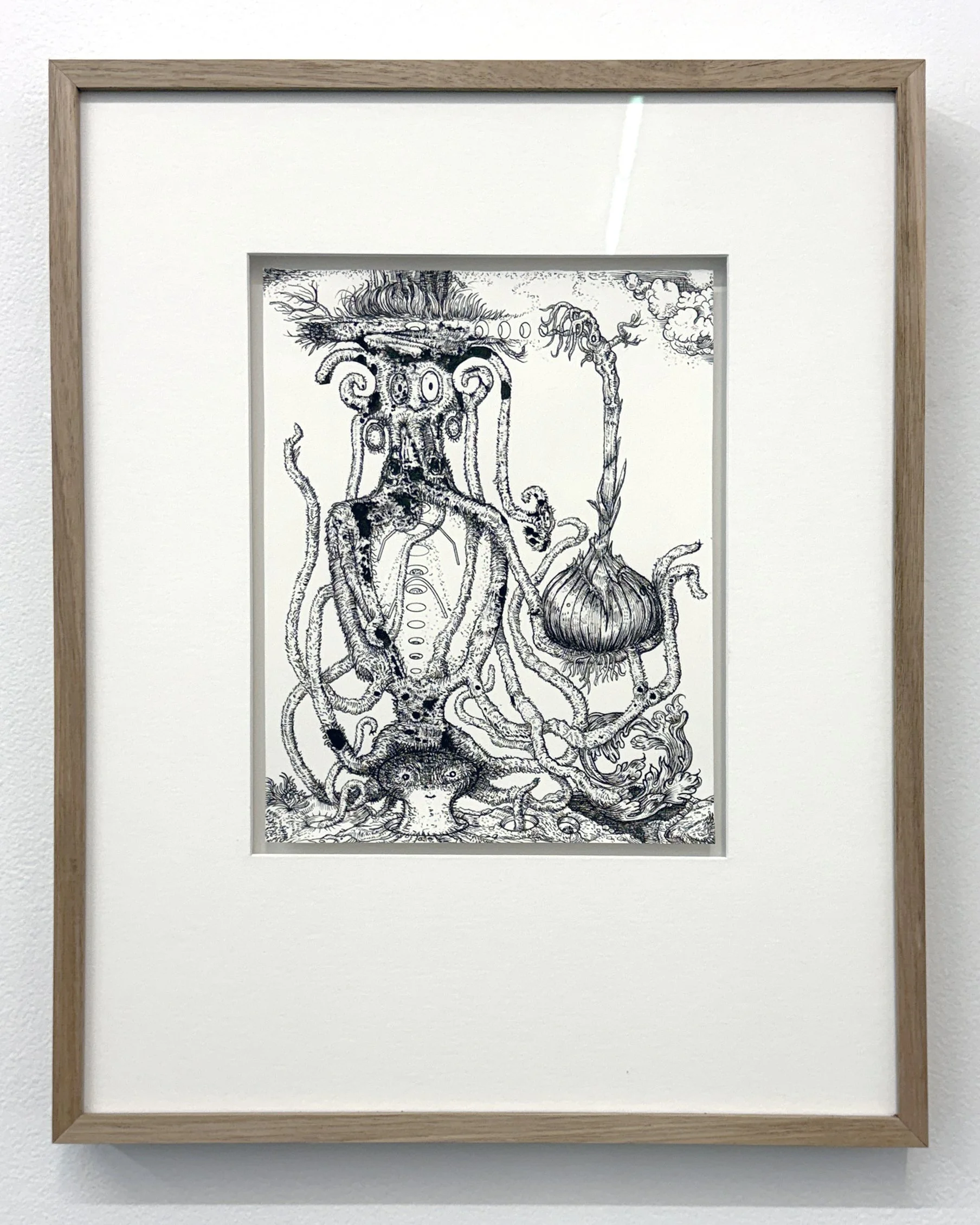
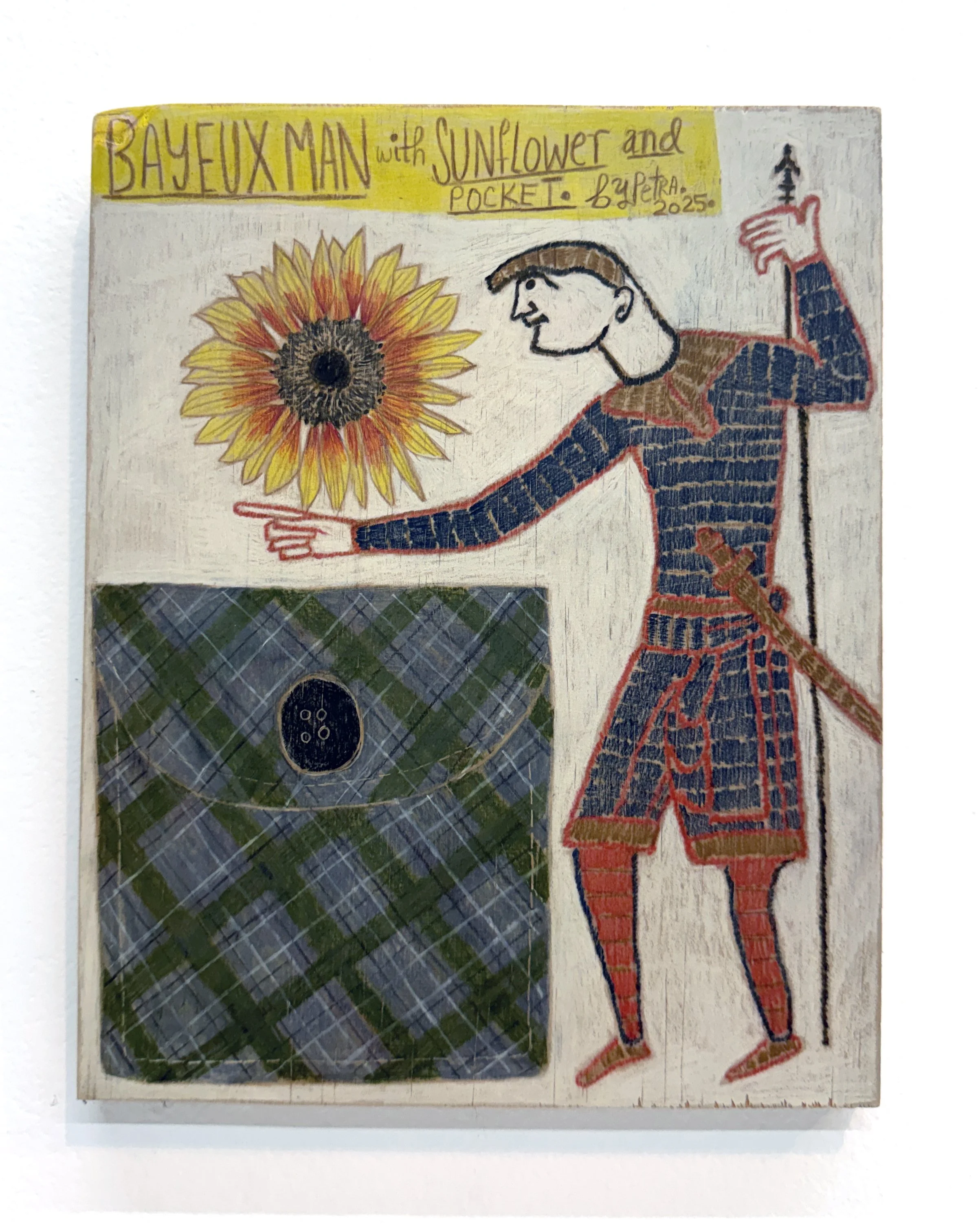
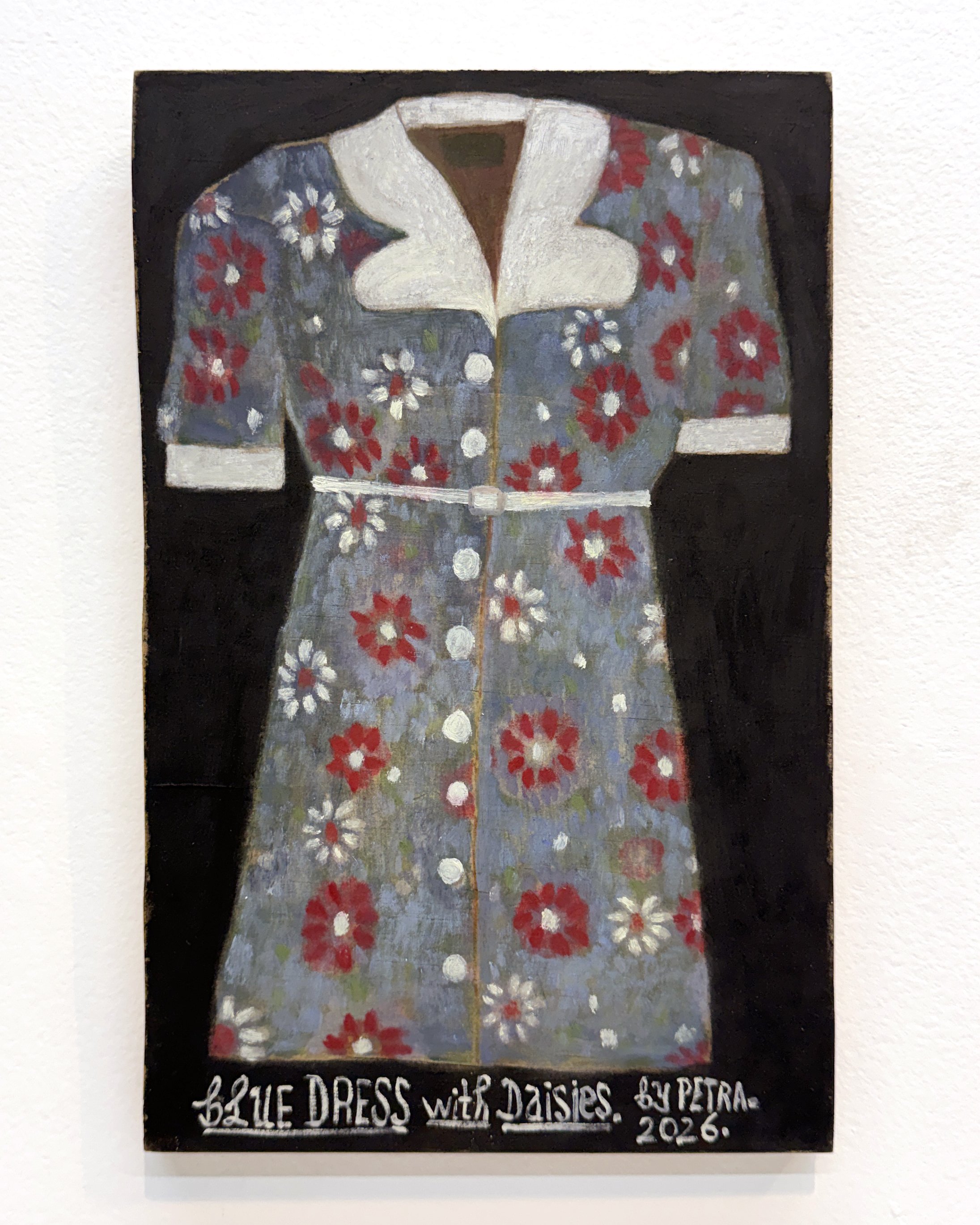
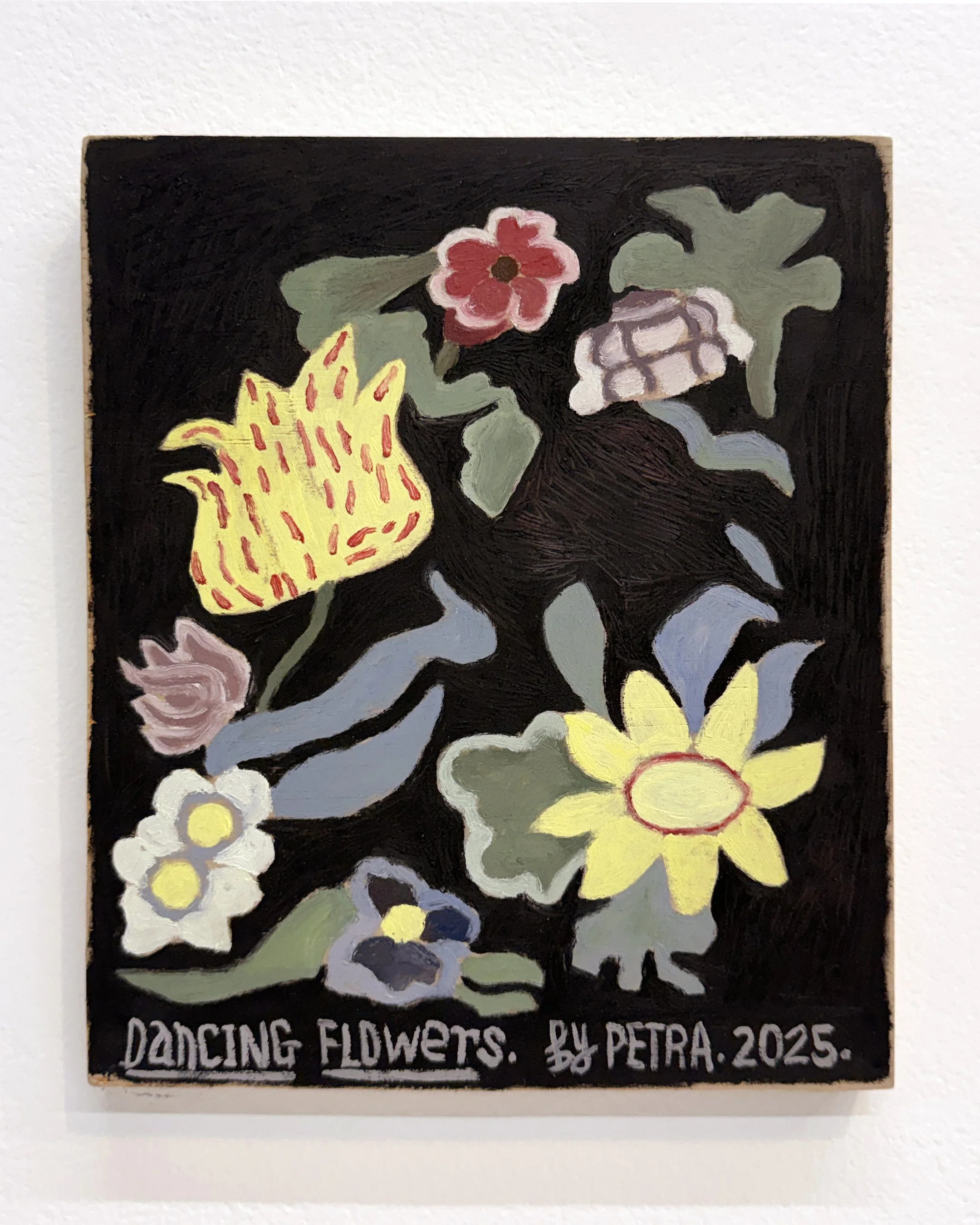
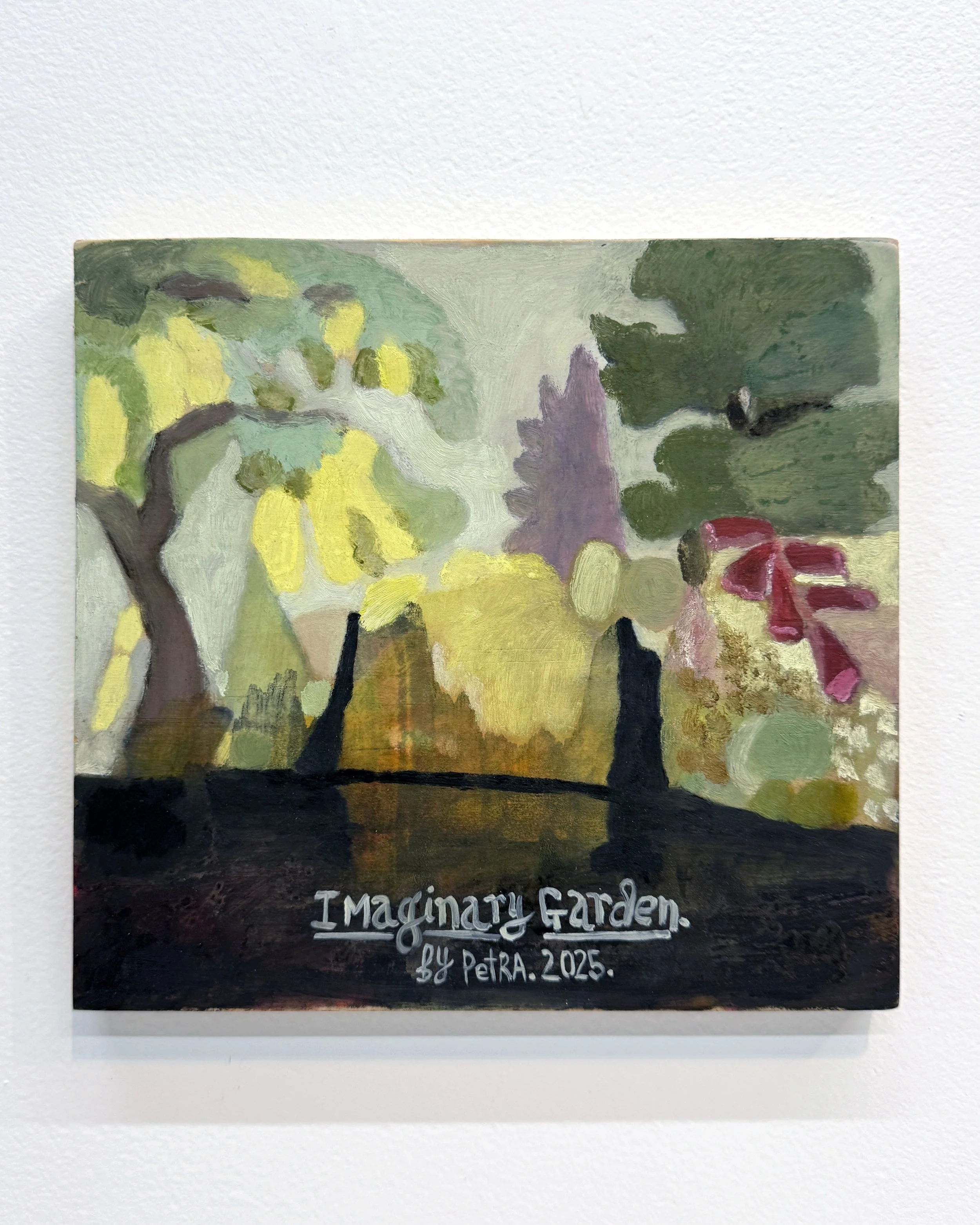
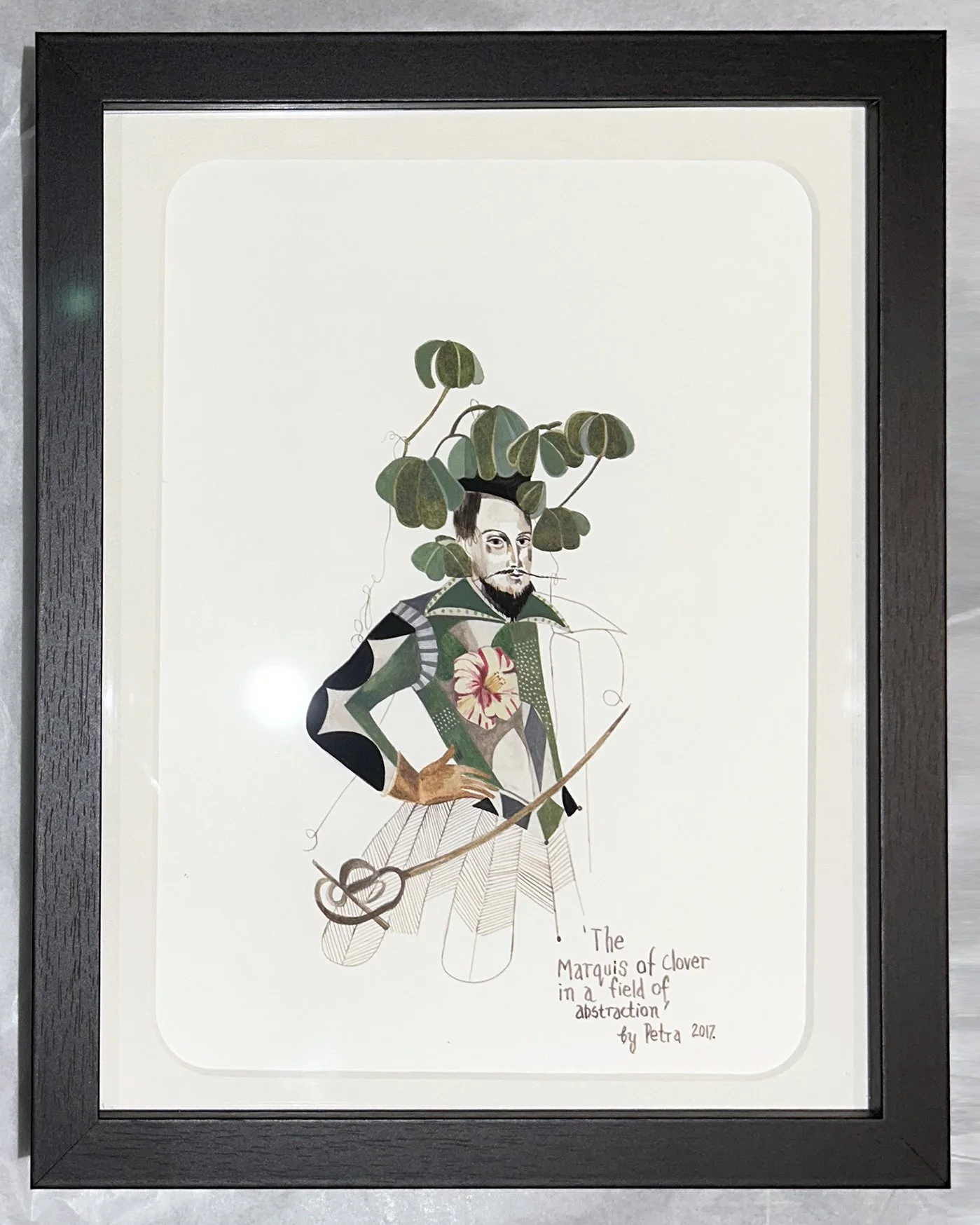
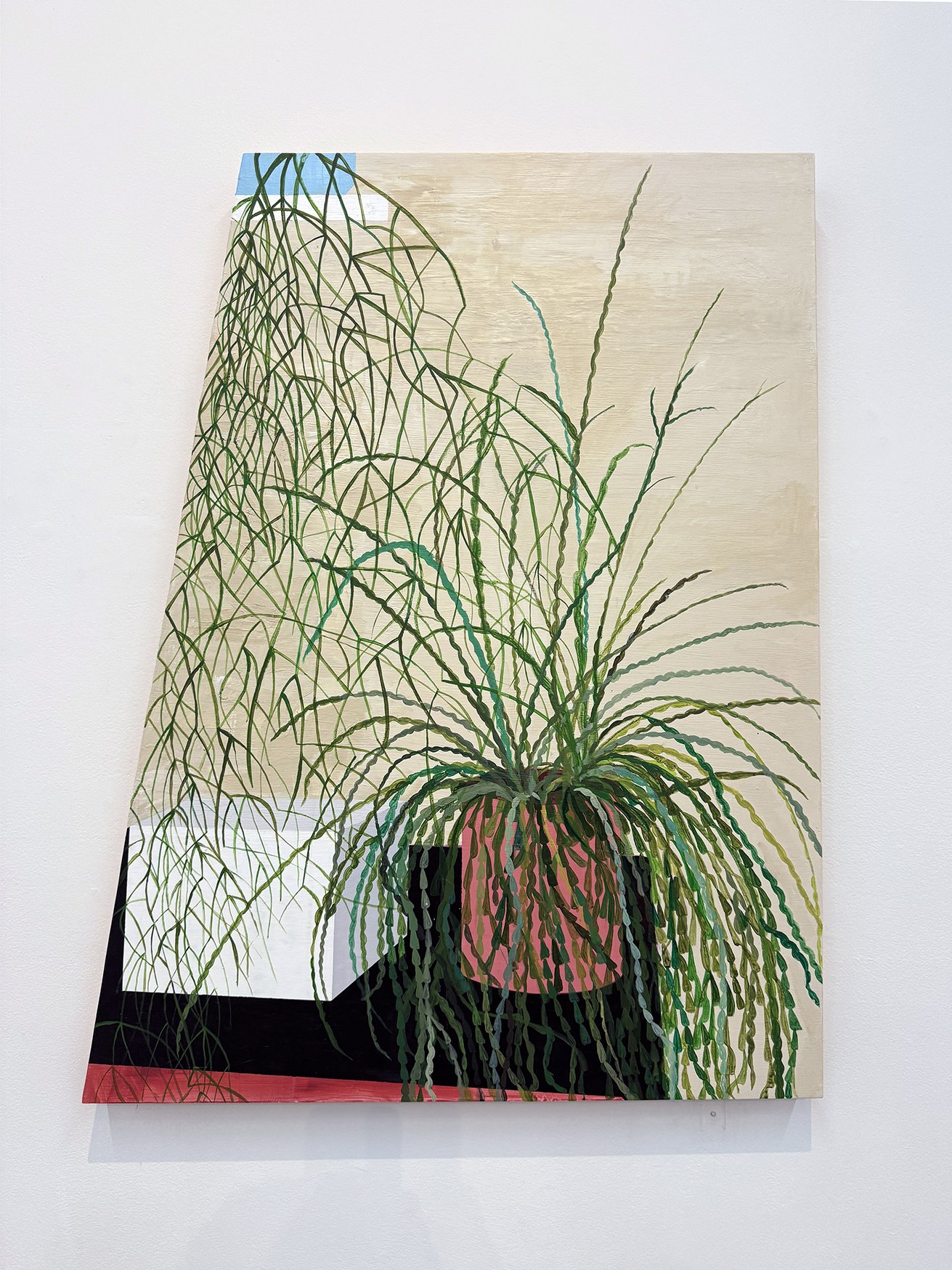
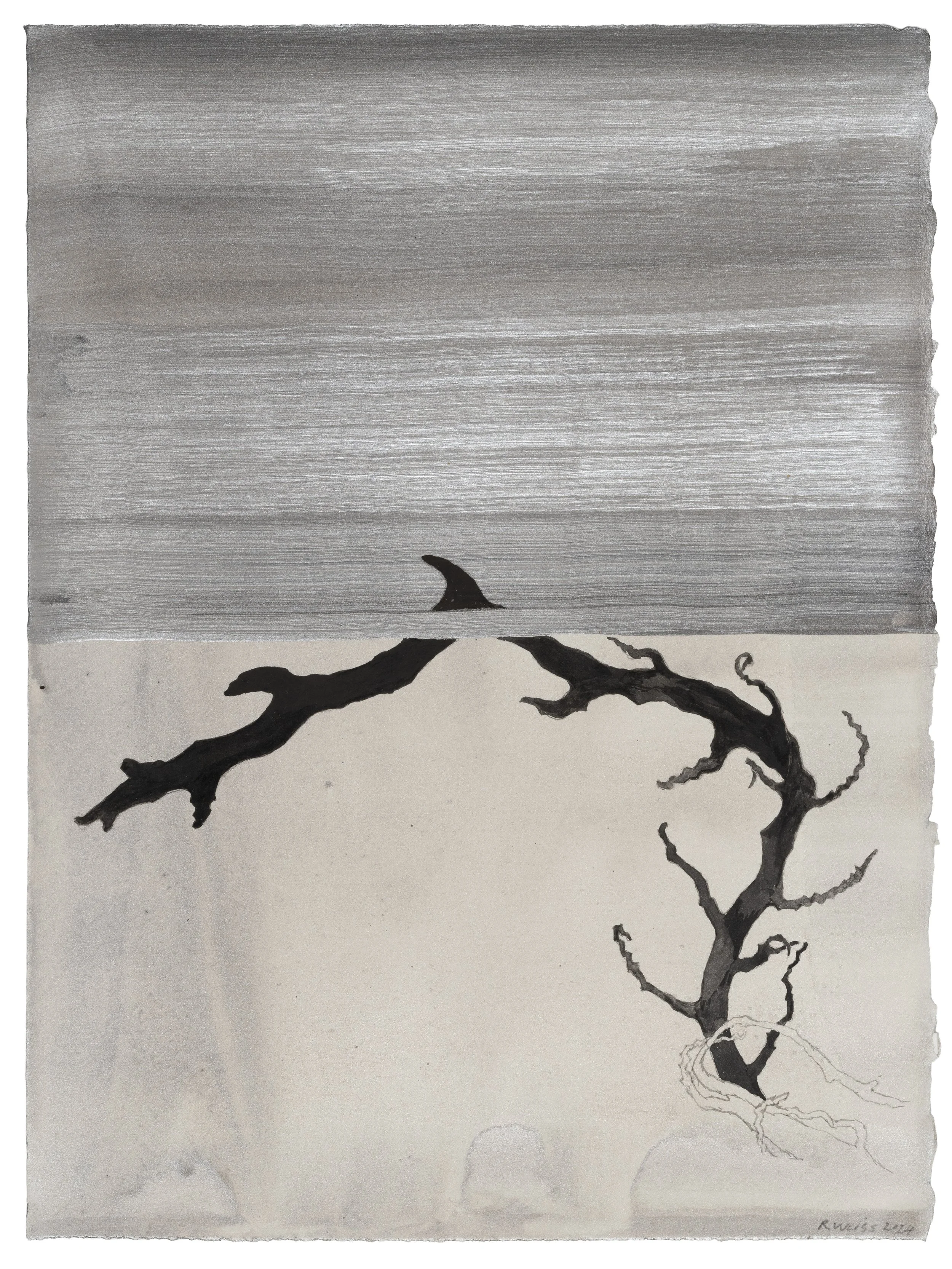
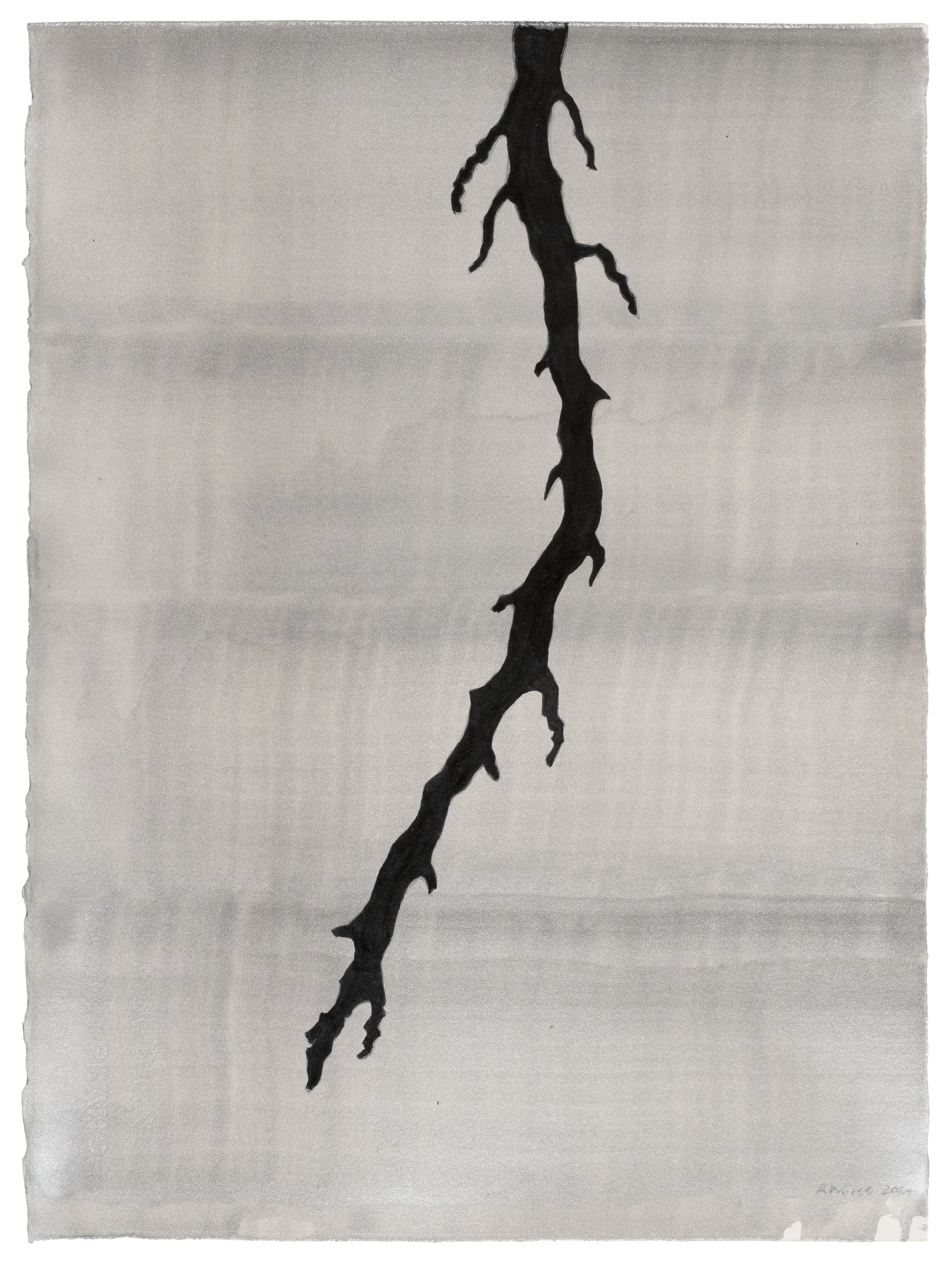
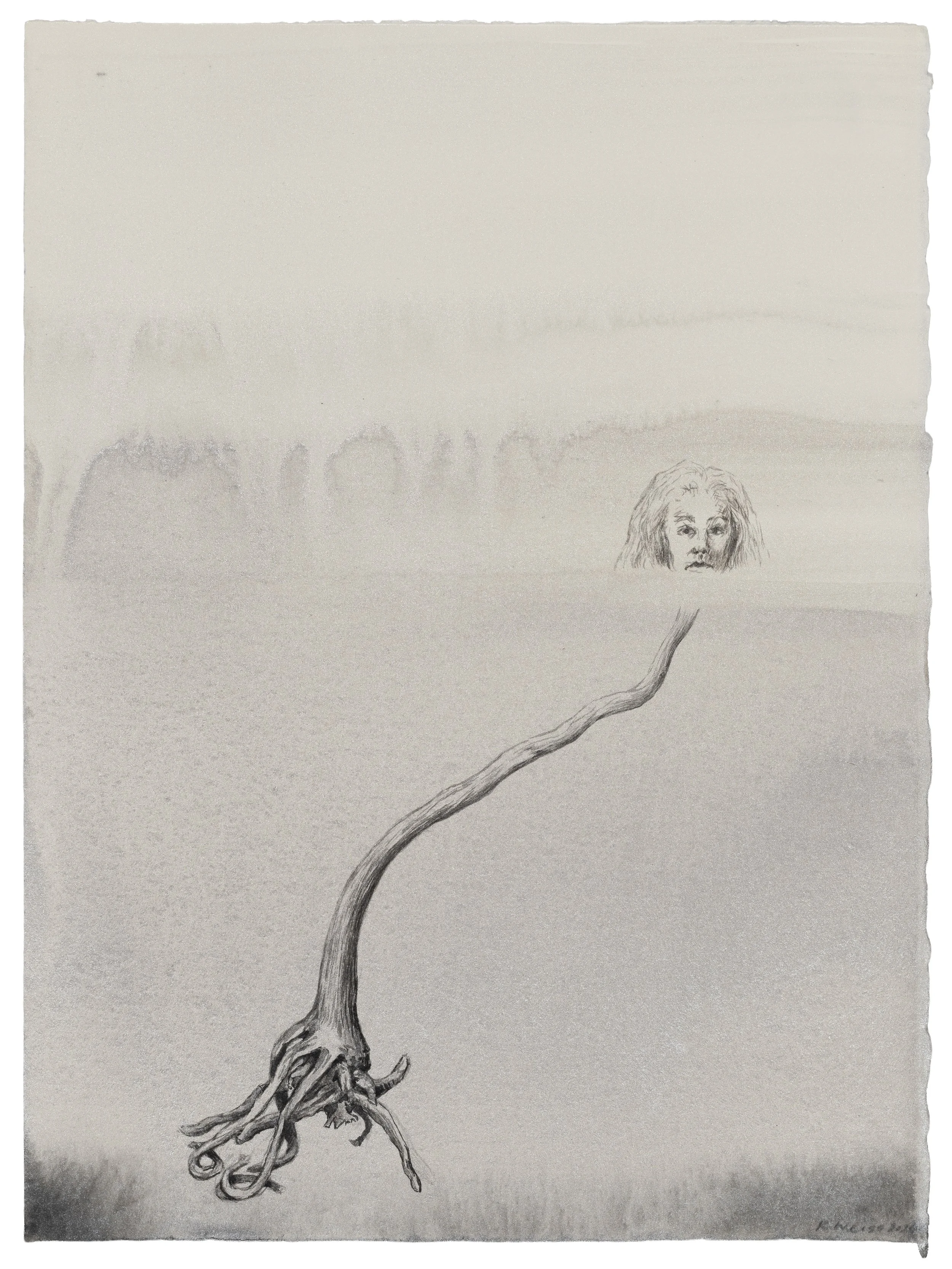
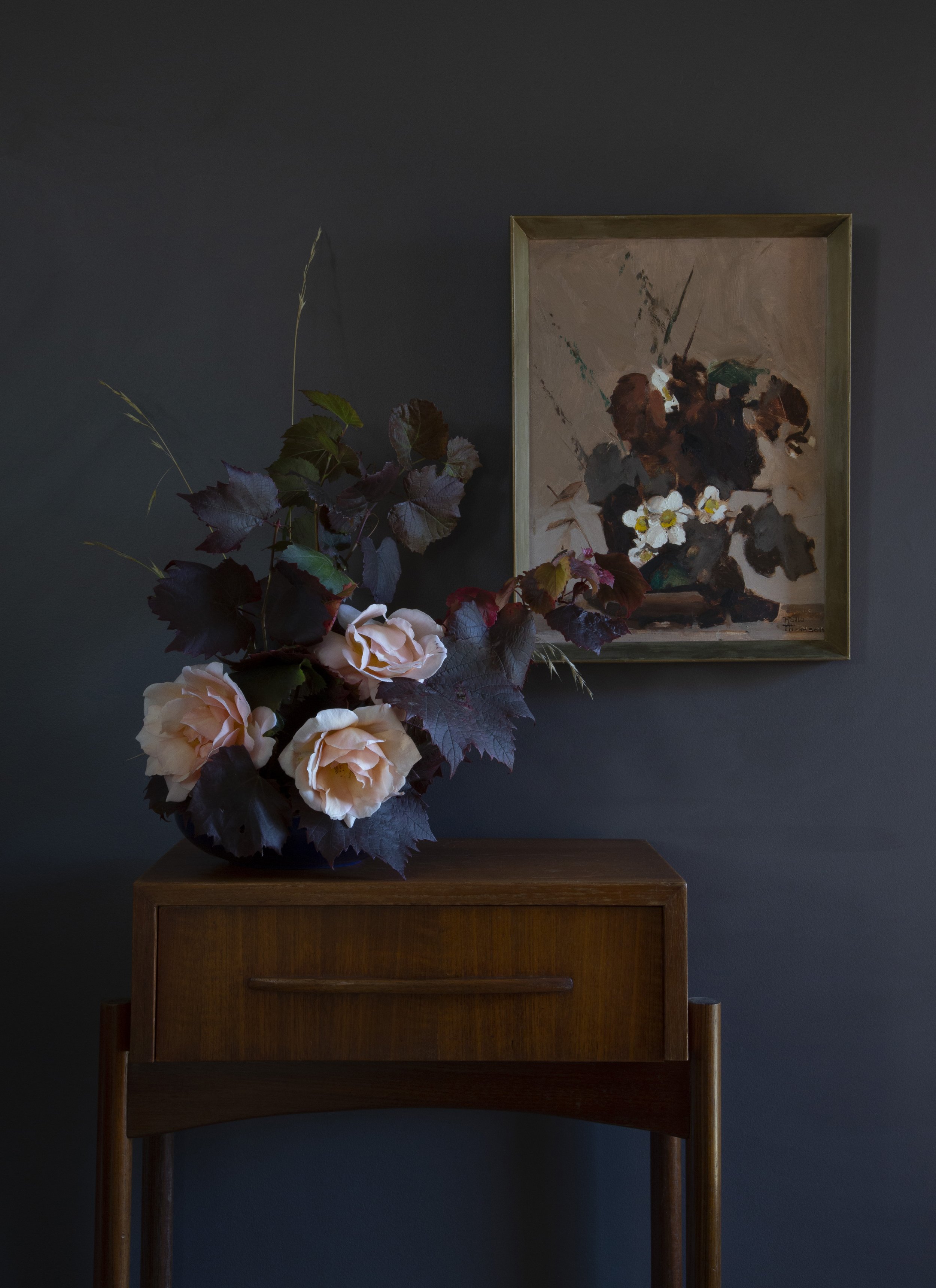
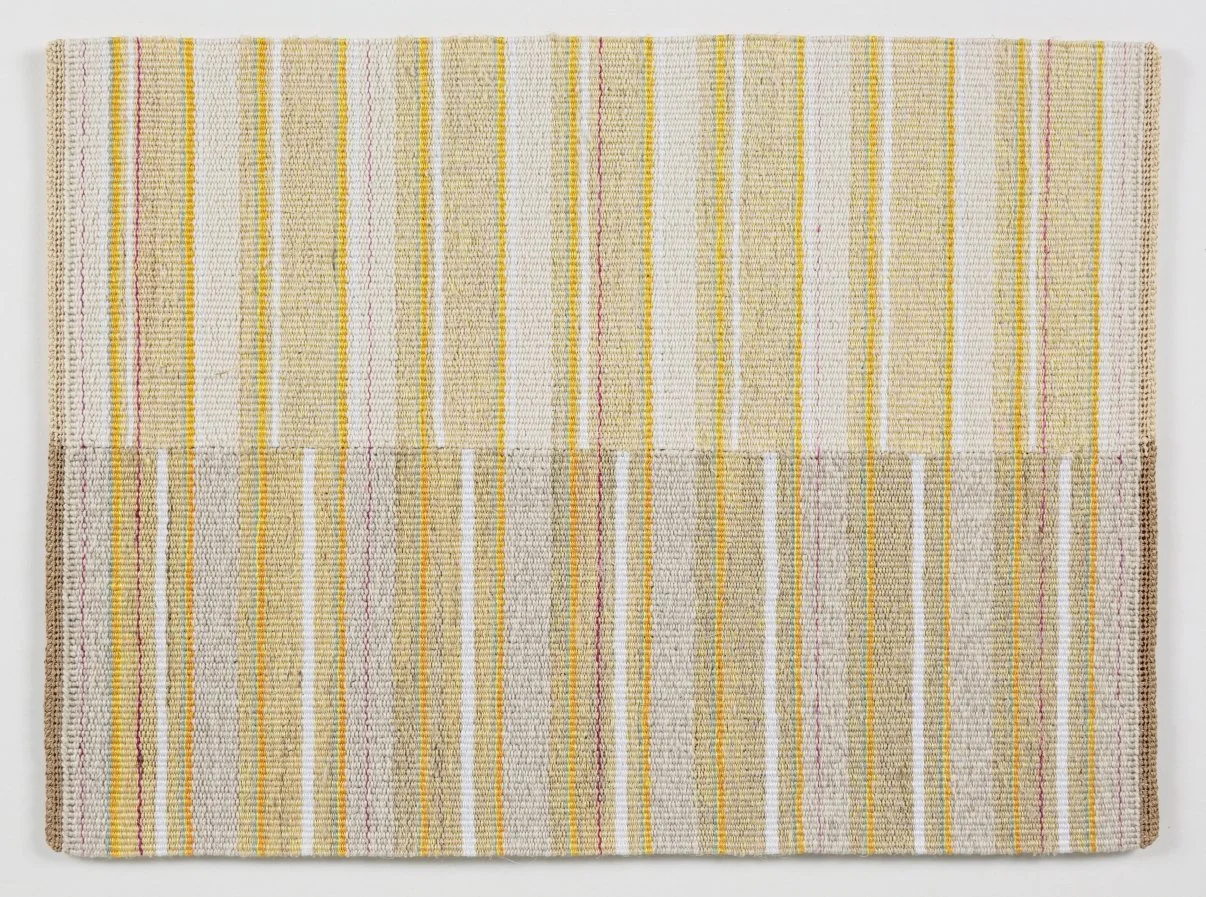
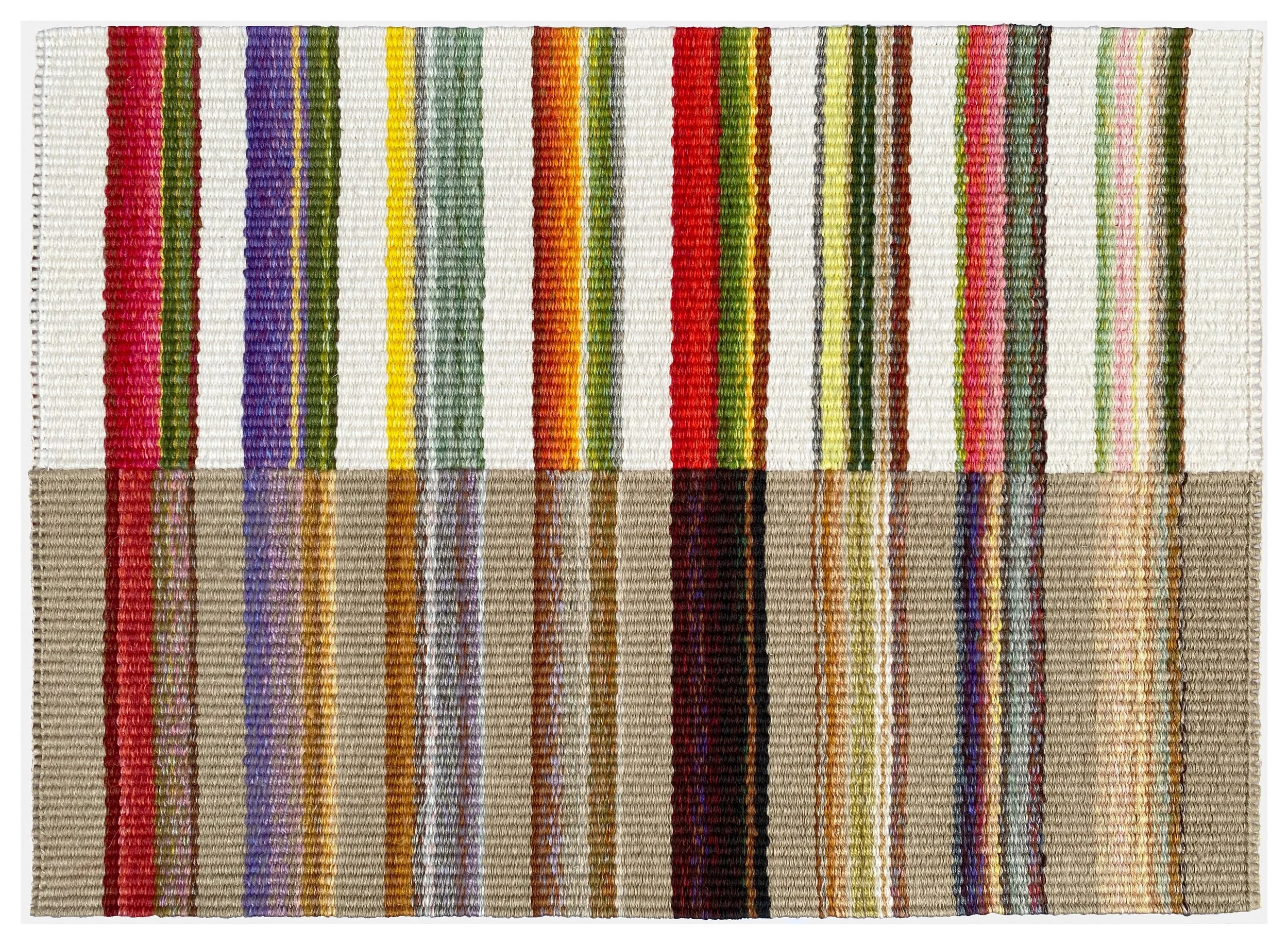
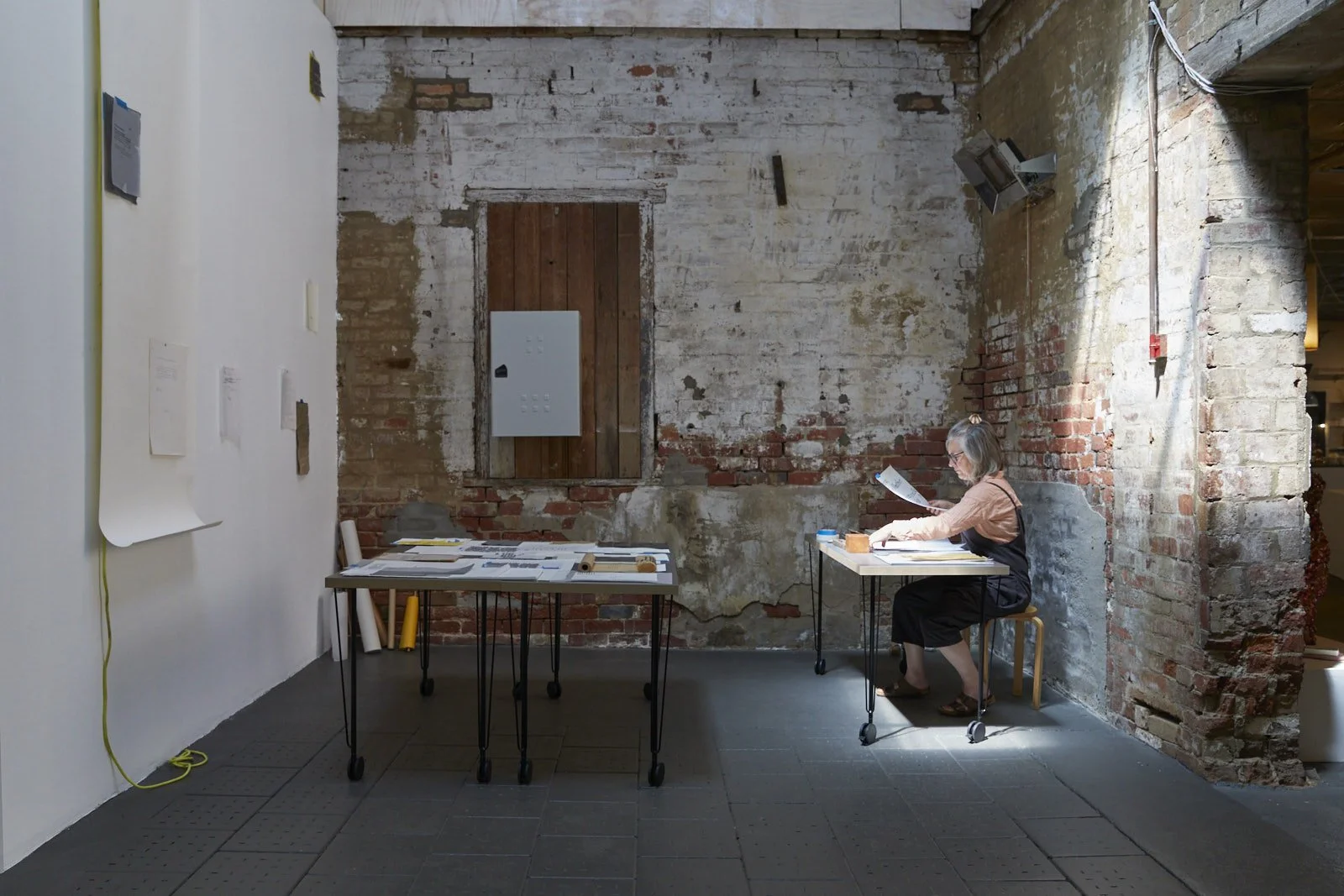
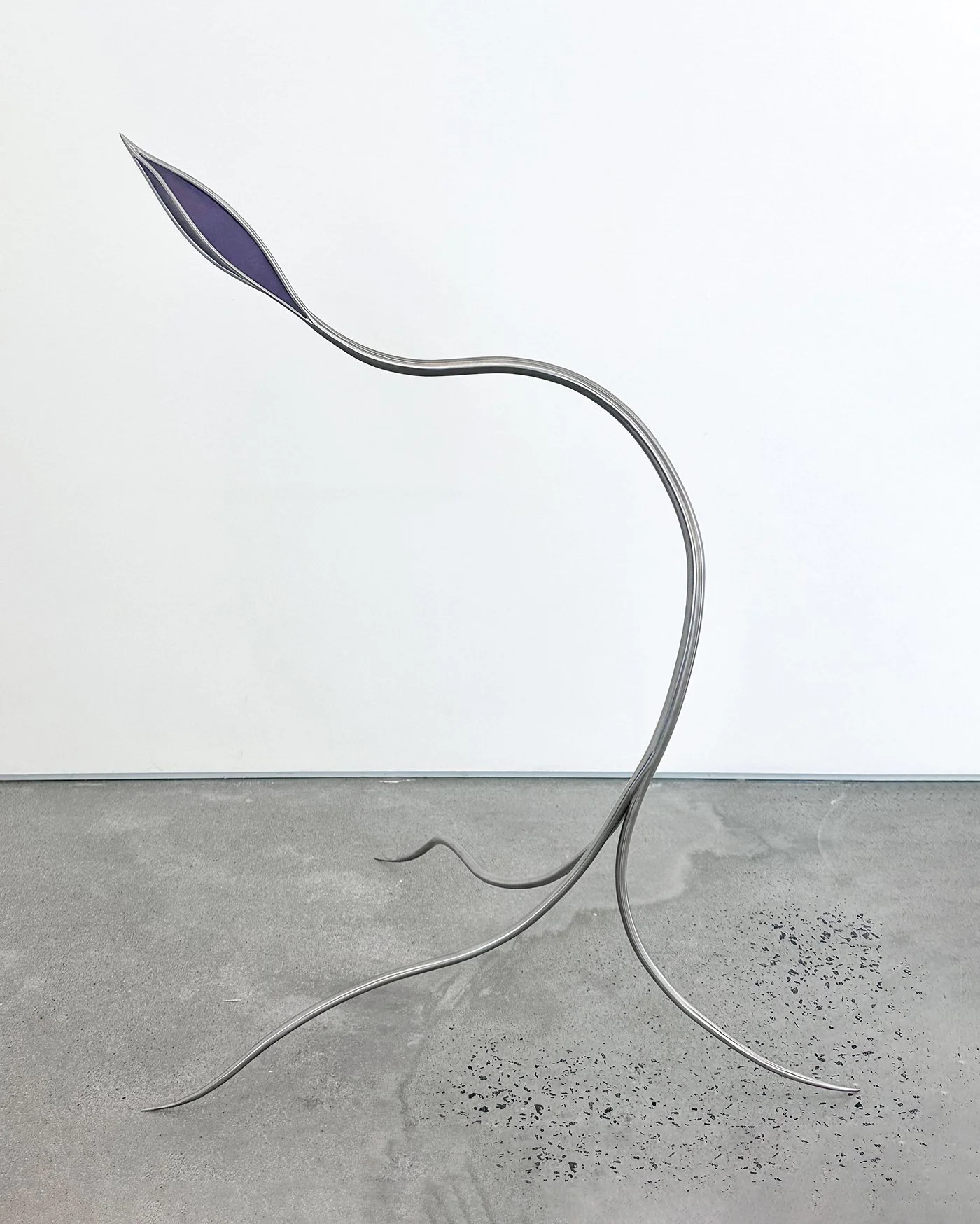
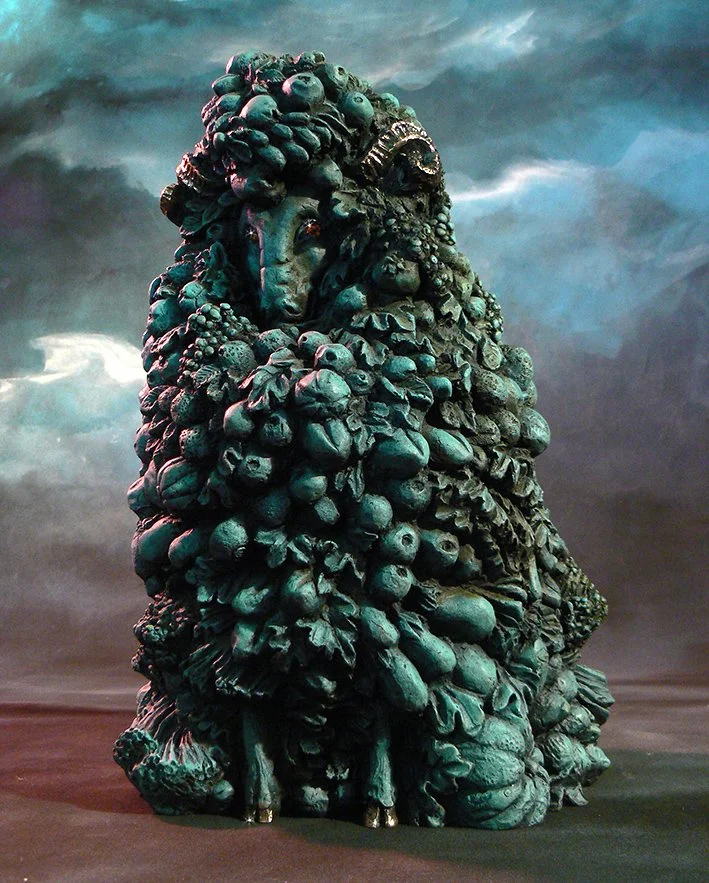
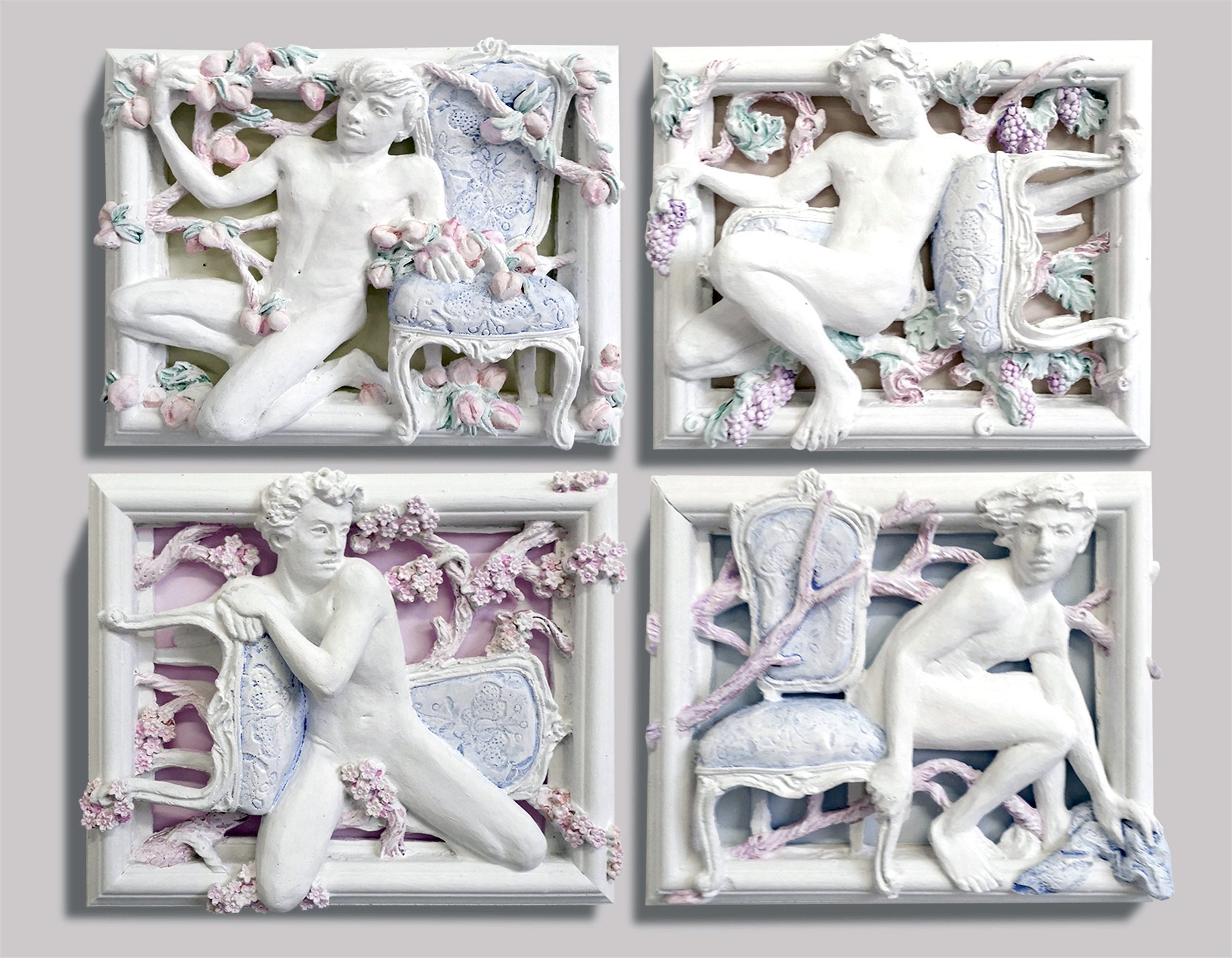
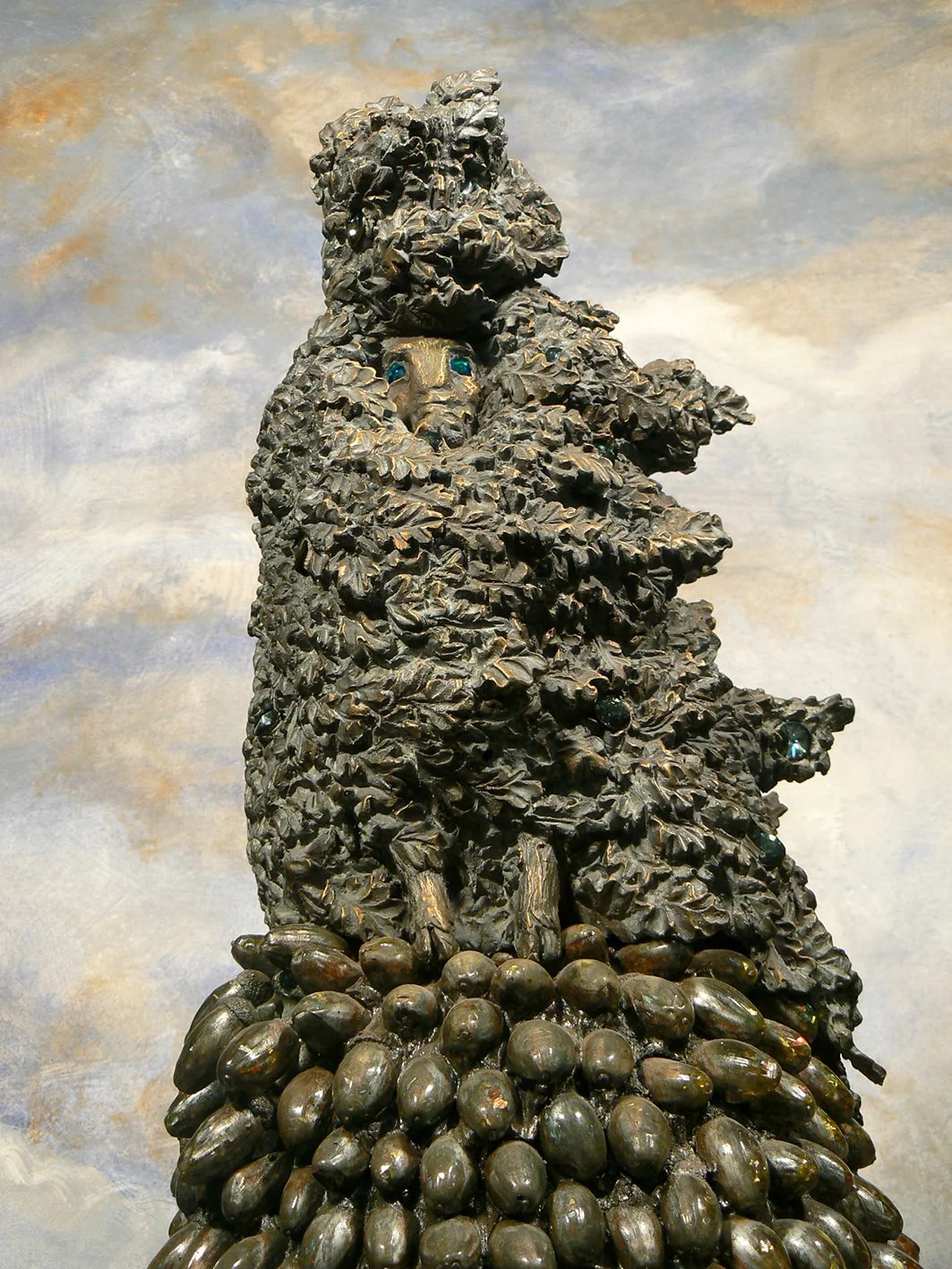
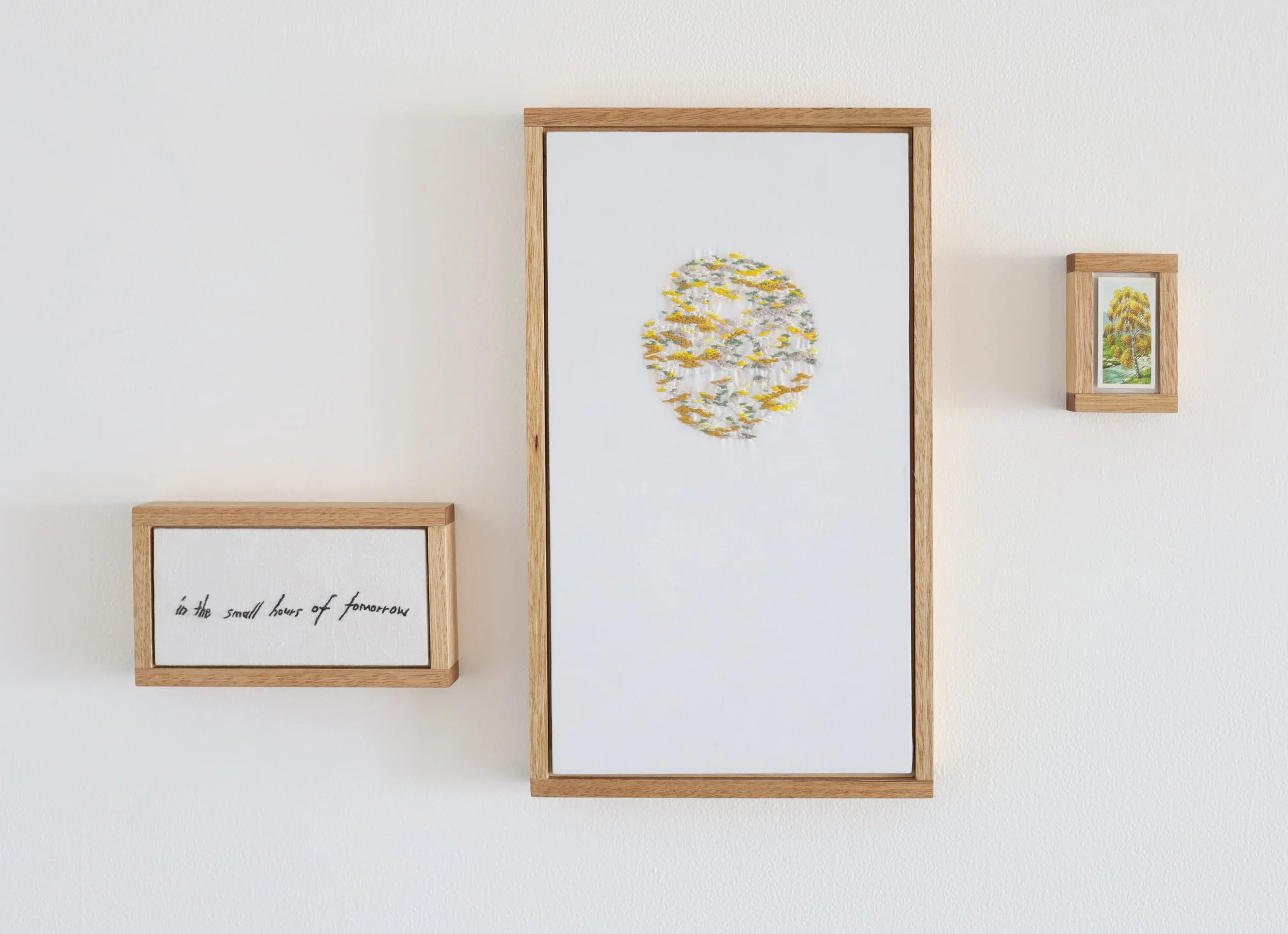
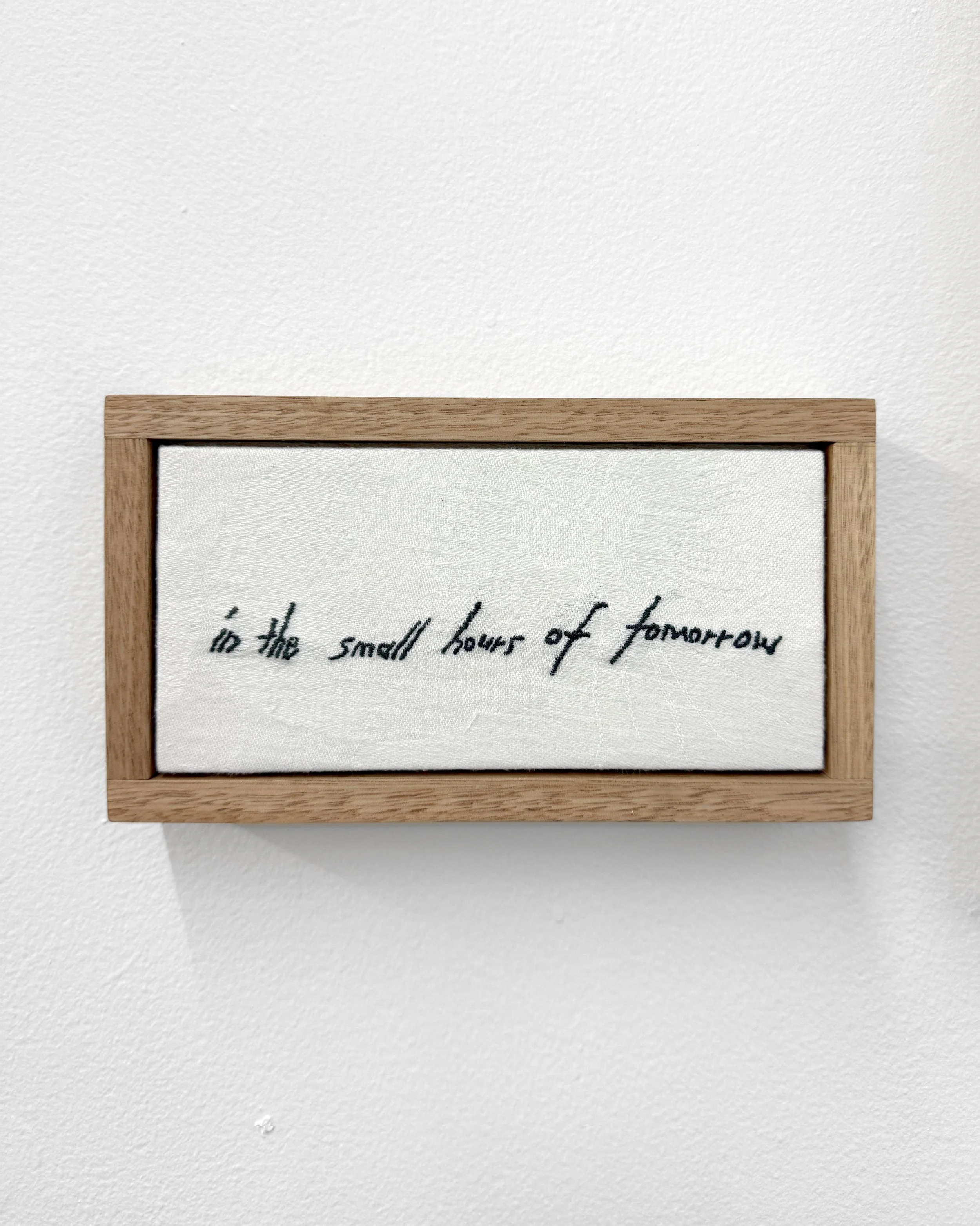
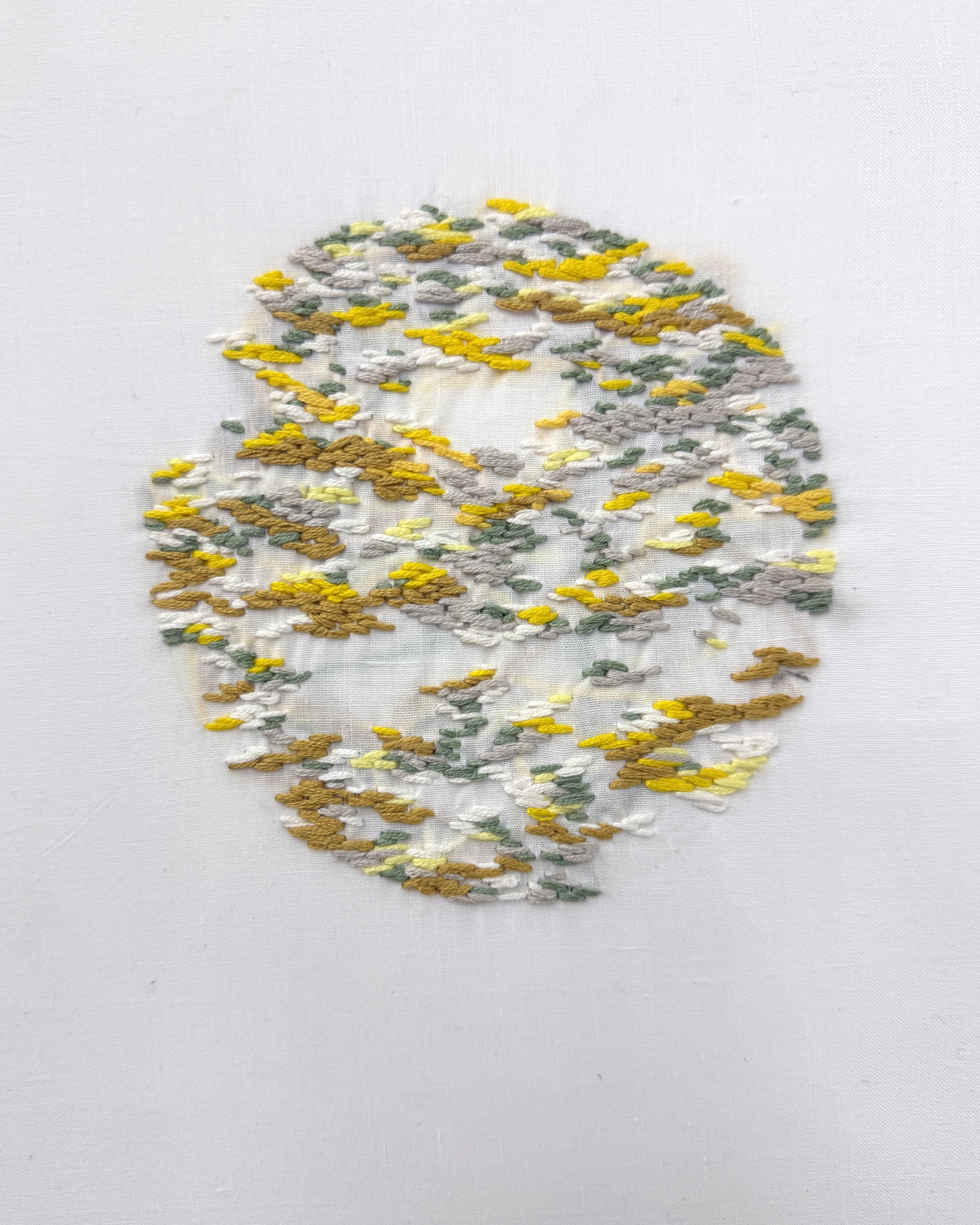
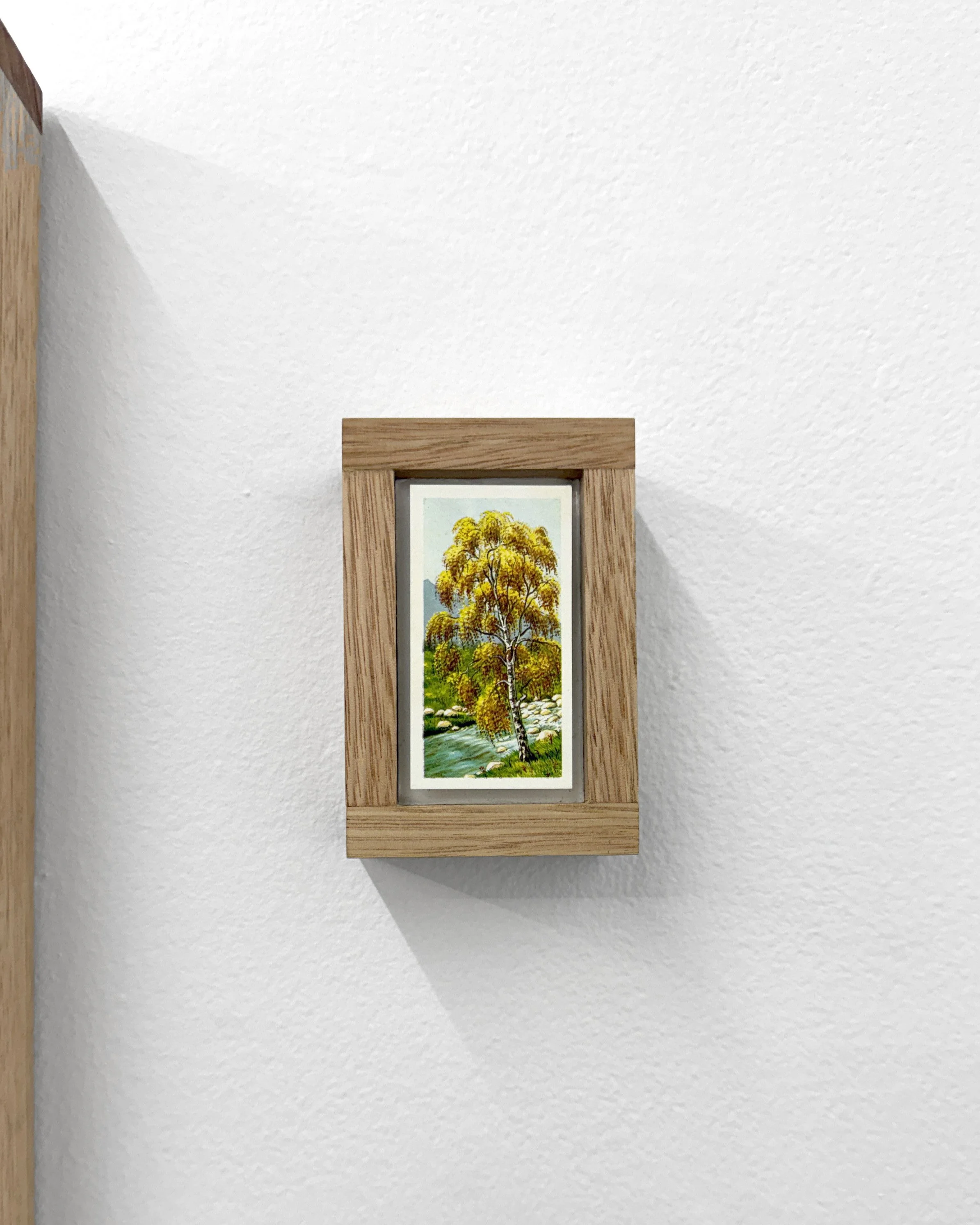
While none of the artists in this exhibition is attempting to turn into a tree (Not that we are aware of anyway). Plant Life brings together a group of artists who for a range of different reasons; beauty, sentimentality, cultural, memorial, ecological, ethical, deeply personal, and/or political – use plants as either subject matter, content, or medium in their artwork.

With more than 400000 land based species of plants, as subject matter alone this provides a dazzling array for artists to draw on for inspiration. Plants provide astonishing beauty as well as the basis of life on this planet.

The relationship between plants and the animal kingdom is necessary and complex.

For centuries and across various cultures, the vegetal world has been fertile ground for artists. Contemporary artists are increasingly engaging with plants as subject matter and medium, reflecting a growing interest in nature, the environment, and the intersections between art, culture, and science. Artists are using plants in diverse ways to explore themes of environmentalism, cultural identity, and the human relationship with the natural world. 

By the time we get near the end of Davis’ book, about one third of the human population have consciously decided to turn into trees, disrupting the world as we know it.

As we grapple with the urgency of climate change during the Anthropocene era, reconsidering human/plant relationships becomes essential if we are to develop a sustainable future for the planet. Artists along with researchers and activists play a critical role in shifting our current anthropocentric ways of thinking, being and living, to one which encourages us to reflect on our relationship nature and bring the vegetal world into our consciousness in more caring, connected and sharing ways.
David Ray, Asian Style with a Western Rhyme

Stockroom Kyneton, gallery two
29 November 2025 / 11 January 2026

DAVID RAY
Asian Style with a Western Rhyme

In March 2025, I journeyed to Jingdezhen, China.  Often called the “Porcelain Capital of the world” Jingdezhen is renowned for its ancient porcelain production that stretches back more than 1,700 years. I arrived carrying questions, yet the place welcomed me with an uncanny sense of familiarity. It didn’t feel like a destination; it felt like returning home to something I had always known but never named. Within the ancient city, the clay carries the memory of countless hands.
One evening, thanks to our group leader Janet DeBoos, I shared my work with a porcelain factory owner. He regarded it with long, thoughtful stillness before saying:

*“Your work has an Asian style with a Western rhyme.”

Those words felt like a quiet revelation—naming the in-between place where my practice truly lives: between cultures, between inheritances, in the soft spiritual space where traditions meet without needing translation.

The feeling of home pulled me back again in November. I returned to Jingdezhen for three weeks, allowing the city to unfold in its gentle, familiar way. I walked its streets as if retracing steps from another life, meeting makers who shared their craft with a sense of lineage that felt both ancient and welcoming. The connections formed were not brief encounters—they felt like reconnections, as if I had stepped back into a story I had momentarily stepped away from.

This exhibition is my offering to that lineage and to the sense of belonging it stirred.

The Chinese ceramic forms that guide me—the bowl that holds silence, the vessel that stands like a guardian, the jar that cradles breath—carry an old intelligence of form and presence. They are more than vessels; they feel like spiritual thresholds. When I make, I stand at that threshold, listening for what wants to be shaped.

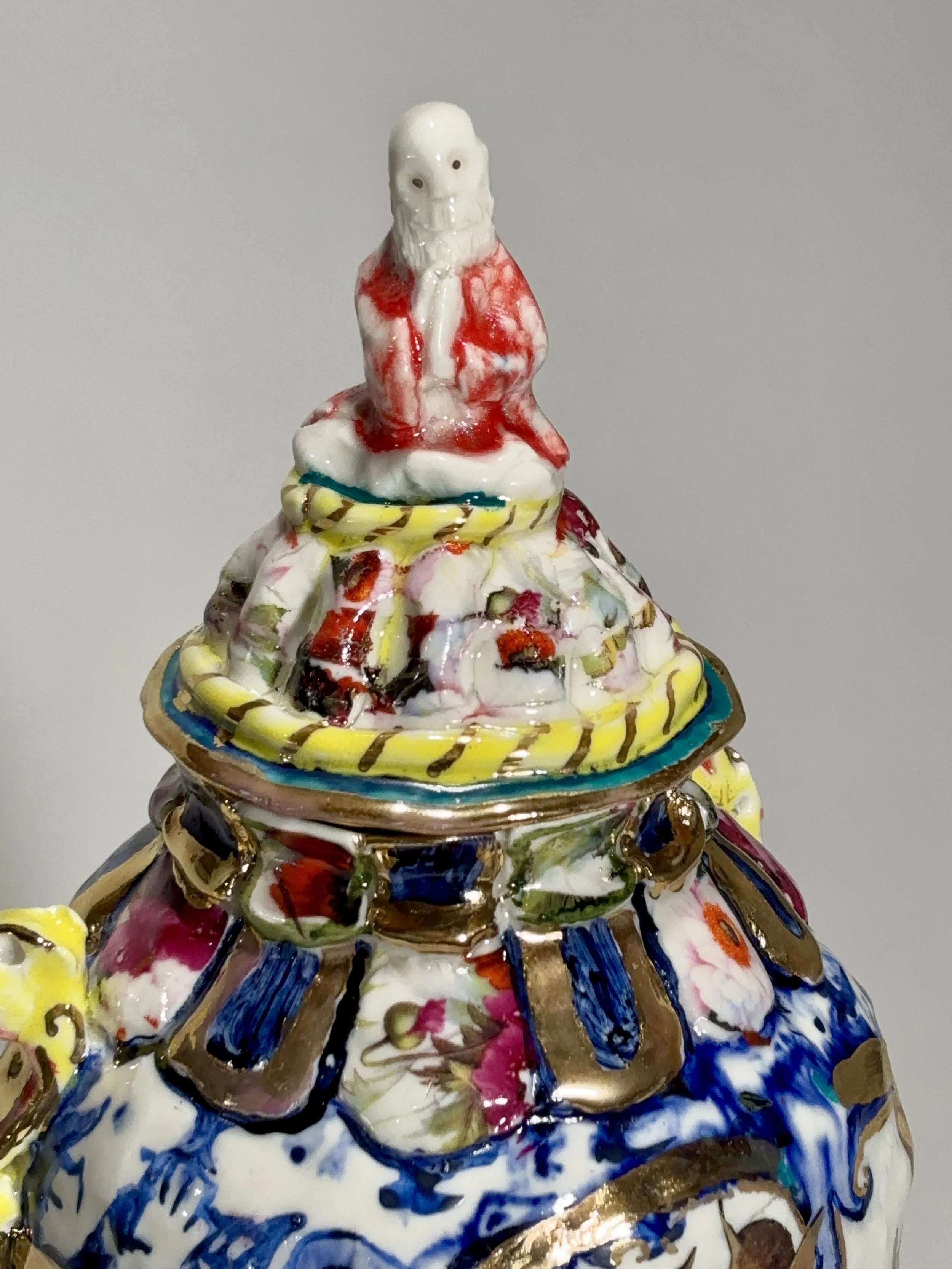
My own pieces rise from this conversation across cultures and time. Blue and white surfaces echo my Western heritage; decals and sculptural marks drift across them like symbols or fragments from a dream. The work becomes a place where influences merge—quietly, naturally—like two currents meeting under the surface of still water.

Each vessel stands on reclaimed timber from my back fence—material once meant to divide, now transformed into a platform of elevation. It feels like a small ritual act: turning a boundary into a bridge, lifting the work beyond utility and allowing it to be experienced as presence, as story, as spirit.

The imagery living on the vessels—a woman in song, a tipsy monkey, a tattooed panda, a tiger dressed in calm authority—functions like a series of gentle guides. They’re playful, yet symbolic, inviting viewers to enter the work intuitively, to find their own meanings, to let the pieces speak in the quiet language of imagination. The vessels become companions in this process—more than objects, they’re holders of mystery, waiting for the stories the viewer brings.

I AVAILABLE ARTWORKS I

Rachael Rose, Objects of Ornament and Utility

Stockroom Kyneton, ceramic space
29 November 2025 / 11 January 2026

RACHAEL ROSE
Objects of Ornament and Utility

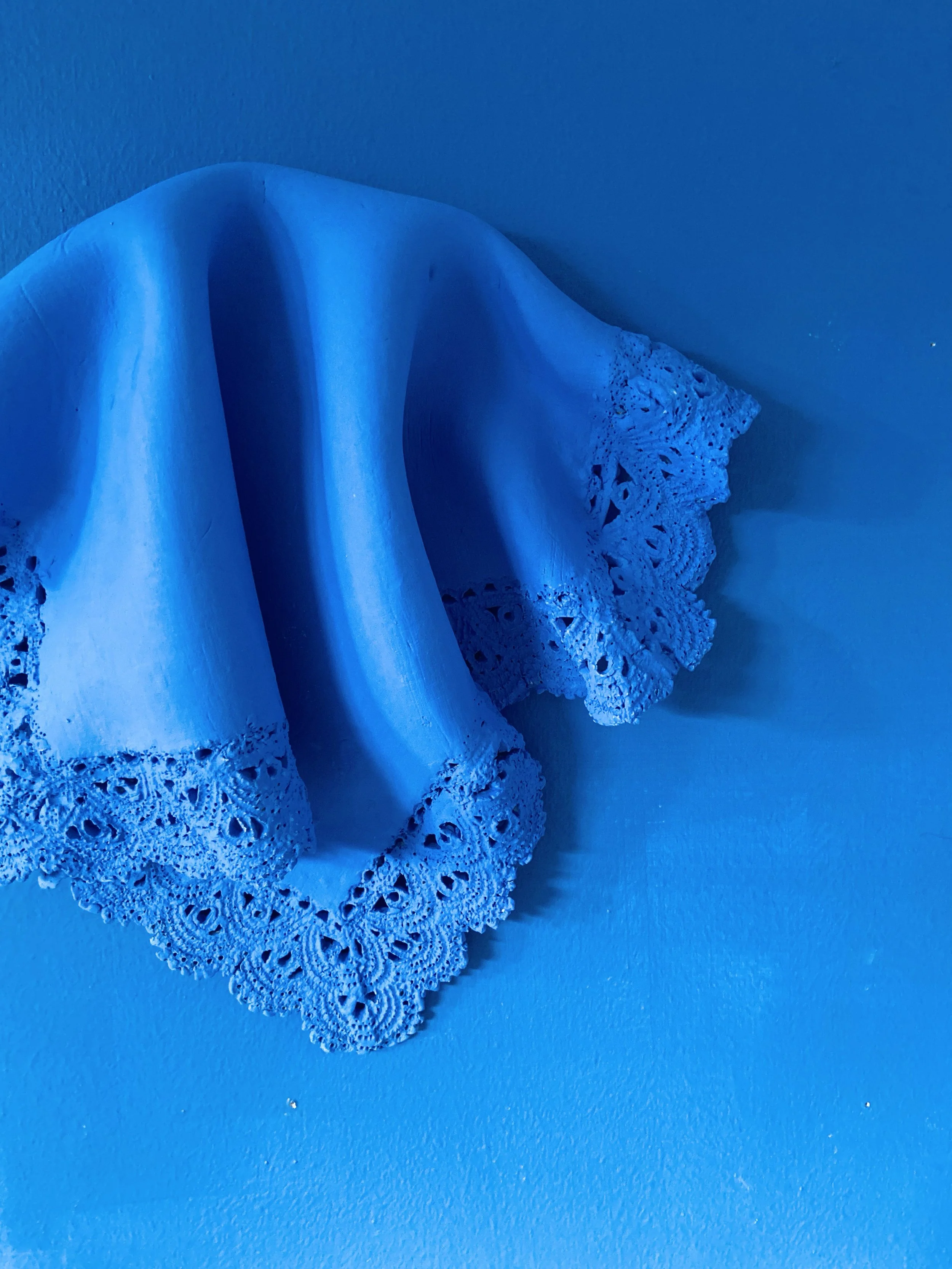
Lace handkerchief, 2025, stoneware, galze, underglaze, 25 x 25 x 5 cm approx

Objects of Ornament and Utility investagates the meeting point of beauty and function, referencing the Arts and craft movements and the ideas of William Morris, who believed object should be both purposeful and thoughtfully made. The exhibition also considers the home as a psychological landscape - a place where the complexities of the self are lived, stored and projected onto things we keep close.

At its centre is Surface Tension, a three-dimensional wallpaper installation in which mounted vessels and suspended handkerchiefs invoke the legacy of William Morris. This gesture situates the work within a decorative arts lineage while simultaneously unsettling its conventions. In dialogue with this installation are lace edged handkerchiefs and over sized chains, a suite of vessels distinguished by exaggerated handles articulates weight, utility, and domestic familiarity, yet deliberately exceeds functional expectation to assert sculptural presence. Together, these works sustain an inquiry into the relationship between form and function, holding the two in deliberate suspension and inviting reflection on how material objects oscillate between the utilitarian and the aesthetic.

Much of this thinking emerges from the role of the home as the nerve centre of the self. It is within domestic space that emotions are felt most fully. Grief, joy, frustration, comfort - each absorbed into the textures of everyday objects. The things we surround ourselves with become extensions of identity: chosen, arranged, collected, and charged with personal meaning. Each object becomes a small externalisation of the internal world.

This approach resonates with Gaston Bachelard’s The Poetics of Space, particularly his phenomenological account of intimate spaces - rooms, corners, and the smallest domestic details, as sites of emotional weight that shape inner life. The works presented here extend that lineage, offering a meditation on how ornament, utility, and the objects of the home disclose the complex interiors of human experience.

I AVAILABLE ARTWORKS I