
CURRENT EXHIBITIONS
26 September/ 01 November 2026
gallery one
MARK RODDA
Abstraction + Watercolour = Good Times!!
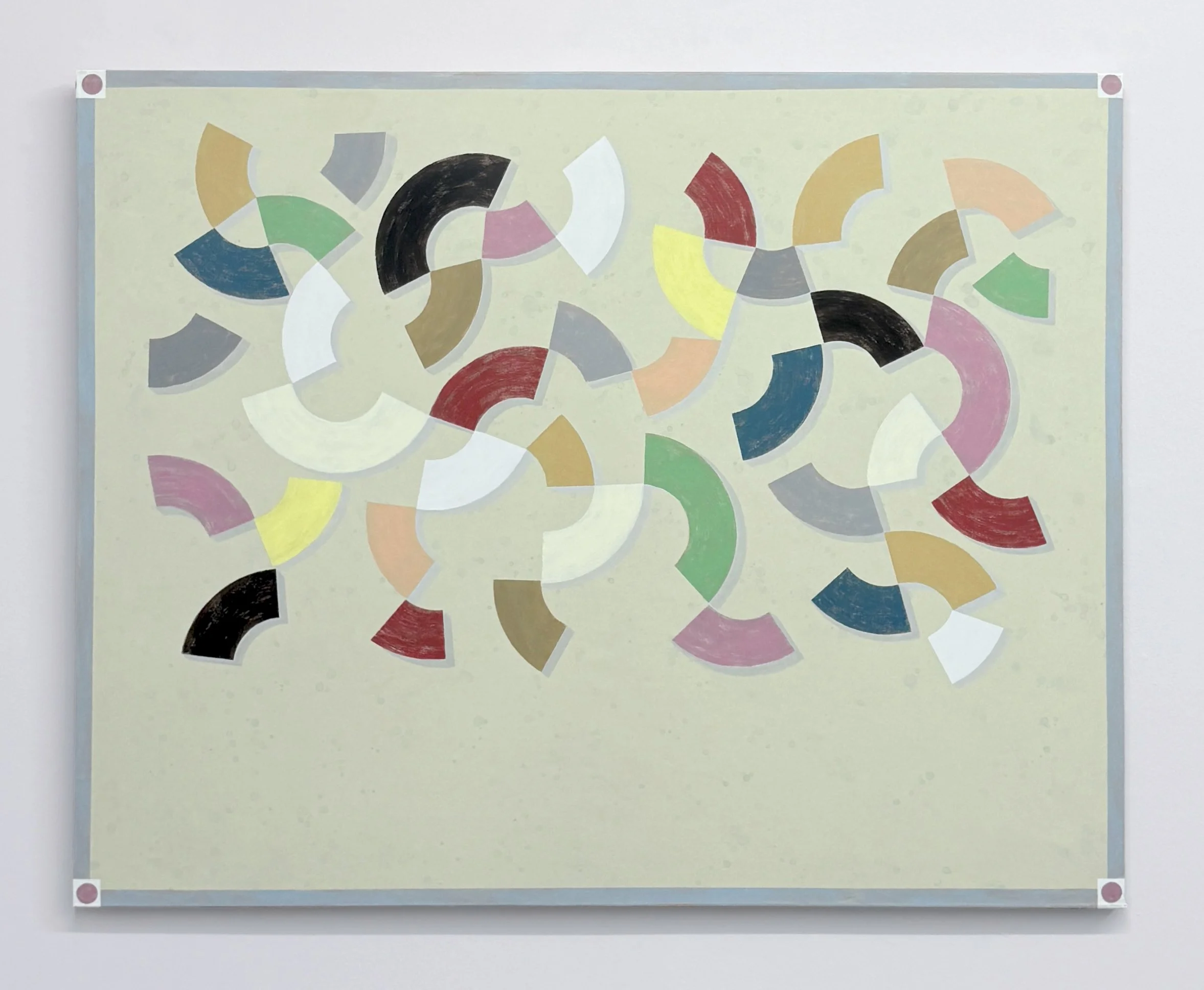
Mark Rodda’s Abstraction + Watercolour = Good Times!! is a collection of abstract compositions and watercolour landscapes. The non-objectives works in this exhibition range in style from graphically geometric pieces to the more organic forms of the artist’s on-going Nebula series. The watercolour aspect of the show is made up of (mostly hazy) romantic landscapes of the type the artist always seems to return to. Within the watercolour bundle is a ‘lost’ group of works from 2013, for which the artist always intended to show, but will only now see the light of day on a gallery wall.
Mark Rodda hopes for some type of synchronicity between these two disparate sets of artworks, but if the combination ends up a little bit wild…the artist is ok with that too.
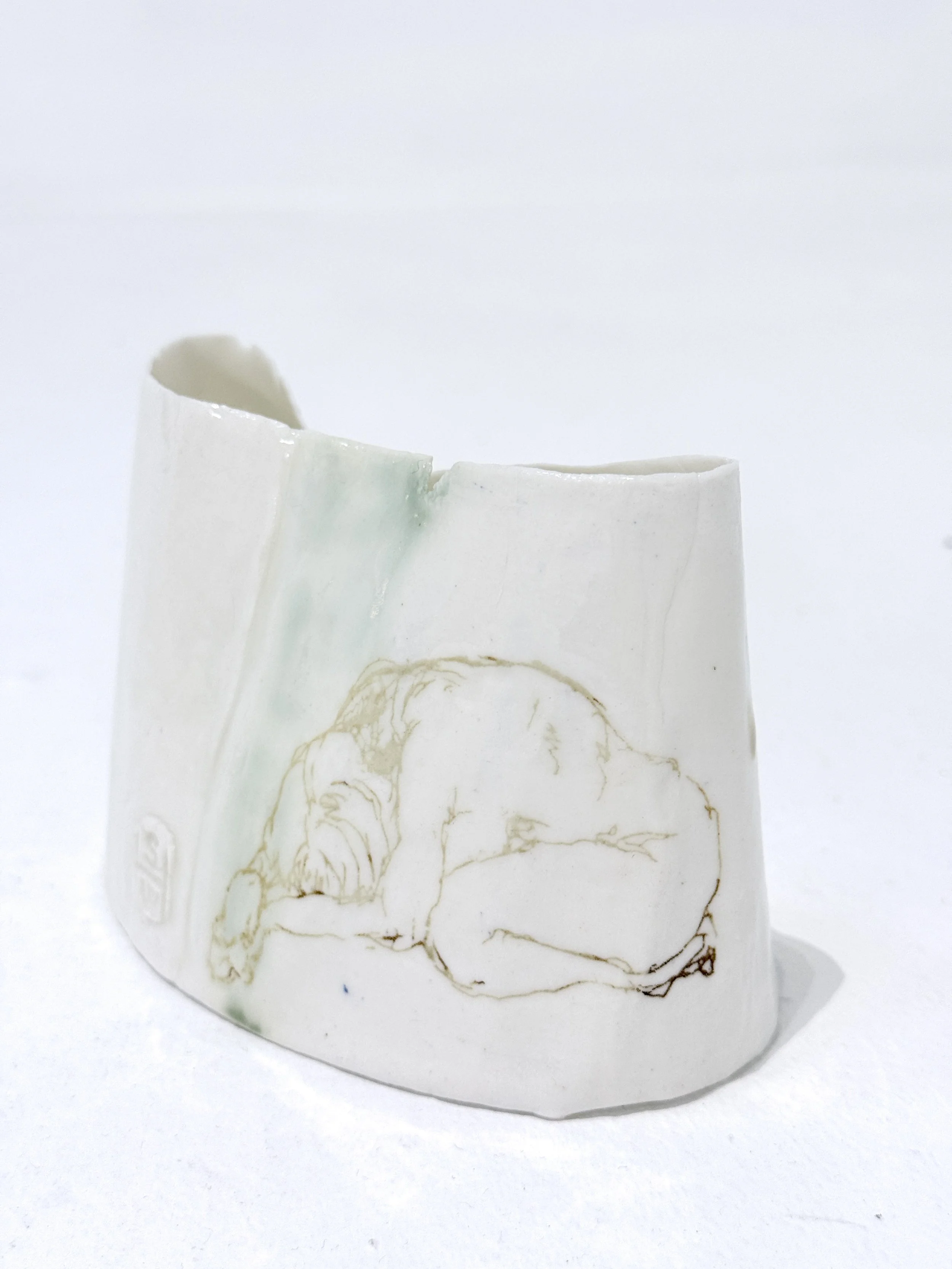
Grief is Like Glitter, is a deeply intimate exhibition of ceramic works by Steph Wallace, born from a year of parallel medical trauma, vulnerability, and profound change within her home. Created to process the raw emotions of Wallace’s own cervical cancer surgery alongside a loved one’s difficult body transition, the work maps a shared family landscape of health uncertainty, dysphoria, and unconditional love.
Wallace turns private pain into a shared space of radical tenderness, resilience, and messy, beautiful transformation.
Subverting a trite internet platitude to uncover a deeper material truth: Grief is Like Glitter, speaks to the strange duality of trauma; impossible to fully wash away, clinging to the quietest corners of daily life and unexpectedly catching the light.
Through this evocative body of work, Wallace turns private pain and family transition into a shared space of radical tenderness, resilience, and shimmering proof of survival.
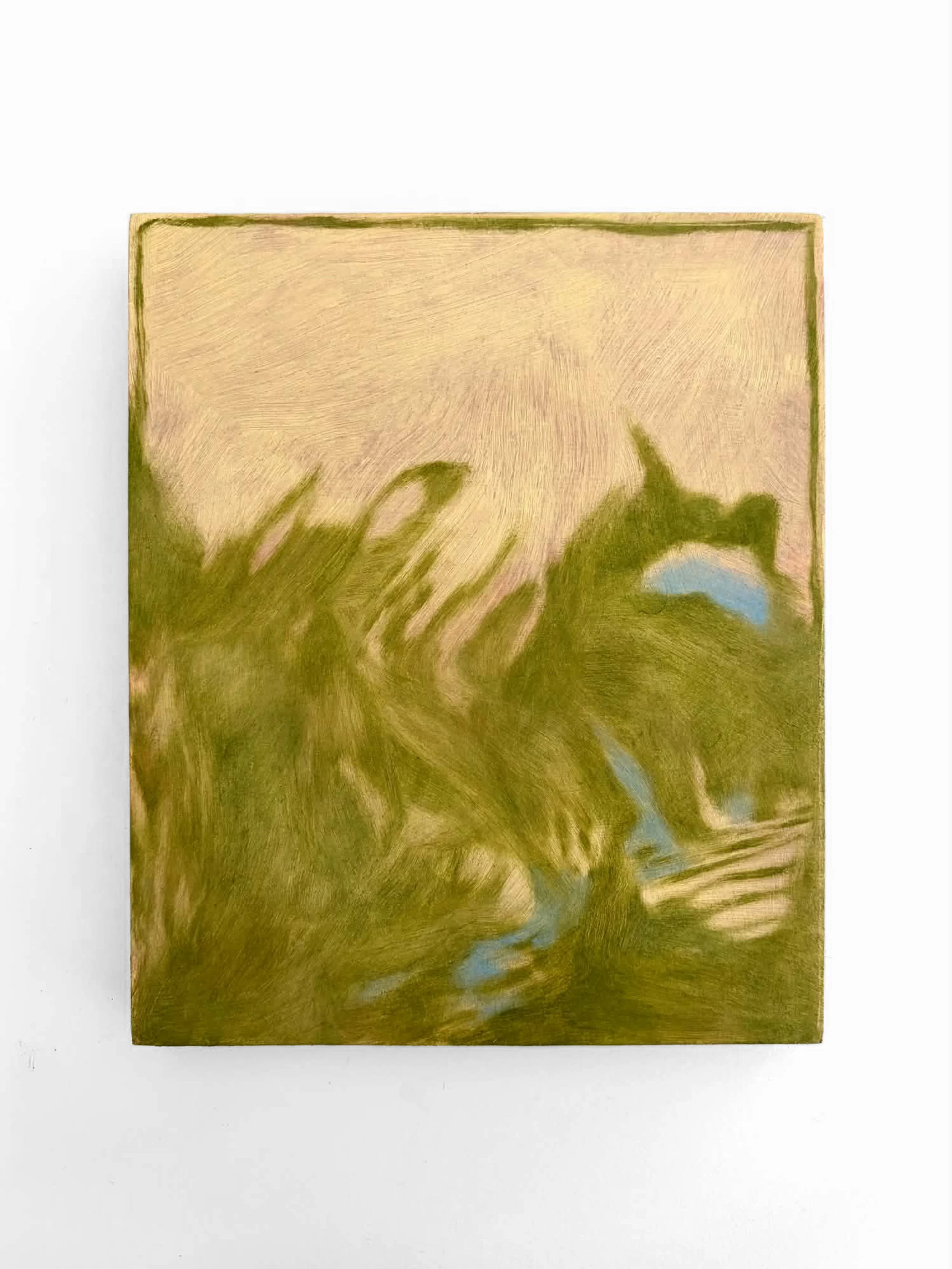
Distance is a collection of small scale oil paintings investigating painting as a practise. On handmade wood panels and stretched canvas, colour, gesture, shape, and surface control a new focus of abstraction, material and tactility.
Unplanned and instinctive, the works are informed by domestic scenes as table compositions, nature, in garden scenes, flowers and trees. From these foundations, forms are blurred and moments of complete image rejection emerge, and the object becomes suspended between layers of oil and brush strokes.
In her interdisciplinary oil painting and textile work, Ella Rizzi creates images that piece together fragmented memories to suggest an always incomplete and shifting understanding of histories. Her practise is a constant, intimate inquiry into rediscovery and recollection, and her paintings, in their innumerable layers, delineate the inevitable erosion of memory and identity across generations. Ella uses reclaimed ephemera from her Northern Italian family history as reference to relentlessly pursue an understanding of a past within the images, while also watching as any information becomes blurred among the oil and coats of paint.
Living and working in Melbourne Australia, Ella has undertaken a Diploma in Visual Arts (RMIT) and a Bachelor in Fine Arts (Victorian College of the Arts). Recent solo exhibitions include Loom, Trocadero Projects, Footscray; Imitami (Valentina), Bargoonga Nganjin, North Fitzroy; and To all who lived before me, Green Floor Gallery, Fitzroy. She has also exhibited in group exhibitions at BlackCat Gallery, Joseph Beuys Cafe, VCA, Motor Works Gallery and Trocadero Projects. Ella participated in an art festival at The Gasometer Hotel and an artist workshop at the MPavillion, Melbourne. She has received the Stuart Black Memorial Scholarship and the West End Projects Award for excellence in her studies and graduation work at the Victorian College of the Arts.
PAST EXHIBITIONS
08 August / 13 September 2026
…
gallery one
GREG WOOD & YOKO OZAWA
Night Shift
Greg Wood's body of work explores the notion of landscape at night, examining how ways of seeing are experienced through darkness rather than direct observation. These paintings investigate the shifting nature of perception after light fades, where familiar forms dissolve into shadow and certainty gives way to ambiguity. It is through this approach, the works invite viewers to engage with the landscape as something sensed and felt rather than fully seen.
Wood uses darkness as both subject and method. Walking and painting within the bush after light heightens awareness of sound, movement and the limits of vision, producing an altered relationship with place. Familiar environments become disorienting and inverted, as though the known world has quietly shifted into something unfamiliar. Rather than recording the landscape through direct description, the paintings emerge from sustained observation of darkness itself and the subtle ways light is received, absorbed and perceived within it.
Central to the series is the idea of absence. Darkness transforms the landscape into a vast and unknowable space where depth, scale and distance become difficult to measure. These atmospheric conditions create a tension between presence and obscurity, suggesting that the landscape exists beyond complete comprehension. Rather than revealing every detail, the paintings embrace uncertainty, encouraging prolonged looking and quiet contemplation.
This series of work require time before the eye begins to register subtle shifts in tone. Gradually, faint vertical passages emerge, suggesting the presence of tree trunks or dense vegetation without fully describing them. Horizons dissolve, foreground and background become indistinct, and no single focal point offers visual certainty. Instead, vision slows as the eye gradually adjusts to darkness. In this way, the paintings do not simply represent the night; they recreate the experience of encountering it.
…
’余白 Yohaku’ (Blank space), a Japanese notion, underlies the expression of Ozawa’s work. For her, the space observed when surveying landscapes—or the space between objects—is not nothingness; rather, it is something that is constantly in motion. Even the invisible air we breathe is never truly static. Ozawa’s work illustrates this everyday celestial event and highlights natural phenomena such as wind, light and shadow, gravity, and seasonal changes. She uncovers their presence through small daily observations and records those fleeting moments.
In this exhibition, "Night Shift," she illustrates scenes from dusk to twilight, inviting the viewer's imagination into a forest shrouded in mist While deeply rooted in Japanese culture, the colours and textures of her works, incorporating natural materials such as eucalyptus ash, evoke the landscape of the Warungjeli Woi Warung people, where she currently lives and creates her art, and stir a universal sense of nostalgia for the countryside and one's hometown. Ozawa's work presents the possibilities of this Yohaku and conveys the connection between humanity and the surrounding nature.
After Serpentine is a study of the dialogue between abstraction and representation, inspired by the 1891 performance of Serpentine Dance by American performer Loie Fuller.
The logic of Alex Dillon’s series of paintings follows Fuller's avant-garde ‘free dance’ practice, which incorporated theatrical devices, synaesthesia, and unencumbered movement to invent an aesthetic spectacle.
The images from After Serpentine are cultivated and juxtaposed from an archive of botanical studies, film stills, documentary photography, and Dillon’s own personal collection of family history. Each painting is rendered first in charcoal, then translated with oil paint onto wooden blocks.
Dillon’s process is driven by a curiosity for curatorship, theatricality, the representation of nature, and the themes of temporality and spectatorship. The combined paintings are staged to be evocative and atmospheric, constructing their own improvisational interpretations.